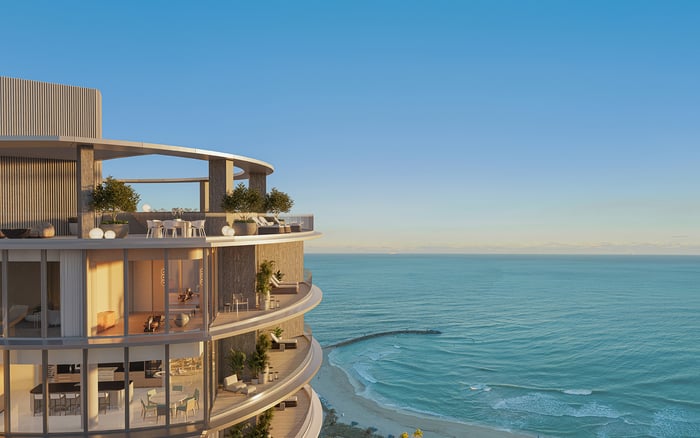
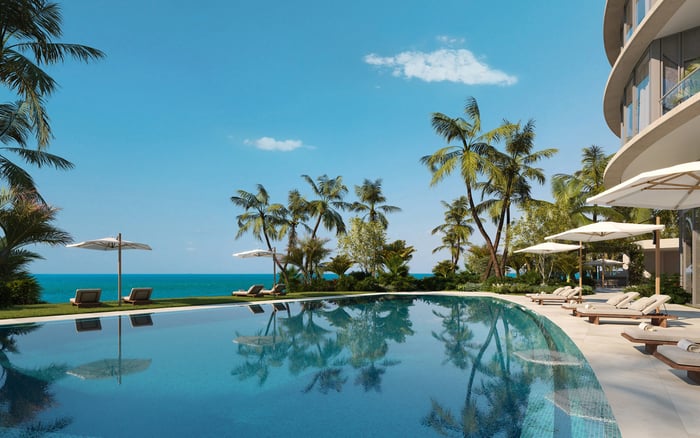
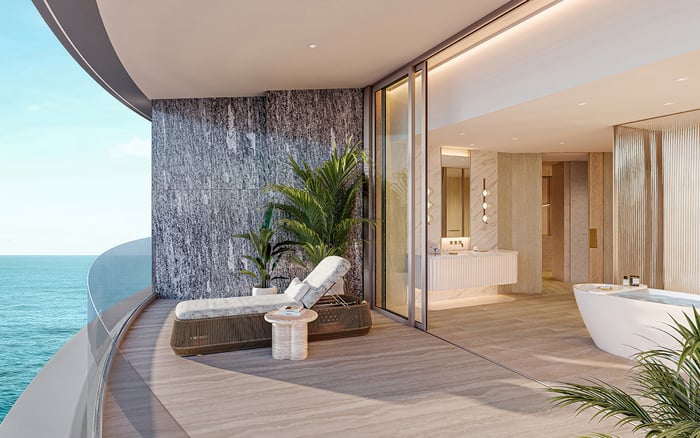
A buyer-focused look at why private-pool maintenance at Rivage Bal Harbour is not simply an amenity question, but a governance, insurance, and long-term cost issue.
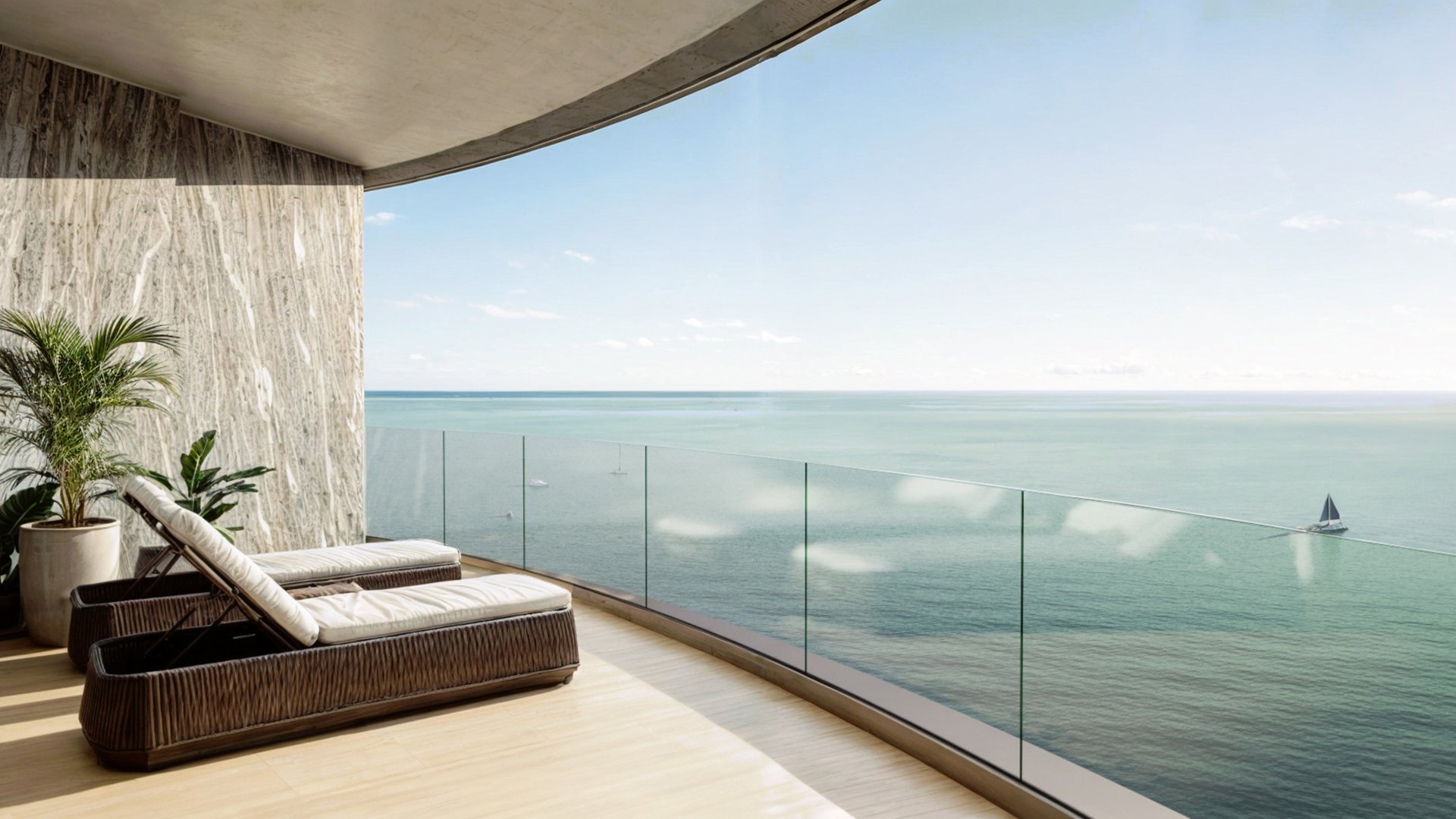
At Rivage Bal Harbour, the private or semi-private pool is more than a visual flourish. It expresses one of the most coveted ideas in South Florida condominium living: the feel of a waterfront estate translated into a full-service oceanfront tower. For buyers accustomed to single-family compounds, the appeal is immediate. A pool aligned with a private terrace, duplex residence, or penthouse-style layout suggests discretion, leisure, and control.
Yet the more refined the amenity, the more important the paperwork becomes. A residence-linked pool may feel personal, and it may be marketed around private use, but that does not automatically resolve ownership. In a condominium, the legal and financial classification of the pool can matter more than the visual experience itself.
For a buyer filtering by Bal Harbour, oceanfront exposure, pool access, terrace living, or penthouse-style privacy, the question is not simply whether the water feels private. The more durable question is who owns the pool, who maintains it, who insures it, and who pays when the system requires repair or replacement.
In ultra-luxury condominium design, a pool attached to an individual residence can fall into several categories. It may be treated as part of the unit. It may be a common element controlled by the association. It may be a limited common element, reserved for the use of one residence but still tied to the broader condominium structure.
That distinction matters because condominium ownership is layered. A buyer may control the interior residence, enjoy exclusive or semi-exclusive access to an adjacent terrace, and still share responsibility for structural systems, waterproofing, drainage, mechanical equipment, or building-envelope elements connected to the pool. The lived experience can be private while the legal reality remains collective.
This is why high-net-worth buyers should resist shorthand assumptions. “Private pool” is a lifestyle phrase. “Unit property,” “common element,” and “limited common element” are governance concepts. The first sells the dream; the others define the obligations.
Maintenance is only the opening line. A residence-linked pool can involve routine cleaning, chemical balancing, equipment service, tile work, waterproofing, leak detection, filtration, pumps, valves, heaters, terrace drainage, and long-term structural coordination. In a coastal tower, these items can be affected by salt air, wind exposure, humidity, and the constant performance expectations of a luxury building.
If the pool is classified as part of the unit, the individual owner may carry a broader maintenance burden. If it is a limited common element, the owner may have exclusive use but only partial control, with expenses allocated by the governing documents. If it is a common element, the association may oversee certain work, though cost allocation can still vary.
Insurance is another essential layer. Buyers should clarify whether the pool and related systems are covered through the association’s master policy, an owner’s policy, or a combination of both. The answer may affect premiums, deductibles, claims handling, and responsibility after a loss.
Replacement planning is equally important. A pool is not a static amenity. Equipment ages. Waterproofing systems have useful lives. Terrace assemblies can require specialized access. If the association is responsible, reserves and budgets matter. If the owner is responsible, the buyer should understand the expected lifecycle cost before closing.
The central ownership issue at Rivage Bal Harbour, as with comparable South Florida luxury towers, turns on the condominium declaration, exhibits, rules, maintenance provisions, insurance language, engineering design, and actual association operating practices. The brochure may describe the experience, but the declaration defines the regime.
Buyers should have counsel review whether the pool is included within the legal boundaries of the unit, attached to a terrace with exclusive-use rights, or embedded within building systems that remain under association control. The review should also address who has access for maintenance, whether the association may enter the terrace or pool area, and how emergency repairs are handled.
The most sophisticated buyers often ask these questions early, especially when purchasing through family offices, trusts, or entities. The goal is not to diminish the amenity. It is to ensure that the ownership structure aligns with the buyer’s expectations for privacy, control, and cost certainty.
Bal Harbour’s luxury market rewards scarcity. Oceanfront development opportunities are limited, and new towers compete through architecture, service, privacy, and signature amenities. In that context, a private-pool residence can become a powerful differentiator because it bridges two worlds: the vertical efficiency of a condominium and the intimate pleasure of a private estate.
Rivage Bal Harbour sits within that ultra-premium conversation, where buyers expect a high level of discretion and service. But the same buyers also tend to evaluate assets with institutional discipline. They understand that the true cost of ownership is not limited to the purchase price, association dues, and property taxes. It also includes the hidden mechanics of maintenance responsibility.
A private pool can add emotional value, daily convenience, and resale distinction. It can also introduce a specific category of legal and financial exposure. The difference lies in the documents, the engineering, and the practical administration of the building.
Before committing to a residence with a private or semi-private pool, buyers should obtain and review the condominium declaration and all relevant exhibits. The first issue is classification. Is the pool part of the unit, a common element, or a limited common element? The second issue is cost allocation. Who pays for routine care, repairs, replacements, insurance deductibles, and damage arising from leaks or failures?
The third issue is control. Can the owner select vendors, or must association-approved personnel perform the work? Are there restrictions on hours, access, equipment, or modifications? If a pump, drain, or waterproofing component is located behind a wall or beneath a slab, who controls access and who coordinates the repair?
The fourth issue is reserves. If any pool-related systems are maintained by the association, buyers should understand whether long-term funding accounts for those systems. If responsibility belongs to the owner, the buyer should consider a private capital plan for future equipment and waterproofing work.
Finally, insurance should be reviewed by professionals familiar with coastal condominium risk. A pool connected to a high-value residence is not a casual accessory. It is part of a larger risk profile involving water, structure, finishes, neighboring units, and common areas.
The strongest luxury purchases are made when emotion and diligence work together. A private pool at Rivage Bal Harbour may deliver the quiet glamour that defines the best of South Florida living. It may allow residents to step from an expansive terrace into the water without entering a shared amenity deck. It may make a condominium feel more like a private coastal residence.
But private enjoyment should not obscure shared infrastructure. The pool’s legal category can determine the owner’s future obligations for maintenance, repair, replacement, insurance, and access. For the global buyer, that question should be resolved before closing, not discovered after the first service issue.
At the most elevated end of the market, discretion is not only about privacy. It is about knowing exactly what has been purchased.
Does private use mean the pool is privately owned? No. A pool can be reserved for one residence while still being classified as a common or limited common element.
Why does pool classification matter? Classification can affect who pays for cleaning, repairs, replacement, insurance, and long-term structural obligations.
What documents should a buyer review? Buyers should review the condominium declaration, exhibits, rules, insurance language, and maintenance provisions.
Can the association control access to a private-use pool? It may, depending on the governing documents and whether building systems require association oversight.
Who pays for leaks or waterproofing issues? The answer depends on the pool’s classification, the location of the affected system, and the governing documents.
Are private pools common in ultra-luxury coastal towers? They are a notable feature in select high-end residences, often tied to terraces, duplex layouts, or penthouses.
Should buyers rely on marketing language? Marketing describes the lifestyle, but the governing documents determine ownership, cost allocation, and control.
Can insurance treatment differ from maintenance responsibility? Yes. Insurance coverage and maintenance duties can be handled separately and should both be reviewed carefully.
Is this mainly a legal issue or a financial issue? It is both. The legal classification can directly shape future operating costs and risk exposure.
When should this diligence occur? Buyers should resolve the pool ownership and maintenance question before closing, ideally before final contract commitment.
If you'd like a private walkthrough and a curated shortlist, connect with MILLION.
If branded residences are on your mind — as a home or as an allocation — we would be glad to share what we are seeing, privately.
Begin a quiet conversation