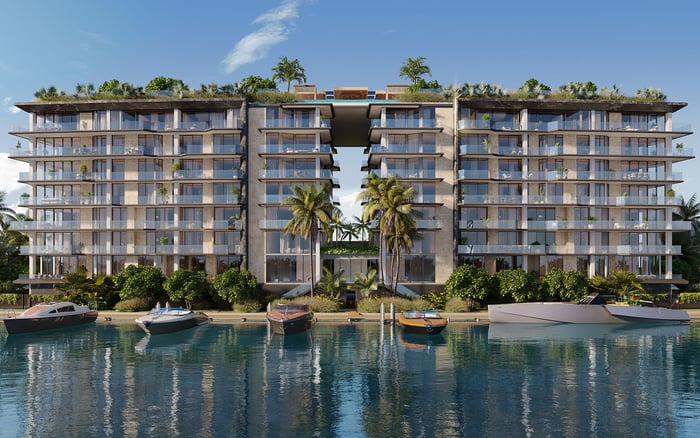
A discreet buyer’s framework for examining access control, surveillance, staffing, data governance, vendor entry, and ownership documents before committing to a Bay Harbor Islands residence.

For a luxury buyer, security is rarely defined by a polished lobby or a camera above the entrance. The more consequential question is how the entire building operates when residents, guests, household staff, contractors, deliveries, vehicles, and digital credentials intersect.
In Bay Harbor Islands, a careful acquisition should therefore include a privacy review alongside the customary legal, financial, and physical diligence. This is not about demanding theatrical levels of protection. It is about understanding who can enter, what information is collected, how exceptions are handled, and whether written rules align with daily practice.
A useful Bay Harbor search file should separate presentation from proof. Marketing may introduce the residence, but governing documents, written policies, management responses, and direct observation should shape the decision.
Security means different things to different owners. A second-home buyer who arrives intermittently may prioritize vacancy checks and credential management. A family may focus on children, caregivers, and recurring service providers. A public-facing principal may care most about identity exposure, visitor discretion, photography, and predictable arrival routes.
Before touring, define the people, property, routines, and information that require protection. Then rank plausible concerns: unauthorized entry, tailgating, package exposure, staff turnover, copied credentials, vehicle identification, unit access during an absence, or disclosure of residency. This turns an emotional subject into a practical checklist.
Request the current declaration, bylaws, rules, access policies, move procedures, renovation protocols, emergency plans, insurance materials, and relevant management forms. Counsel should determine which provisions are binding, which can change, and what remedies exist when rules are ignored.
Read specifically for guest authorization, vendor entry, deliveries, keys, lockouts, unit access, records, cameras, pets, private events, leasing, construction personnel, and after-hours incidents. Flag every undefined phrase. “Controlled access,” for example, is incomplete without knowing who controls it, by what method, and under which exceptions.
A buyer considering Alana Bay Harbor Islands or Onda Bay Harbor can use the project introduction as a starting point, then request the property-specific documents and written explanations appropriate to the transaction stage.
Walk the arrival sequence rather than simply admiring it. Examine pedestrian entry, vehicle approach, garage access, elevator transfer, loading areas, service circulation, stairs, amenity access, and the route from package receipt to the unit. Waterfront living also warrants questions about access from every edge of the property, without assuming that one controlled entrance governs all movement.
Ask management to explain, step by step, what happens when a guest arrives early, a driver changes, a vendor lacks identification, a credential fails, or someone follows a resident through a door. Observe whether staff address ambiguity consistently and discreetly.
Apply the same exercise when evaluating La Baia North Bay Harbor Islands. The objective is not to infer procedures from design, but to verify the relevant protocols directly before relying on them.
Modern access can involve mobile credentials, intercom profiles, license-plate records, visitor logs, camera footage, package notifications, and resident portals. Buyers should ask what information each system captures, where it is stored, who can view it, how long it remains available, and how access is revoked after staff or vendors depart.
Seek clarity on administrator privileges, password and multifactor requirements, credential sharing, lost-device response, software updates, third-party providers, incident notification, and deletion practices. If biometric tools are contemplated, legal and technical review becomes especially important. Convenience should never obscure the value of the underlying data.
For a new-construction candidate such as The Well Bay Harbor Islands, distinguish between planned systems and final, documented operating policies. A specification can describe capability; it does not, by itself, establish governance.
Technology cannot compensate for unclear authority. Ask who hires, trains, supervises, and replaces front-desk, security, maintenance, valet, and management personnel. Determine whether temporary staff receive different permissions and how credentials are recovered upon separation.
Vendor controls deserve equal scrutiny. Confirm how cleaners, caregivers, contractors, brokers, movers, and delivery personnel are enrolled, identified, escorted, logged, and removed. Owners should also understand emergency-entry procedures and who may authorize access to a residence when the owner is unreachable.
Boutique scale may feel intimate, but intimacy is no substitute for protocol. Buyers reviewing Origin Bay Harbor Islands should pose the same operational questions they would ask of a much larger property.
Discuss title, entity, trust, financing, insurance, mailing, and estate-planning decisions with qualified advisers before contract deadlines. The appropriate structure depends on the buyer’s circumstances, and privacy should not be pursued in a way that conflicts with disclosure, tax, lending, sanctions, association, or other legal obligations.
Inside the residence, consider separate networks for personal and connected devices, controlled permissions for household staff, secure document disposal, delivery preferences, and a written guest protocol. Building security is a shared layer, not a substitute for disciplined household practices.
Before committing, create a concise matrix listing each promised protection, its documentary basis, the responsible party, exceptions, unresolved questions, and the consequences of failure. Separate confirmed conditions from future intentions and verbal representations.
The strongest result is not a building described as “secure.” It is a residence whose procedures are understood, whose limitations are acceptable, and whose operating culture aligns with the owner’s life.
What should a buyer request first? Begin with governing documents, current rules, access policies, emergency procedures, and written management explanations relevant to the purchase.
Is a staffed lobby sufficient evidence of security? No. Review authority, training, coverage, escalation, credential controls, and exception handling.
How can buyers evaluate guest access? Ask management to demonstrate the complete process for expected, early, unlisted, and after-hours visitors.
What matters most about surveillance cameras? Confirm coverage, viewing privileges, retention, export authority, incident procedures, and deletion practices.
Should buyers test garage and elevator access separately? Yes. Each transition can involve different credentials, exceptions, service routes, and tailgating exposure.
How should household staff be handled? Use individualized permissions where available, limit access according to need, and establish prompt revocation procedures.
Do planned security systems deserve reliance? Treat them as proposals until specifications, delivery, testing, governance, and operating responsibility are confirmed.
Can ownership structure guarantee anonymity? No. Seek legal and tax advice, comply with required disclosures, and avoid treating privacy as secrecy.
What should an absentee owner prioritize? Clarify vacancy checks, emergency entry, leak response, credential suspension, package handling, and notification chains.
Who should review the final security picture? The buyer may need coordinated advice from legal, insurance, technology, and security professionals suited to the circumstances.
If you'd like a private walkthrough and a curated shortlist, connect with MILLION.
If branded residences are on your mind — as a home or as an allocation — we would be glad to share what we are seeing, privately.
Begin a quiet conversation