Ocean House Surfside’s planned arrival and valet amenities deserve a closer operational review. Before buying, confirm chauffeur waiting rights, vehicle staging rules, garage access, and the full procedure for an overnight pickup in writing.

For a buyer who travels with a chauffeur or regularly returns after midnight, the most consequential arrival amenity may be a clear operating procedure. A covered entrance matters. So does knowing where a driver can wait, who authorizes access, and how the resident reaches the correct vehicle without unnecessary exposure.
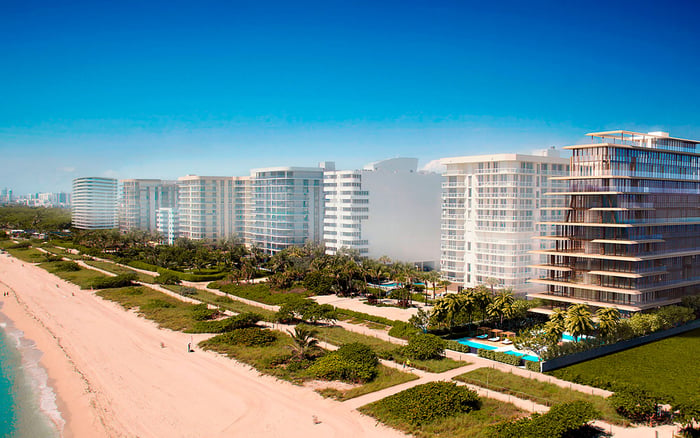
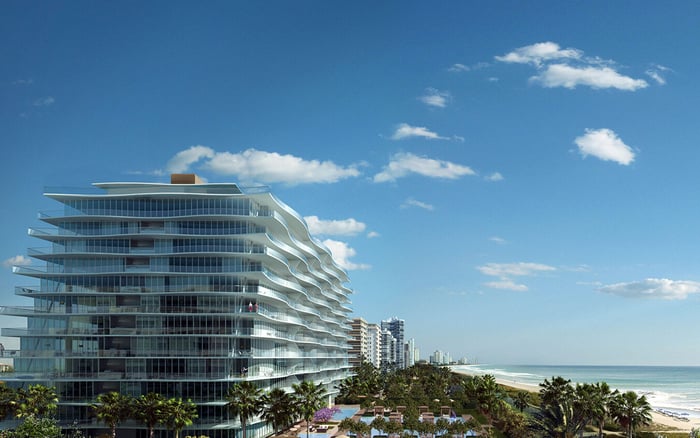
Ocean House Surfside is marketed as a pre-construction oceanfront condominium at 9309-9317 Collins Avenue, Surfside, FL 33154, with 25 residences. Its advertised plans include a landscaped arrival area, covered porte-cochère, double-height lobby, and garage with 24-hour valet service. These are meaningful design elements-not confirmation of chauffeur privileges or a secure overnight pickup protocol.
The buyer’s task is to distinguish the planned physical setting from the permissions and staffing that will govern it. An unresolved procedure is a diligence item, not evidence that the property is unsafe.
A 25-residence program does not, by itself, establish how many vehicles can wait simultaneously. The question is whether the arrival area can accommodate the buyer’s actual routine within the building’s rules.
Ask for an annotated arrival plan identifying passenger loading, valet handover, permitted waiting positions, and areas that must remain clear. Request the proposed vehicle capacity and time limits for each permitted position. Do not treat a porte-cochère as an extended waiting area unless that use is expressly authorized.
Test a realistic overlap: one household departing for dinner, another returning with luggage, and a private driver arriving early. Ask where each vehicle would go and who would manage the sequence. This is a scenario to test, not an assertion about future congestion.
If Fendi Château Residences Surfside is also on the shortlist, apply the same questions independently. A comparison is useful only when each property’s permissions are established on their own terms.
Where a car may wait and where its driver may wait are separate questions. The advertised plans do not establish a dedicated driver lounge, chauffeur waiting rights, or a maximum waiting period.
For a household retaining a regular driver, request written confirmation of whether the driver may remain in the vehicle, enter an approved interior waiting area, or leave the property between assignments. Clarify check-in requirements, restroom access, re-entry arrangements, and how the driver is contacted when the resident is ready.
Confirm vehicle staging separately. Ask whether an early-arriving driver may remain on site, whether the vehicle must be handed to valet, and what happens when an authorized waiting position is occupied. Distinguish a brief passenger pickup from an hour-long standby assignment.
Apply the same discipline when evaluating The Delmore Surfside: request property-specific rules rather than assuming an arrival feature carries a particular privilege. The objective is predictable service, not an informal exception that depends on who is working.
Ocean House’s advertised garage includes 24-hour valet service and electric-vehicle charging stations. Neither amenity establishes mandatory valet use, private-driver garage access, or permission to occupy a charging position while waiting.
Request separate answers for owner parking, guest parking, chauffeur access, and ride-share pickup. Confirm who may retrieve or move the resident’s vehicle, whether a regular driver can be preauthorized, and how authorization is withdrawn or updated. If self-parking matters to the household, verify it expressly. Valet availability alone does not establish whether its use is required or optional.
For an electric vehicle, ask about charging access, scheduling, and vehicle movement while charging. Treat these as unresolved operational details unless documented. Charging equipment alone does not explain how a chauffeur’s standby routine would work.
The advertised service program includes 24/7 front-desk reception/concierge and an on-site property manager. It does not establish the manager’s overnight presence, overnight staffing levels, or a dedicated security role. Electronic fob-controlled access is also advertised, without specifying privileges for private drivers or ride-share operators.
Ask the sales team to obtain a written walkthrough of a 1-3 a.m. departure. Begin with the resident inside the apartment and the driver approaching the property. The response should identify:
Who receives the driver’s arrival notification and confirms the resident’s authorization.
Where the vehicle waits before the resident leaves the building.
How the driver and vehicle are matched to the scheduled pickup.
Where the resident waits if the vehicle is delayed or cannot enter.
Who handles an unrecognized driver, a changed vehicle, or a missed connection.
Private elevators with separate residence foyers are advertised, but that feature does not establish a driver’s right to reach those foyers. Ask how the proposed pickup procedure preserves the boundary between common areas and residential access.
Keep the planned mailroom and package-receiving service a separate issue. Package handling does not establish delivery-driver admission rights. Each visitor category needs its own clearly defined access procedure.
Surfside has six municipal parking lots listed as open 24/7 and regulated by multi-space meters. Locations include 93rd Street and Collins Avenue and the 200 block of 93rd Street.
Those locations may help a driver plan, but their operating hours do not establish permission for commercial staging, available spaces, security coverage, or a safe nighttime walking route. Do not accept “the driver can wait nearby” as a complete operational answer.
If an off-site waiting arrangement is proposed, verify the applicable parking rules and the communication sequence for returning to the entrance. Assess the resident’s pickup route separately. Nearby parking should not be assumed to substitute for an authorized on-property passenger handover.
Before buying, assemble a concise arrival brief covering the household’s likely vehicle types, regular drivers, guest frequency, and late-night travel habits. Request written responses tied to the proposed parking and access rules, with unsettled details clearly identified.
Distinguish what is included in the purchase documents from what remains a proposed management practice. Have counsel review any driver or parking arrangement material to the purchase, including whether it can change and who has authority to approve exceptions.
The decision standard is straightforward: the resident should understand where the driver waits, where the vehicle stages, who controls admission, and what happens when the planned pickup fails. A polished entrance is valuable; a documented routine makes that value relevant to daily life.
For a discreet perspective on South Florida residences and buyer priorities, explore MILLION.
If branded residences are on your mind — as a home or as an allocation — we would be glad to share what we are seeing, privately.
Begin a quiet conversationIt is marketed as a pre-construction oceanfront condominium at 9309–9317 Collins Avenue, Surfside, FL 33154.
The advertised development has 25 residences. That count does not establish vehicle staging capacity or waiting availability.
The advertised plans do not establish a dedicated driver lounge. Buyers should request written confirmation of any permitted interior waiting area.
A covered porte-cochère is planned, but it does not establish permission for extended waiting. Confirm authorized locations and time limits separately.
No. The advertised service does not establish mandatory valet use, self-parking rights, or chauffeur garage access.
Yes, electric-vehicle charging stations are advertised. Access, scheduling, and vehicle-movement arrangements require separate confirmation.
No. Reception/concierge coverage is advertised, but dedicated security roles, overnight headcount, and pickup responsibilities are not established.
The advertised private elevators, separate foyers, and fob-controlled access do not establish driver access privileges. Request the specific authorization and access rules.
Their 24/7 hours do not establish permission for commercial staging, space availability, or security coverage. Verify parking rules before relying on an off-site waiting arrangement.
Request a written 1–3 a.m. walkthrough covering driver authorization, vehicle matching, waiting locations, staff responsibilities, and a fallback if the pickup cannot proceed.