The Delmore’s planned wellness amenities invite a closer look at the operating details behind the design. Buyers should seek written clarity on fitness access, trainer qualifications, and acoustic controls before treating those services as settled.
For an oceanfront residence, luxury is not simply a beautiful fitness room. It is the ability to use that room when desired, work with a trusted professional, and return to an apartment undisturbed by activity elsewhere in the building. At The Delmore Surfside, those everyday expectations deserve the same scrutiny as the architecture.
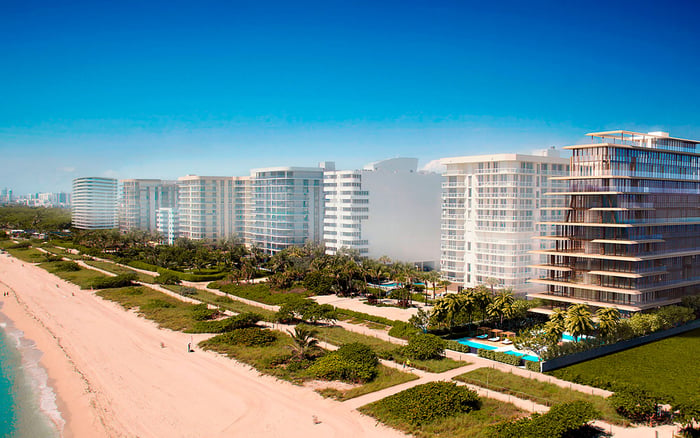
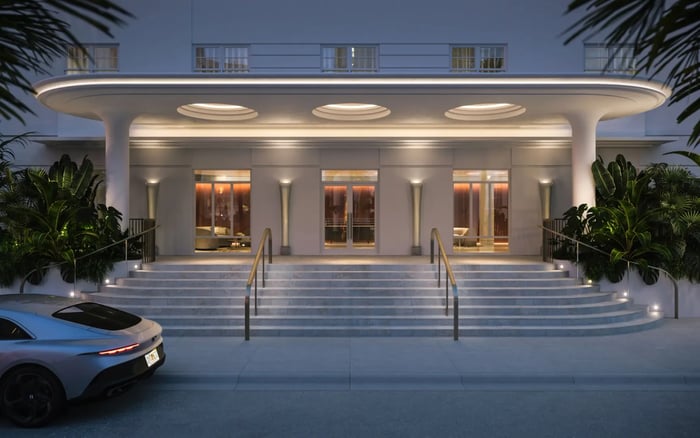
Planned for 8777 Collins Avenue in Surfside, the condominium is developed by DAMAC International and designed by Zaha Hadid Architects. The proposed 12-story building comprises 37 residences, including large full- and half-floor homes. Launch pricing began at approximately $15 million-a historical reference point, not a current availability quote.
The buyer’s task is to distinguish the planned amenities from the rules and technical provisions that will support them. A small residence count does not, by itself, establish unrestricted access, preferred appointment times, or acoustic privacy.
The planned amenity program spans more than 55,000 square feet and includes a fitness center, wellness spa, and residents-only restaurant. Wellness plans also encompass a 75-foot indoor lap pool, treatment rooms, movement-focused programming, and a 20,000-square-foot beachside meditation garden.
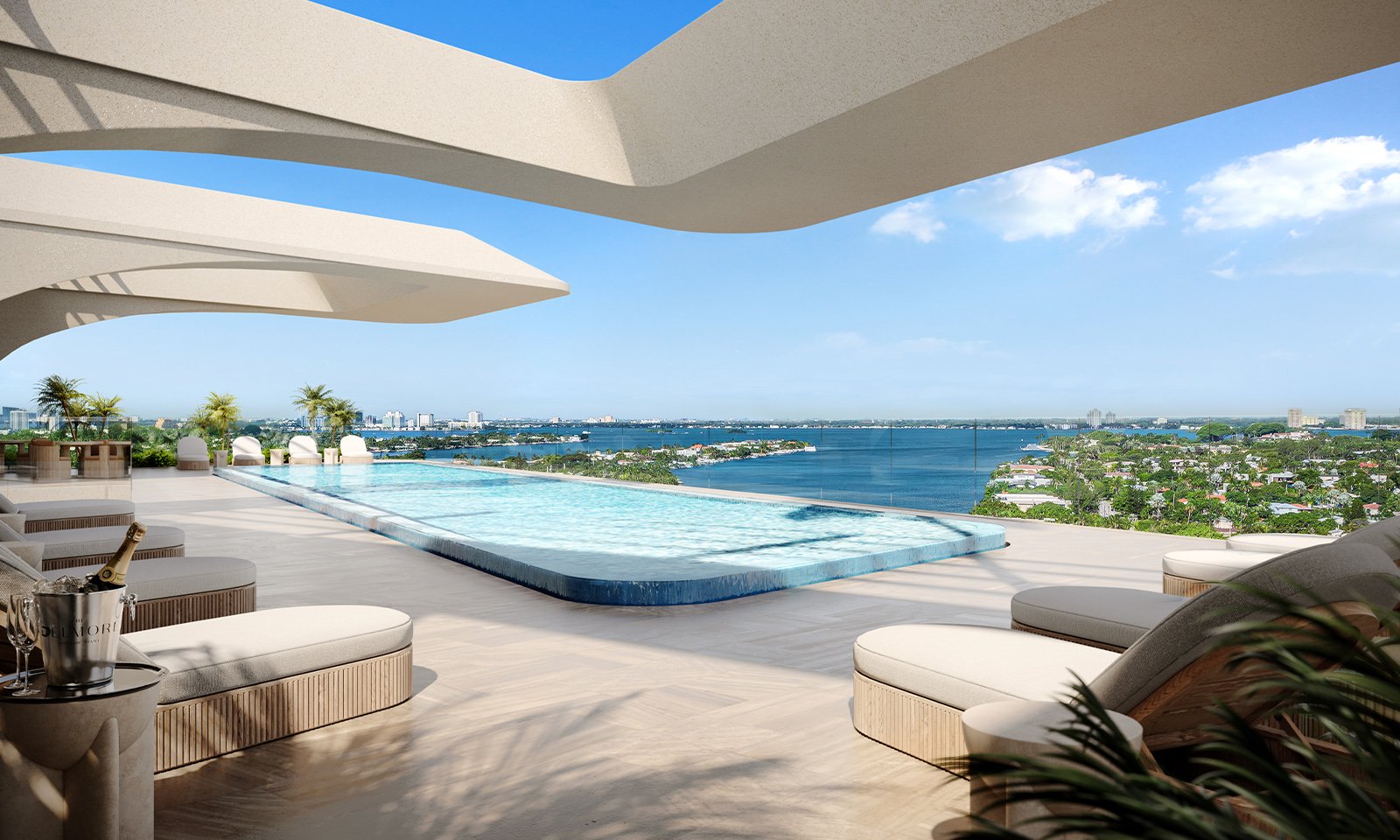
Separate plans call for a 75-foot transparent rooftop pool suspended approximately 125 feet above ground, bridging the building’s two wings. Buyers should distinguish the indoor lap pool from the suspended rooftop pool when requesting operating and engineering details.
These are planned facilities, not evidence of services already operating. Fitness reservation procedures, the operator’s identity, trainer credentialing requirements, and acoustic performance remain unverified. That does not mean policies or specifications do not exist; it means they should be requested rather than assumed.
For someone also considering Ocean House Surfside, the useful comparison rests on documentation: apply the same questions to each property without assuming equivalent services or operating standards.
Begin with a realistic week. If you prefer early workouts, a recurring private session, and occasional guest access, ask how each would be accommodated. An amenity description is not a booking procedure, and white-glove service language does not confirm concierge-managed reservations.
Request written answers covering:
The booking channel, advance reservation window, and limits on active appointments.
Whether residents, household members, and guests receive different scheduling priority.
Capacity limits for open fitness use, private training, and movement sessions.
Cancellation deadlines, no-show rules, waitlists, and applicable fees.
Whether recurring reservations are permitted and how competing requests are resolved.
Ask whether private instruction reserves equipment, a dedicated room, or part of the shared fitness floor. Each is a different access arrangement. Clarify whether scheduled programming would restrict independent exercise and whether any pool access would require a separate reservation.
The most revealing question is practical: what happens when two residents want the same instructor or space at the same time? Request the governing rule, not an informal assurance. If the operating manual is still in development, ask for a written account of what remains undecided and who will approve it.
Who will operate the fitness program, what minimum certifications trainers must hold, and whether outside professionals may enter remain unverified. Start with the operator’s identity and the party responsible for approving instructors. Then request the qualification standards.
A useful diligence package should address required certifications, verification procedures, insurance requirements, and emergency-response training. Ask who maintains those records and whether outside trainers must meet the same requirements as personnel engaged by the operator.
For a buyer with an established training relationship, permission to use an outside trainer may matter more than the breadth of programming. Clarify approval procedures, access hours, guest registration, charges, and whether permission can be withdrawn. Do not assume a personal invitation authorizes professional use of the facilities.
If The Well Bay Harbor Islands is also on your shortlist, bring the same credentialing questions to that review. The purpose is not to presume either property’s standards, but to compare written responsibilities rather than wellness terminology.
The Delmore’s architectural identity does not establish how sound and vibration will be controlled within a particular residence. STC/IIC targets, sound-isolation specifications, and pool and mechanical vibration-control details remain unconfirmed. Buyers should request the relevant acoustic specifications for the architecture and mechanical, electrical, and plumbing systems.
Make the inquiry residence-specific. Ask for plans showing the apartment’s relationship to fitness areas, treatment rooms, pools, elevators, and mechanical equipment. A full- or half-floor layout is not proof of acoustic separation from shared facilities.
The technical review should cover unit separations, fitness-floor impacts, amenity sound transmission, pool equipment, and elevator-related sound and vibration. Request the proposed assemblies and isolation measures, along with any specified testing or acceptance criteria. Have a qualified adviser interpret technical materials for the residence under consideration.
The suspended rooftop pool warrants precise questions, not a presumption of either disturbance or silence. Ask how its equipment and vibration-control provisions relate to the selected home, and distinguish those answers from the indoor pool’s specifications.
Finally, connect engineering to management. Seek written rules on fitness hours, amplified music, equipment use, and complaint escalation. Ask what verification is planned before occupancy and how any identified shortfall would be addressed. Review operating restrictions and construction details together; neither substitutes for the other.
A foundation permit was secured in August 2025. That milestone does not establish completion or operational readiness. The purchase review should therefore distinguish documented commitments from proposals.
Request the condominium declaration, rules and regulations, and amenity operating manual. Ask your advisers to reconcile those materials with written responses on reservations, outside trainers, and acoustic provisions. For documents still in draft, identify the version, approval status, and provisions subject to change.
Keep a concise record of each material question, the written answer, the responsible party, and the supporting document. Ask counsel to distinguish enforceable commitments from descriptive language. This matters particularly when a purchase decision depends on a specific routine, such as recurring private training or quiet use of a home near an amenity.
The Delmore’s planned wellness offering is substantial. Its value to an individual owner, however, depends on whether access, professional oversight, and acoustic provisions support that owner’s daily life. The strongest diligence turns attractive possibilities into clear, residence-specific expectations without mistaking unanswered questions for defects.
For a discreet conversation about evaluating South Florida residences, connect with MILLION.
If branded residences are on your mind — as a home or as an allocation — we would be glad to share what we are seeing, privately.
Begin a quiet conversationThe Delmore is planned at 8777 Collins Avenue in Surfside, Florida, as an oceanfront condominium.
DAMAC International is the developer, and Zaha Hadid Architects is the architect.
The project is planned as a 12-story building with 37 residences, including large full- and half-floor homes.
Plans include a fitness center, wellness spa, treatment rooms, movement-focused programming, a 75-foot indoor lap pool, and a 20,000-square-foot beachside meditation garden.
A booking platform, reservation windows, scheduling priority, and appointment limits remain unverified. Buyers should request written procedures, including fees and cancellation rules.
Outside-trainer access rules remain unverified. Buyers should request written permission requirements, approval procedures, access limits, and any associated charges.
Request the operator’s identity and written standards for certifications, insurance, qualification checks, and emergency-response training.
STC/IIC targets, sound-isolation specifications, and pool and mechanical vibration-control details remain unverified. Buyers should seek residence-specific plans and acoustic specifications.
No. The plans describe a 75-foot indoor lap pool and a separate 75-foot transparent rooftop pool suspended approximately 125 feet above ground between the building’s two wings.
Request the condominium declaration, rules and regulations, and amenity operating manual. Have advisers distinguish binding commitments from proposed or descriptive provisions.