For a Sunny Isles Beach residence, wine-storage due diligence should reach beyond the appliance specification. Written answers about backup circuits, delivery handoffs, storm shutdowns, and climate records help buyers understand how a collection would be managed.
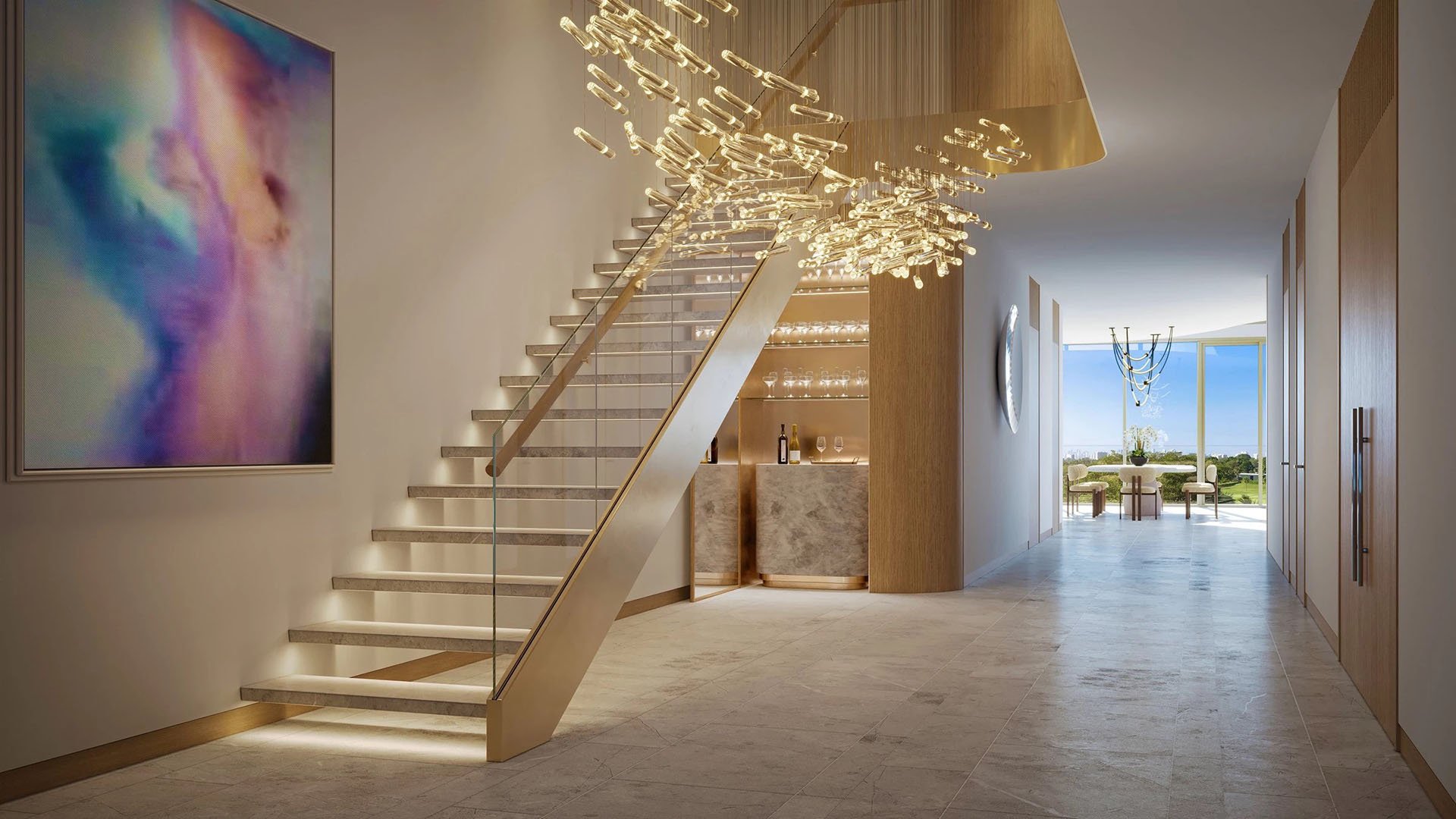
A beautifully integrated wine cabinet can feel entirely at home in a Sunny Isles Beach residence. For a buyer bringing a carefully chosen collection, however, the more consequential questions concern what the photograph cannot show: a utility interruption, a delayed delivery, an unattended alarm, or a planned mechanical shutdown.
The essential distinction is between having storage and understanding how it operates. A building generator does not, by itself, confirm backup power for an individual wine refrigerator. Nor does package acceptance confirm refrigerated receiving. Each requires a separate written answer.
When evaluating a residence at Jade Signature Sunny Isles Beach, focus the inquiry on the equipment and services associated with that residence. The project name is a starting point for due diligence, not evidence of any particular wine-storage protection.
Begin by identifying the proposed storage arrangement: a privately owned appliance, an installed cooling system, or space in a common wine room, if offered. Ask who owns, maintains, monitors, and authorizes repairs to each component. Do not let “building responsibility” substitute for a precise allocation of duties.
Hurricane planning for condominium buildings encompasses major physical-plant equipment and common amenities. That makes the boundary between common and private equipment particularly important. A plan addressing the building’s mechanical systems does not necessarily include every refrigerated space.
Request a written description of the storage arrangement, its service contact, and the procedure for access when the owner is away. If several parties share responsibility, ask management to identify who initiates a response-not simply who receives an alert. For a collection, an unambiguous handoff matters more than a general assurance of attentive service.
The opening question is not simply whether the building has a generator. It is whether the specific wine-storage equipment is connected to an emergency-backed circuit, and what supports that answer. Ask management or the appropriate technical professional to identify the equipment and explain its backup-power arrangement in writing.
Life-safety backup and individual-appliance backup are different categories. Elevator operation, emergency lighting, and other protected building functions do not establish that a residence’s wine refrigerator will continue running.
For a purchase under consideration at Armani Casa Sunny Isles Beach, request the same equipment-level explanation rather than relying on broad descriptions of building resilience. Useful follow-up questions include:
Does backup serve the complete cooling system or only selected components?
Is power transfer automatic, and is an interruption expected?
Can this load be disconnected when other equipment takes priority?
What runtime is anticipated under the stated operating load and fuel assumptions?
What testing or maintenance documentation is available for review?
Treat runtime as a building-specific answer, not a number that applies elsewhere. Ask the respondent to distinguish a design expectation from performance observed during a test or outage.
Backup capability does not settle the question of storm-time operation. Condominium associations may have authority to shut down elevators and air-conditioning equipment before and after a hurricane. Buyers should therefore examine planned shutdowns as well as unplanned power failures.
Request the hurricane action plan and ask whether it expressly addresses the cooling equipment in any common wine room. If storage is private, ask how building-level mechanical shutdowns could affect its operation. Seek an explanation of restart procedures, access restrictions, and who determines when equipment may resume service.
Shutdown planning can also involve generators, access gates, parking garages, and major mechanical systems. Ask how those decisions would affect access to stored wine or the ability to arrange an authorized response. Do not assume an emergency delivery or collection transfer would remain possible.
Keep legal categories separate, too. Hurricane-protection provisions for homeowners’ associations do not establish permission to install a permanent generator or fuel tank in a condominium residence. Any proposed owner-installed solution requires its own professional and association review.
Delivery diligence should establish the complete sequence, not merely confirm a receiving desk. For a residence being considered at Muse Residences Sunny Isles Beach, ask management to explain how a wine shipment would move from carrier arrival to the owner’s designated storage. Do not presume that wine-specific handling is offered.
Request written answers on accepted delivery windows, advance notice, shipment-size limits, signature procedures, and whether the owner or an authorized representative must be present. Confirm whether staff can accept the shipment at all and what happens if it arrives outside the permitted window.
Then address the interval between acceptance and handoff. Is refrigerated holding available? If so, what capacity and time limits apply, and who confirms space before dispatch? If not, ask where the shipment would wait and how promptly the recipient would be notified.
Clarify the procedure for visibly damaged packaging, a missed collection, or a delivery arriving during storm preparations. These are questions for management, not assumed services. Before scheduling shipment, seek written confirmation of the permitted handoff and identify the person responsible for completing it.
A current temperature display answers a narrower question than a record of conditions over time. Ask whether temperature and humidity are logged, where sensors are located, how frequently readings are captured, and whether records can be exported for review.
Requesting six to twelve months of available records is a useful way to frame the inquiry-not a statement that records exist or a legal retention requirement. If records are available, ask management to explain gaps, excursions, equipment changes, and any associated corrective action.
For a prospective residence at Turnberry Ocean Club Sunny Isles, apply the same distinction between a present reading and a documented operating history. Neither the existence of logs nor a particular monitoring service should be presumed.
Ask who sets alarm thresholds, who receives notifications, and what happens if the first contact does not respond. Also ask whether monitoring and notification continue during a power or communications interruption. The objective is to understand both the measurement and the response it triggers.
Before purchase, assemble the written equipment description, backup explanation, delivery policy, storm procedures, and available climate records into one review file. Have the appropriate professionals examine any unresolved technical or legal questions.
Separate the answers into confirmed arrangements, conditional services, and open questions. A promise to seek clarification is not confirmation of protection. Where an answer is conditional, record the condition and the person responsible for satisfying it.
The strongest outcome is not an assurance that nothing can go wrong. It is a clear understanding of what is powered, what may stop, who can act, and how the owner will know.
For a discreet conversation about your Sunny Isles Beach residence search, connect with MILLION.
If branded residences are on your mind — as a home or as an allocation — we would be glad to share what we are seeing, privately.
Begin a quiet conversationNo. Backup for life-safety equipment does not establish coverage for an individual appliance; request written confirmation for the specific cooling equipment.
Ask for the anticipated runtime under stated load and fuel assumptions. Clarify whether the answer describes a design expectation or performance observed during testing or an outage.
Ownership, maintenance, monitoring, and repair authority may involve different parties. Ask for a written allocation of responsibilities for the actual storage arrangement.
Condominium associations may have authority to shut down elevators and air-conditioning equipment around a hurricane. Ask specifically how planned shutdowns affect the wine-storage system.
Ask whether its cooling equipment is expressly addressed, including shutdown and restart procedures. General mechanical-system planning should not be treated as confirmation of coverage.
Do not assume so. Ask separately whether wine shipments are accepted and whether refrigerated holding is available, with any capacity or time limits.
Confirm delivery windows, notice requirements, signature procedures, holding arrangements, and the authorized recipient. Ask what happens with late arrivals, damaged packaging, or storm-related restrictions.
Six to twelve months of available temperature and humidity records is a useful interview request. It is not a legal retention requirement or confirmation that such records exist.
Ask about sensor locations, recording frequency, alarm thresholds, notification recipients, and escalation procedures. Clarify whether monitoring and notifications continue during power or communications interruptions.
Not automatically. Those provisions do not establish permission for a generator or fuel tank in a condominium residence; a proposed installation needs separate professional and association review.