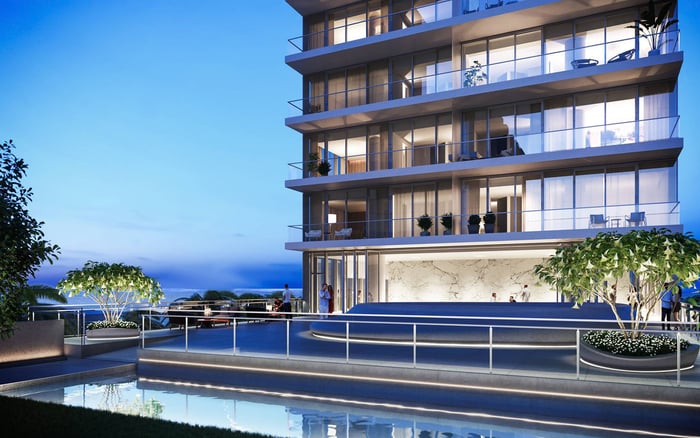
A buyer-focused review of the distinction between advertised amenities and enforceable access at 2000 Ocean, with practical diligence on guest accommodations, cancellation exposure, and peak-season use.
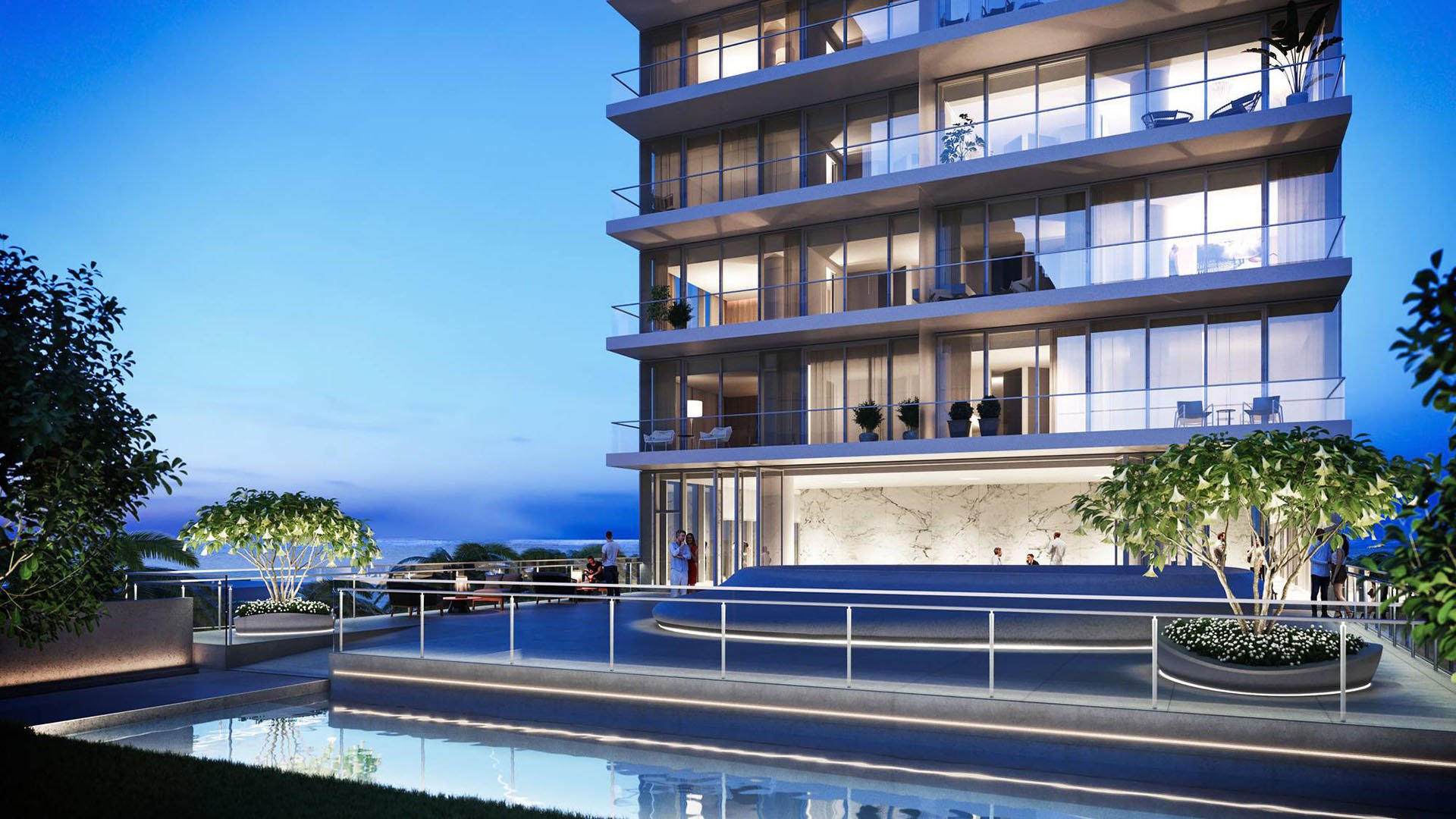
For a luxury condominium buyer, privacy is only part of the equation. The more revealing question is whether the building can accommodate the life you intend to lead: visiting family, holiday entertaining, and effortless beach days when your calendar allows. At 2000 Ocean Hallandale Beach, that assessment should distinguish the residence itself from the rules governing shared amenities.
The 64-residence oceanfront condominium stands at 2000 South Ocean Drive, Hallandale Beach, FL 33009. Residence types include half-floor residences, full-floor penthouses, and a duplex sky villa. The development is marketed as complete and ready for immediate occupancy. Half-floor residences are advertised with private elevator landings and east- and west-facing terraces.
Those features define the residential offering. They do not establish priority for guest accommodations or guarantee seasonal access. Publicly disclosed information does not establish guest-suite inventory, booking rights, or cancellation schedules. That gap should be resolved before signing; it is not proof that accommodations or governing policies do not exist.
Begin with the foundational question: does the condominium offer guest suites, and, if so, what may an owner reserve? Do not treat guest accommodations as an ownership entitlement without written confirmation of their existence, eligibility requirements, and operating rules.
Publicly disclosed information available for this assessment does not establish a formal guest-suite reservation priority. Preference by residence type also remains unverified. A penthouse purchase, a larger residence, or a private elevator landing should not be read as conferring an additional booking privilege.
Request a written policy identifying the number and type of accommodations, who may book them, permitted occupants, maximum stays, rates, taxes or additional charges, and advance booking windows. Ask management whether reservations are first-come, allocated by rotation, or governed by another system. These are questions to resolve, not descriptions of confirmed procedures.
If hosting is central to your purchase, test the policy against a realistic family visit. Ask how overlapping requests, wait lists, blackout dates, and repeat reservations would be handled. Establish whether the association can change procedures and how owners would receive notice. A favorable answer today is less useful if its durability is unclear.
There are two distinct financial risks: cancelling a guest accommodation reservation and cancelling the purchase itself. Neither schedule has been established here. Their consequences should not be conflated.
For guest bookings, request cancellation deadlines, no-show charges, early-departure terms, and any charge for releasing reserved dates. Clarify when payment is collected and whether a replacement booking affects refundability. If guest suites are confirmed, review the applicable written terms before making plans around them.
For the acquisition, have Florida condominium counsel review the purchase agreement, riders, disclosures, and escrow instructions. That review should address deposit refundability, applicable rescission rights, contingencies, notice requirements, default remedies, liquidated damages, and attorney-fee provisions. Do not assume that readiness for occupancy makes the contract more flexible.
Restrictions on advertised-unit offerings, deposits, and binding or nonbinding reservations until an offering plan is filed with the New York State Department of Law appear in the development's legal disclaimer. That language is not a Florida buyer-cancellation schedule. Counsel should determine which provisions apply to your transaction rather than treating a marketing disclaimer as a substitute for the executed agreement.
Advertised amenities include private beach access, attendant service, chaise lounges, umbrellas, and two swimming pools: an elevated oceanfront pool and a sunset pool/lounge area. Cabanas, a spa pavilion, fitness center, owner's lounge, and function rooms are also advertised, alongside concierge, valet parking, and 24-hour security.
The distinction is between an amenity's existence and access at your preferred time. Publicly disclosed information does not establish peak-season crowd controls, cabana allocation, guest limits, or owner-versus-renter access policies. It does not establish guaranteed availability during winter holidays, spring break, or other peak periods.
For a buyer also considering Turnberry Ocean Club Sunny Isles, the same diligence standard applies: compare written access terms rather than assuming an appealing amenity description answers the availability question. This is a framework for comparison, not a claim that the buildings operate alike.
Request holiday operating schedules and, subject to privacy limits, 12 months of reservation history. The aim is to understand whether your intended dates and hosting pattern fit the operating rules, rather than relying on a quiet-day tour.
Translate the amenity discussion into a specific visit. If relatives arrive during a holiday week, ask whether they may use beach services, pool areas, cabanas, and function rooms, and whether the owner must accompany them. Request registration requirements, occupancy limits, fees, and reservation procedures in writing.
Ask how temporary closures, maintenance, or changes to operating hours are communicated. None of these questions presumes that a particular restriction exists. They distinguish an available service from one on which your itinerary depends.
Buyers weighing Shell Bay by Auberge Hallandale alongside 2000 Ocean should apply the same household-specific questions to each property. Separate written answers are essential; one development's arrangements should never be assumed to apply to another.
A second home may be intended solely for private use, but rental rules still matter when assessing occupancy and amenity eligibility. For Unit 11B, the stated maximum of four rentals per year and minimum stay of 30 days remain unverified. They are not an established governing-document provision and require confirmation with the association before reliance.
Request the applicable leasing rules, approval procedures, and amendments. Separately confirm whether tenants and their guests have the same amenity eligibility as owners. An unverified rental limit does not establish how seasonal demand is managed or whether an owner receives booking preference.
Before signing, assemble the purchase agreement, riders, disclosures, escrow instructions, condominium declaration, bylaws, rules, budget, and amendments. Pair counsel's contract review with management's written explanation of guest accommodations and seasonal amenity procedures. Treat verbal assurances as points to document, not settled rights.
The decision is not whether every amenity must be available without restriction. It is whether the verified terms support your intended lifestyle and whether you are comfortable with the remaining uncertainty. If holiday hosting depends on unconfirmed guest accommodation, plan an alternative before allowing that expectation to shape the purchase.
For a discreet perspective on South Florida residences and the questions that shape a considered purchase, explore MILLION.
If branded residences are on your mind — as a home or as an allocation — we would be glad to share what we are seeing, privately.
Begin a quiet conversationIt is a 64-residence oceanfront condominium at 2000 South Ocean Drive, Hallandale Beach, Florida. Residence types include half-floor residences, full-floor penthouses, and a duplex sky villa.
Publicly disclosed information does not establish guest-suite inventory or availability. Obtain written confirmation before treating guest accommodations as part of the ownership offering.
Priority by residence type remains unverified. A penthouse or private elevator landing does not itself establish a booking privilege.
Cancellation deadlines, no-show charges, and booking-release penalties have not been publicly established. Request the applicable written terms if guest accommodations are confirmed.
No. Accommodation booking charges and purchase-contract cancellation or deposit forfeiture are separate issues requiring separate review.
No Florida buyer-cancellation schedule is established by the cited disclaimer language. Have Florida condominium counsel review the agreement and provisions applicable to your transaction.
Advertised offerings include private beach access, attendant service, chaise lounges, umbrellas, and two swimming pools. These descriptions do not establish guaranteed availability on particular dates.
Publicly disclosed information does not establish guaranteed access during winter holidays, spring break, or other peak periods. Request operating schedules and allocation policies.
Four rentals per year and a 30-day minimum stay have been reported for Unit 11B, but remain unverified listing information. Confirm the applicable restrictions with the association before relying on them.
Request the purchase agreement, riders, disclosures, escrow instructions, declaration, bylaws, rules, budget, and amendments. Also seek written guest-accommodation and seasonal amenity policies.