A buyer-focused review of 2000 Ocean’s ownership considerations, separating its private-access design and services from the written authority, access arrangements, vendor approvals, and insurance terms worth confirming before purchase.
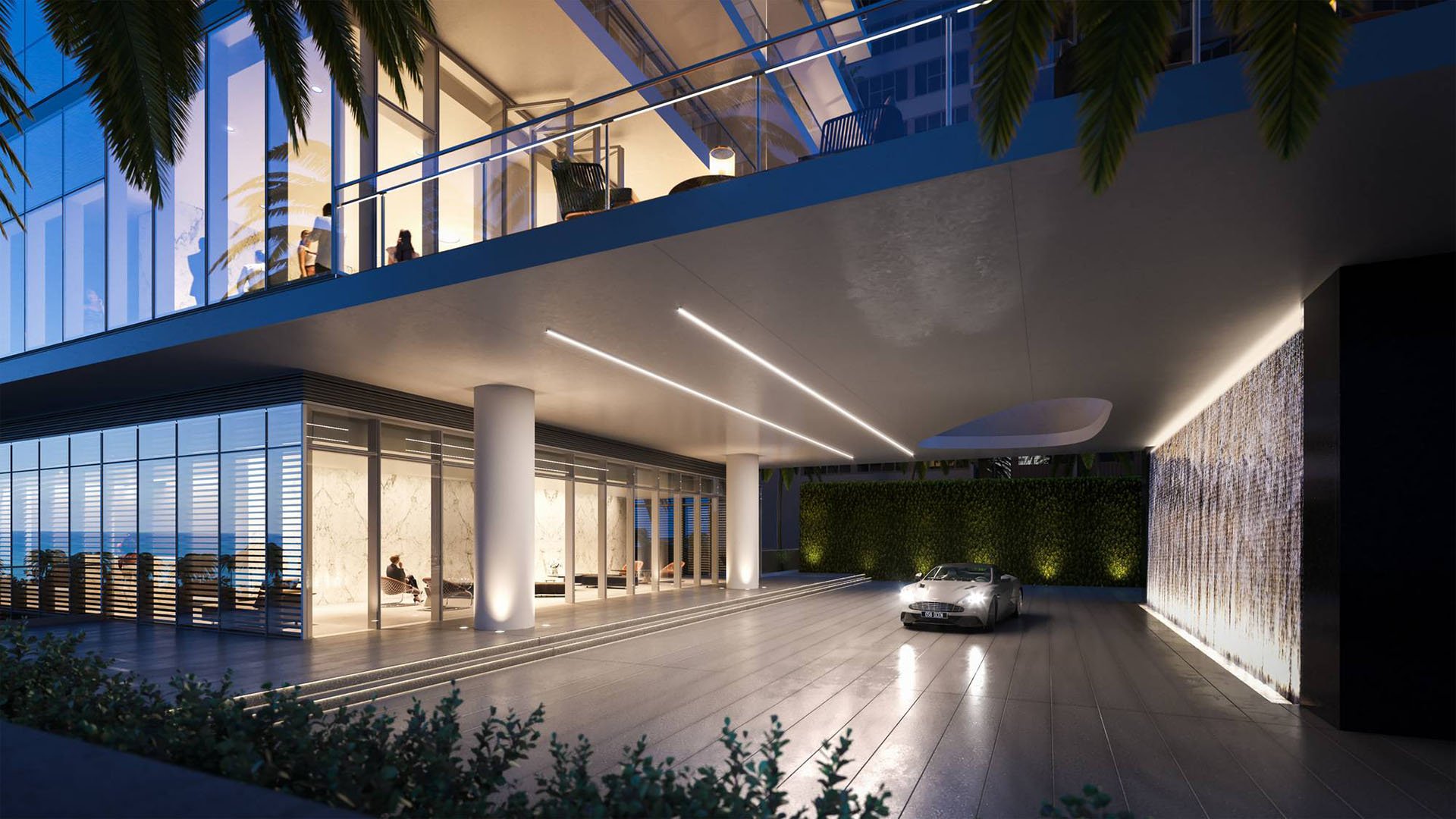
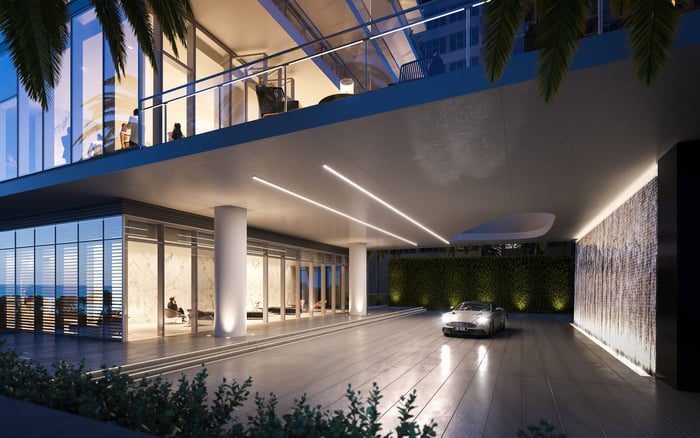
At 2000 Ocean Hallandale Beach, the ownership proposition pairs oceanfront living and 64 residences with a 24-hour doorman, valet parking, round-the-clock security, and full-time concierge service. The condominium stands at 2000 South Ocean Drive, Hallandale Beach, FL 33009. Construction was completed in March 2022.
For a buyer, however, the practical test extends beyond arrival service. After a storm, who may authorize an inspection, how can an absent owner’s residence be accessed, and what must happen before a contractor begins work? Resolve these questions in writing rather than infer the answers from the building’s staffing or architecture.
The distinction is fundamental: a service offering does not establish emergency authority. Buyers should evaluate the residence and its operating documents together, without treating the building’s age as reassurance against substantial repairs.
Start with the declaration, bylaws, current rules, and hurricane plan. Ask management to identify the provisions governing post-storm inspections and explain who authorizes each stage. Separate permission to inspect from permission to perform repairs, permit re-occupancy, or reopen amenities.
A useful written response should address:
Who initiates a common-area inspection and determines its scope?
Who authorizes entry into an individual residence, and under what circumstances?
Who engages qualified professionals and receives their findings?
Who determines re-occupancy and amenity reopening, including any applicable public-authority role?
Request the communication procedure as well: who contacts owners, how findings are delivered, and where inspection documentation is retained. These are due-diligence questions, not confirmed 2000 Ocean procedures or statements of Florida law.
The objective is to understand the decision sequence. Ask how owner communications would distinguish an initial observation from a professional assessment and authorization for corrective work. A statement that the property has been “checked” should prompt clarification of what was examined and what remains unresolved.
2000 Ocean’s residences are served by biometrically controlled private elevators. That feature supports privacy and the arrival experience; it does not establish management’s legal authority to enter a home or explain how emergency access works.
An owner who travels frequently should request written clarification of entry circumstances, notification procedures, and access arrangements. Ask how the process differs when the owner is reachable, unavailable, or has designated a local representative. Have counsel review the relevant provisions rather than assume that a concierge instruction or informal authorization resolves every situation.
Clarify how an entry would be recorded. Ask whether documentation identifies the people entering, the purpose, the time, the areas inspected, and any observations or photographs shared with the owner. Confirm what instructions can be placed on file and how to update them.
For buyers also considering Jade Signature Sunny Isles Beach, use the same document request rather than assume that different private-access settings operate under equivalent rules. Compare written arrangements, not presumed levels of emergency service.
A contractor’s availability and the association’s authorization to admit that contractor are separate matters. Before relying on a preferred vendor, obtain management’s current requirements and ask how they apply after a storm.
Request the exact certificate-of-insurance requirements, coverage limits, additional-insured wording, licensing documentation, and approval steps. Clarify who reviews submissions, how acceptance is communicated, and whether any emergency-work procedure differs from ordinary scheduling. Do not assume that an existing relationship with an owner substitutes for association approval.
Then address physical access: service-elevator reservations, permitted work hours, delivery arrangements, and restrictions affecting equipment or materials. Ask whether post-storm conditions could change those arrangements and who would communicate changes. Staffed security alone does not establish a mandatory vendor check-in process or guarantee immediate mobilization.
For an absentee owner, consider assembling a contact sheet for management, the authorized representative, the insurer, and preferred contractors. Keep it aligned with management’s written requirements. This is a preparation measure, not evidence that a vendor has been approved or will be available when needed.
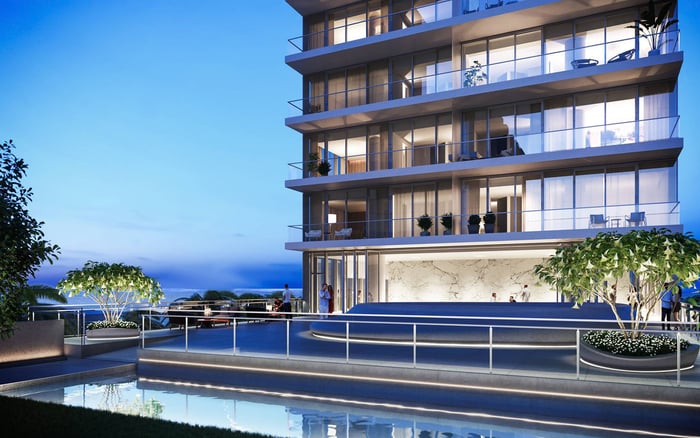
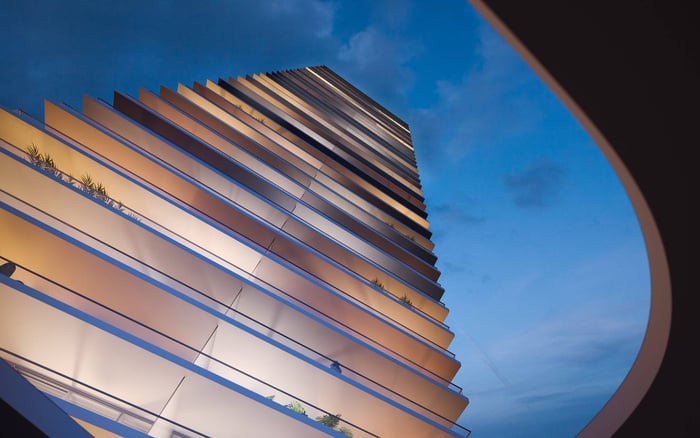
Each residence has an eastern oceanfront terrace and a western garden-facing terrace. Home types include half-floor residences, full-floor penthouses, and a duplex sky villa with a private pool deck. Buyers should ask how inspection scope and repair responsibilities account for their particular residence configuration.
Shared outdoor spaces include two swimming pools-one oceanside and one west-facing-along with Sasaki landscaping and a sculpture garden. The property also offers private beach access with dedicated service and an outdoor bar. A freestanding spa pavilion includes a Hammam steam bath, treatment facilities, an ice room, and a yoga studio.
Treat these as distinct reopening questions. Ask who assesses each area, what conditions must be satisfied before use resumes, and how restrictions would be communicated. Access to a residence does not confirm that the pools, beach facilities, gardens, or spa are available. Avoid building a return itinerary around an assumed reopening timetable.
Monthly association-fee reference figures range from $4,700 to $9,579, with a figure of $4,734 for Unit 10B. These are reference points, not a current building-wide quotation. Confirm the amount for the specific residence against the current budget and association documentation.
Fee inclusions encompass common areas, structure maintenance, pools, sewer, security, trash, and water. They do not constitute a storm-repair responsibility schedule.
Review the master insurance policy, deductibles, unit coverage, governing documents, and potential assessment exposure with appropriate advisers. Ask how responsibility would be evaluated for the components relevant to your home, including terraces and interior finishes. Distinguish responsibility for arranging work from responsibility for paying for it; neither should be inferred solely from a monthly fee description.
If Auberge Beach Residences & Spa Fort Lauderdale is also on the shortlist, apply the same written checklist without presuming that its policies match 2000 Ocean’s. A useful comparison places inspection authority, absent-owner access, vendor approval, and insurance allocation alongside the more visible differences between residences.
Before committing, seek a coherent set of documents and responses that your attorney and insurance adviser can review together. The ownership advantage to look for is clarity: knowing who can act, what authorization is needed, and how you will be informed when circumstances are unsettled.
For a considered approach to South Florida residential ownership, explore MILLION.
If branded residences are on your mind — as a home or as an allocation — we would be glad to share what we are seeing, privately.
Begin a quiet conversation2000 Ocean is an oceanfront condominium at 2000 South Ocean Drive, Hallandale Beach, FL 33009.
The development contains 64 residences. Home types include half-floor residences, full-floor penthouses, and a duplex sky villa with a private pool deck.
Construction completion dates to March 2022. That date should not be treated as evidence that substantial repairs are unlikely.
No. Biometrically controlled private elevators are an access feature, not proof of management’s legal authority to enter a unit.
Request the declaration, bylaws, current rules, and hurricane plan. Ask management to identify who authorizes inspections, determines re-occupancy, and approves amenity reopening.
Obtain written clarification of entry circumstances, notification procedures, representative arrangements, and inspection documentation. Have counsel review the relevant provisions.
Request exact insurance, additional-insured wording, licensing, and approval requirements. Also clarify service-elevator reservations, permitted work hours, and any emergency-work procedures.
No such assumption should guide a return plan. Ask who assesses each amenity and what conditions must be satisfied before reopening.
Published figures range from $4,700 to $9,579 monthly, with Unit 10B listed at $4,734 monthly. Confirm the current amount for the specific residence against the budget and association documentation.
No. Review governing documents, the master policy, deductibles, unit coverage, and potential assessment exposure rather than relying on a fee summary.