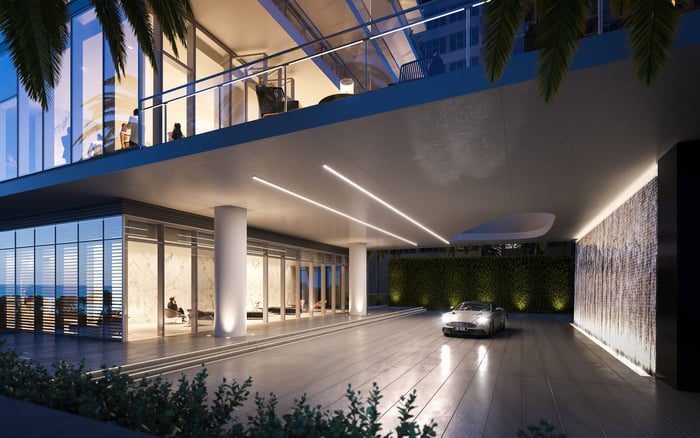
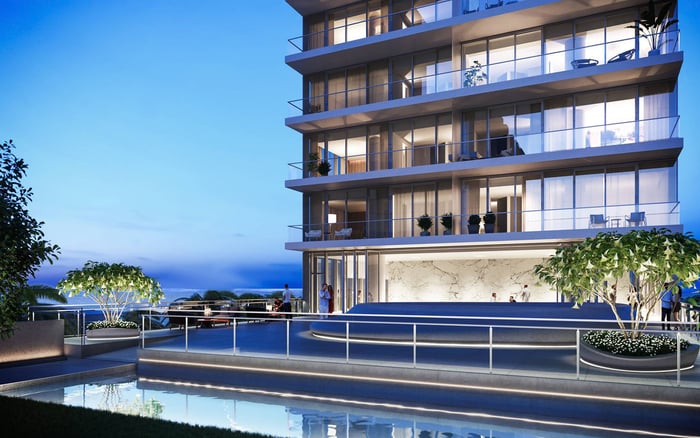
At 2000 Ocean, an elegant service offering should be evaluated separately from occupancy rights. Before purchasing, buyers should confirm extended-guest rules, management authority, independent amenity access, and the controls available to an absent owner.
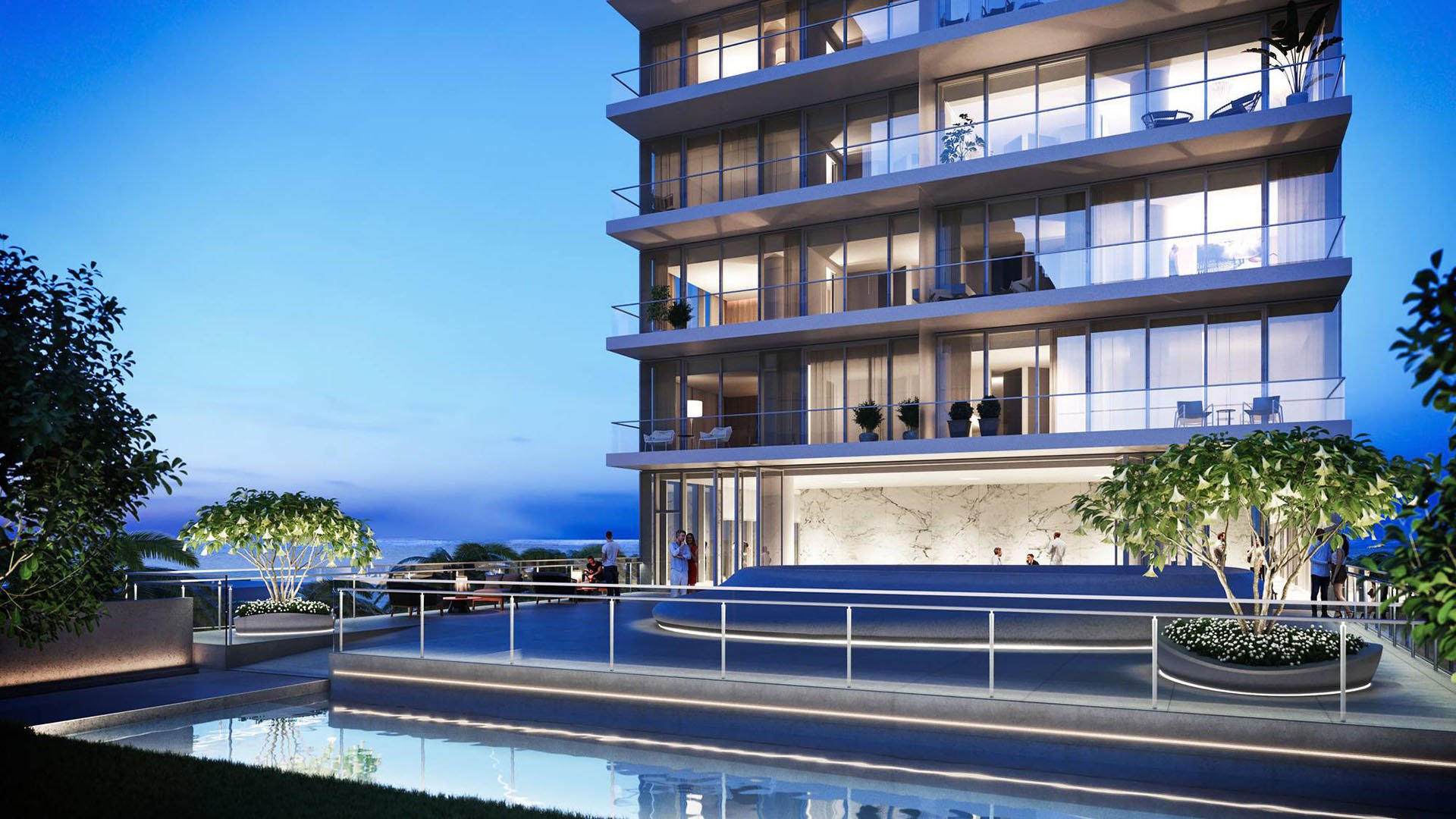
At 2000 Ocean Hallandale Beach, the appeal is clear: half-floor residences, full-floor penthouses, and one duplex sky villa, each with private eastern oceanfront and western garden-facing terraces. Located at 2000 South Ocean Drive, Hallandale Beach, Florida 33009, the property's service offering includes concierge service, private arrival, full-service valet parking, 24-hour security, and a 24-hour lobby attendant.
For a buyer who travels frequently or welcomes family for extended visits, however, the purchase decision rests on something less visible: whether the building's governing arrangements support the intended way of living. A staffed lobby is not, by itself, permission for a relative to occupy the residence independently. Concierge service does not define a manager's authority to override an owner's instructions.
The service offering does not establish occupancy rights. Those rights deserve the same attention as the residence's plan and outlook.
Begin with written definitions of guest, occupant, household member, and tenant. Ask how the association classifies an adult child visiting alone, a parent staying for several weeks, or a friend using the residence while the owner is abroad. These are scenarios to test, not established permissions.
Request the maximum consecutive stay, any cumulative annual limit, registration requirements, approval procedures, and the applicable notice period. Determine whether the owner's presence changes the classification and whether unpaid occupancy can fall within leasing restrictions. Do not assume that the absence of rent settles the question.
A useful written response should identify the governing provision, the person authorized to approve the arrangement, and any conditions attached. If an exception is possible, ask whether it is discretionary, how long it lasts, and whether it must be renewed. An informal welcome should not become a purchase assumption.
The amenity offering includes private beach access, beach attendants, chaise lounges, umbrellas, two pools, pool service, and a poolside café. Wellness facilities include a spa pavilion, fitness facilities, a yoga room, an ice room, and a massage room. Shared spaces include an owners' lounge, function rooms, curated gardens, and a library.
That offering does not establish extended guests' entitlement to these spaces or any owner-presence conditions. Ask separately about the beach, pools, wellness areas, and reservable rooms. Permission to stay in a residence is not confirmation of unrestricted amenity use.
Clarify guest counts, booking rights, identification requirements, charges, and accompaniment rules. For an owner hosting family while traveling, the practical question is whether that family can use the intended facilities independently-not simply whether the facilities exist.
Clarify what “house manager” means in the proposed arrangement: the building's management representative or a professional retained privately by the owner. Neither role should be assumed to carry unrestricted authority over access or occupancy.
For building management, obtain the management agreement, if available, or a written summary of authority. Ask who may approve guests, deny entry, issue credentials, deactivate access, enforce rules, admit contractors, hold keys, or arrange emergency entry. Concierge and security services do not, by themselves, establish those powers.
For an owner's private manager, establish which instructions the association will accept and what supporting authorization it requires. Can that person register a visitor, coordinate repairs, or retrieve keys? Where does authority stop?
Request the escalation route when an owner's instruction conflicts with a staff decision. Knowing who makes the final determination-and how to seek review-is more useful than a general assurance that the team will accommodate requests.
The description of facial-recognition elevator access for the building and individual residences, including Unit 30B, does not establish an extended guest's entitlement to enrollment or independent elevator use.
Ask who authorizes enrollment, whether credentials expire, and how access is removed after a visit. Confirm the alternative entry process for someone not enrolled, along with procedures for lost credentials or interrupted access. If biometric enrollment is proposed, request the applicable privacy and deletion policies rather than assuming their terms.
Parking and valet require separate answers. Establish whether an approved guest may retrieve a vehicle, receive deliveries, or admit a service provider without the owner present. A clear written access plan should connect the entrance, elevator, residence, and amenities without relying on discretionary exceptions at each point.
An absentee-owner plan should identify who can act locally and precisely what that person can authorize. Ask whether the association accepts a designated representative or a limited power-of-attorney agent, and have counsel review the proposed scope. Those arrangements remain to be confirmed.
Request procedures for urgent maintenance, contractor entry, key custody, emergency notifications, and communication with an owner in another time zone. Confirm how to replace the representative and revoke access when a private management relationship ends.
Put a concrete scenario to management: the owner is overseas, a registered family member is staying, and a repair requires entry. Who receives notice, who grants access, and who documents the visit? The answer should distinguish routine coordination from emergency authority. A service-rich building can still require explicit instructions for each role.
The stated monthly association fee for Unit 31A is $4,760, with association management, amenities, common areas, and cable TV among the specified coverage. Treat that as a unit-specific figure, not a building-wide quotation or confirmation of today's charges for another residence.
For Unit 19A, the entries include “Guest Accommodations: No,” “Application Fee Required,” and “Other Fees: $150.” These fields do not establish a prohibition on private guests or explain which applicants and circumstances trigger the charges.
Request the current fee schedule and written clarification of any registration, application, credential, parking, or amenity charges relevant to your plans. Separately review current financials, insurance information, assessment disclosures, and an estoppel certificate. Understand recurring ownership costs and guest-related costs independently before relying on a total operating budget.
Request the declaration, bylaws, house rules, amendments, and relevant board minutes. Ask management to tie material answers to those documents, and have the buyer's attorney resolve any inconsistency between a written response and the governing language. Discuss a document-review contingency and applicable cancellation rights rather than assuming the desired arrangements are guaranteed.
If the search also includes Shell Bay by Auberge Hallandale, use the same occupancy scenarios as a comparison framework. For Turnberry Ocean Club Sunny Isles, repeat the exercise without transferring any conclusion about guest rights or management powers from another property.
The decision is not whether a residence feels accommodating during a showing. It is whether the documented rules support your family's actual pattern of arrival, absence, and use. Resolve those questions while purchase protections can still be discussed, not after keys are delivered.
For a discreet perspective on matching residence ownership to your South Florida lifestyle, connect with MILLION.
If branded residences are on your mind — as a home or as an allocation — we would be glad to share what we are seeing, privately.
Begin a quiet conversation2000 Ocean is located at 2000 South Ocean Drive, Hallandale Beach, Florida 33009.
The supplied marketing materials do not establish stay limits, registration requirements, or owner-presence conditions. Request the current governing rules and written confirmation of your proposed arrangement.
That permission is not established by the supplied materials. Confirm how the association classifies unaccompanied occupancy and whether it requires approval.
No. The advertised service does not establish who may approve visitors, deny entry, or deactivate credentials.
Independent guest use is not established by the supplied materials. Ask for separate written rules covering beach, pool, and wellness access.
No. Facial-recognition elevator access is described in marketing, but extended guests' enrollment rights and independent access are not established.
The supplied materials do not establish the scope of that authority. Confirm which representative arrangements the association accepts and what each representative may authorize.
That listing field alone does not establish a prohibition on private guests. Ask the association to clarify its meaning and the applicable occupancy rules.
No building-wide fee is established by that figure; it appears in the supplied Unit 31A listing. Confirm current charges for the specific residence under consideration.
Ask counsel to review governing documents, occupancy provisions, representative authority, and relevant financial disclosures. Discuss a document-review contingency and applicable cancellation rights.