A buyer-focused examination of private arrivals, elevator access and service circulation at two Surfside residences, with practical steps to distinguish architectural privacy from current management policy.
For a luxury residence in Surfside, privacy extends beyond a private elevator foyer. It encompasses the sequence from vehicle arrival to the apartment threshold: who admits a visitor, which elevator that person may use, where household staff circulate, and whether deliveries cross the principal residential route. The essential distinction is between architecture that supports separation and management rules that enforce it.
At The Surf Club Four Seasons Surfside and Fendi Château Residences Surfside, advertised features provide meaningful foundations for discreet arrivals. They do not, on their own, establish complete resident-guest separation. A purchaser should assess the residence alongside the permissions, staffing and exceptions that govern daily use.
The objective is not an inaccessible building. It is a clear understanding of how hospitality and controlled access coexist-when an owner is away, a guest arrives early or several service providers require entry.
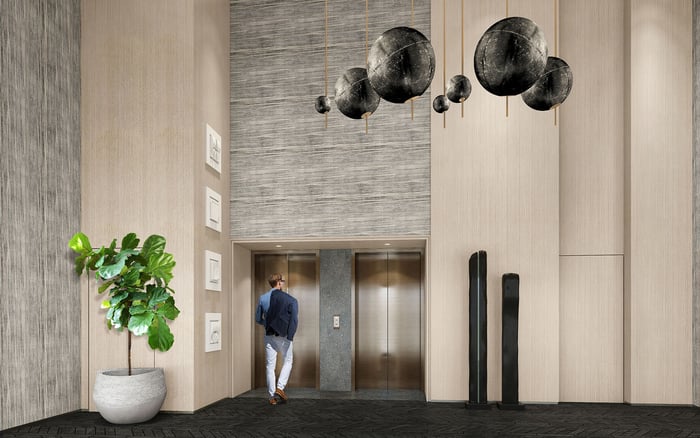
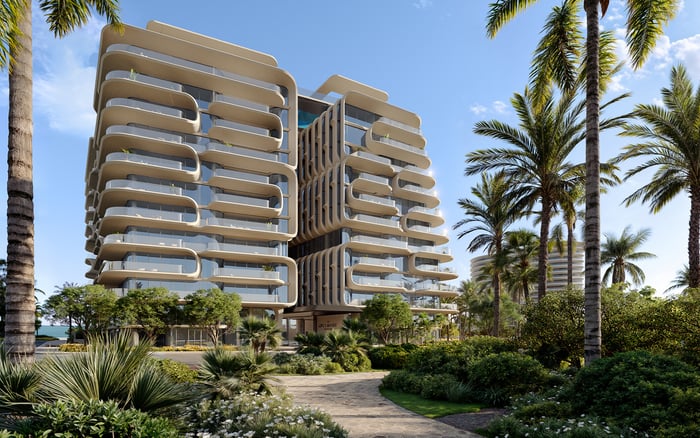
The Surf Club occupies 9011-9111 Collins Avenue. Its advertised provisions include a dedicated private arrival and valet entry for each building, electronic access to all elevators and garage doors, and private elevator lobbies for each residence. Private elevator entrances through a dedicated residential elevator core add another architectural layer of privacy.
These features warrant a route-by-route inspection. Begin at the vehicle drop-off, continue through the arrival space, and follow the connection to the residential elevator. Ask management to identify any shared lobby, connecting door or crossover with hotel and club circulation. Assess the dedicated residential core together with the controls that govern access to it.
Private self-parking is offered in select residences alongside valet service. Confirm whether it applies to the apartment under consideration and how the parking route reaches the private lobby. Electronic access alone does not establish which floors a credential permits, whether visitors require an escort or how temporary permissions expire.
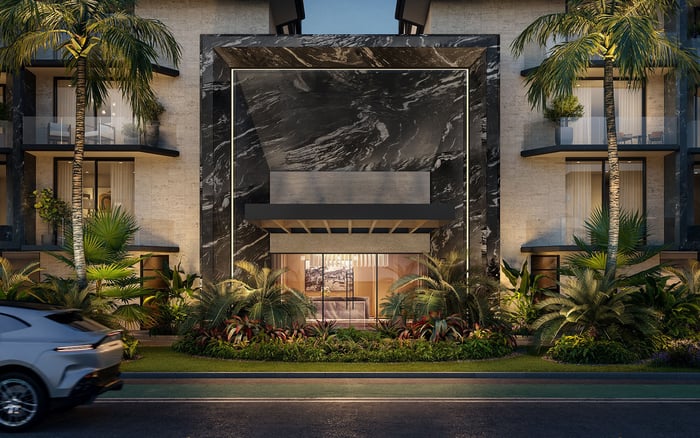
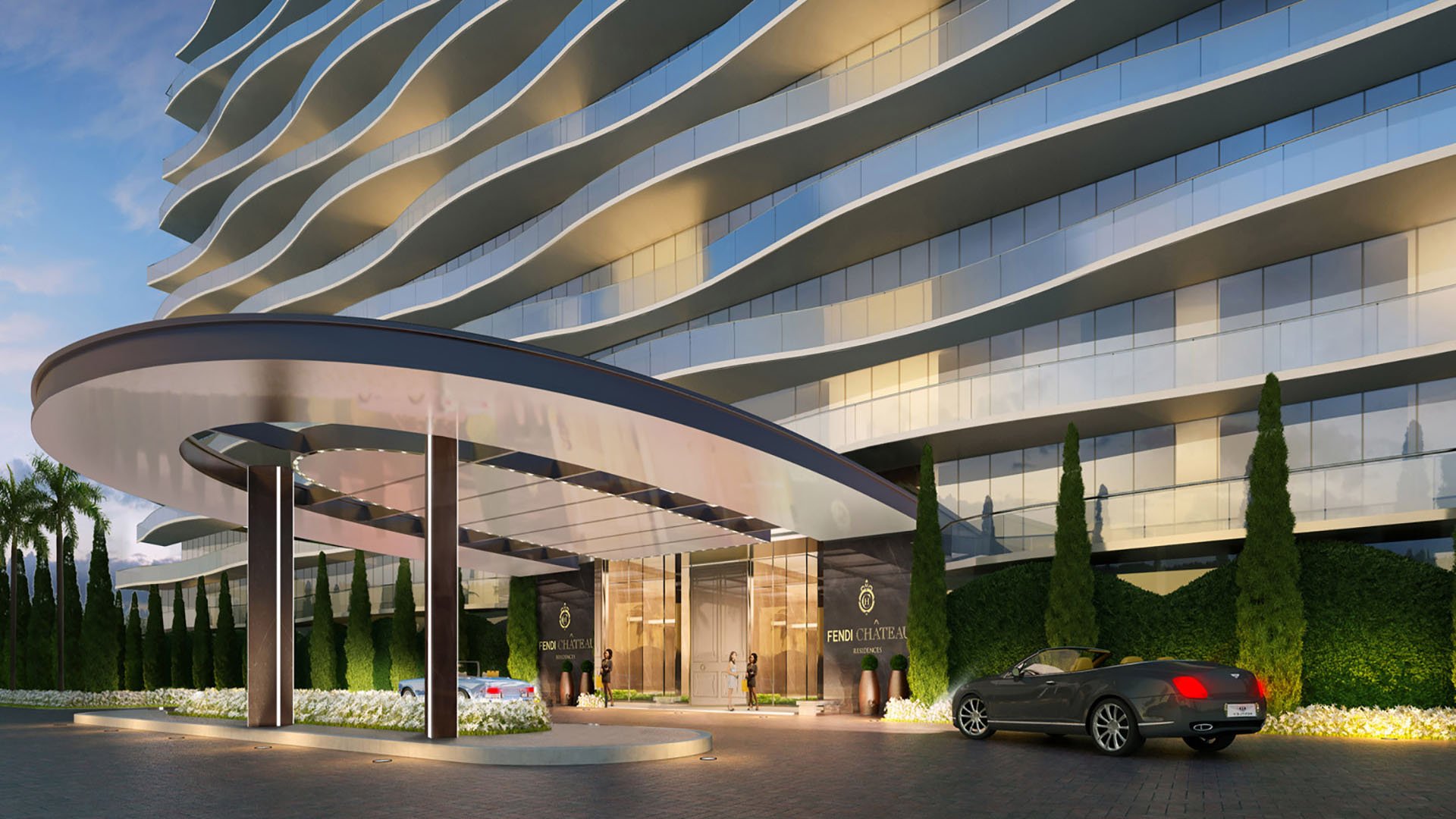
At 9349 Collins Avenue, Fendi Château's advertised features include a gated entrance with 24-hour security and dedicated elevators opening into private foyers for all residences. Doorman and valet service are also listed. These features support discreet arrivals, but the gate and apartment foyer remain separate points of control.
Ask who authorizes passage beyond the entrance and who approves elevator access. The advertised provisions do not specify fob controls, floor restrictions or staff approval procedures. A private foyer is not proof that an admitted visitor can reach only one residence.
Shabbat elevators are also identified. Request a clear explanation of how their operation interacts with resident credentials, visitor permissions and access to private foyers. This is an operational question, not an assumption of greater or lesser security. Ask for a walkthrough of the applicable settings and accompanying management procedures, including any changes during their use.
The Surf Club's advertised provisions expressly include dedicated service elevators, as well as a separate service entrance, service stairs and staff quarters. Together, they provide a more explicit description of service circulation-not proof of superior current security operations.
During an inspection, ask management to trace a delivery, a contractor visit and a household employee's arrival. Establish where each person checks in, whether the route bypasses the principal residential arrival and whether service access is limited to the intended residence. Separate infrastructure can still involve crossover, depending on permissions and operating procedures.
At Fendi Château, confirm whether a service entrance connects to a separate freight or service elevator and avoids the main residential route. The advertised features discussed here do not establish that arrangement. Do not fill the gap with assumptions. The practical test is whether management can explain and demonstrate the route, including exceptions for large deliveries and after-hours work.
The most valuable document is a current access-control matrix: a written account of who may enter which spaces, through which entrances, under whose approval and for how long. Request coverage for residents, guests, household employees, vendors, brokers, deliveries and emergency responders.
For each category, confirm restrictions by floor, residence, elevator bank and time. Ask how management issues, suspends and revokes credentials; whether permissions can be limited to one visit; and how an owner authorizes access while away. Guest escort requirements and temporary-access rules warrant explicit answers at both properties.
Review broker showings and open-house policies separately from ordinary guest visits. An invitation to view an apartment should not be assumed to confer wider building access. Ask how visitors are identified, where they wait and who accompanies them.
Finally, request procedures for lost credentials, denied entry and emergency access. Clear exceptions matter as much as routine restrictions: they reveal how management balances privacy with necessary access.
The Surf Club's advertised security provisions include 24-hour patrols and closed-circuit security cameras. Round-the-clock staffing is also described, including concierge, housekeeping, valet and a security team. Fendi Château's advertised provisions include 24-hour security at its gated entrance, alongside doorman and valet service.
Staff presence and access policy answer different questions. Ask who monitors arrivals, who approves exceptions and how responsibility passes between valet, concierge and security. Review camera coverage and retention with management; the presence of a camera does not establish continuous monitoring or a particular retention period.
Amenity access requires separate confirmation. Do not extend private elevator language to pools, restaurants, beach access or other facilities without current written rules. A residence can have a controlled apartment arrival while individual amenities follow different admission policies.
For buyers also considering Arte Surfside, the same framework allows a consistent comparison without presuming equivalent features or procedures. Compare current written permissions, not merely the vocabulary of privacy.
Arrange an authorized arrival walkthrough at different times, ideally including a busier period and an evening visit. Follow both the owner route and the approved guest route. Ask management to demonstrate a preauthorized visitor's journey without testing access covertly or disrupting residents.
Consider the household's actual pattern: frequent visitors, employees, extended absences or regular deliveries. Determine whether the stated rules accommodate those needs and whether convenience depends on informal exceptions. A polished arrival is most valuable when its controls remain clear in ordinary daily use.
The Surf Club's more explicit service-circulation description and Fendi Château's gated entrance and private foyers are useful starting points. Neither replaces current written policy and an in-person walkthrough. The buying decision should rest on the intersection of the apartment's layout, demonstrated access controls and management's ability to explain exceptions clearly.
For a discreet perspective on South Florida residences and buyer due diligence, explore MILLION.
If branded residences are on your mind — as a home or as an allocation — we would be glad to share what we are seeing, privately.
Begin a quiet conversationThe Surf Club is at 9011–9111 Collins Avenue in Surfside. Fendi Château is at 9349 Collins Avenue in Surfside.
Yes, electronic access is specified for all elevators and garage doors. Buyers should still confirm current credential permissions and guest-access procedures.
A dedicated private arrival and valet entry is advertised for each building. Private elevator lobbies are also listed for each residence.
Private self-parking is offered in select residences, not universally. Confirm whether it applies to the apartment under consideration.
Fendi Château advertises a gated entrance with 24-hour security and dedicated elevators opening into private foyers for all residences. Doorman and valet service are also listed.
No. Private foyers support architectural privacy, but guest permissions, floor restrictions and escort procedures require separate confirmation.
Dedicated service elevators, a separate service entrance and service stairs are advertised. Buyers should verify how those routes operate today.
The advertised features discussed in the article do not establish that arrangement. Ask management to demonstrate any separate service entrance and elevator route.
Ask how their operation interacts with resident credentials, visitor permissions and private foyer access. Those operational details are not specified in the advertised features.
Request a current access-control matrix covering residents, guests, employees, vendors, brokers, deliveries and emergency responders. It should explain permitted routes, approvals, time limits and exceptions.