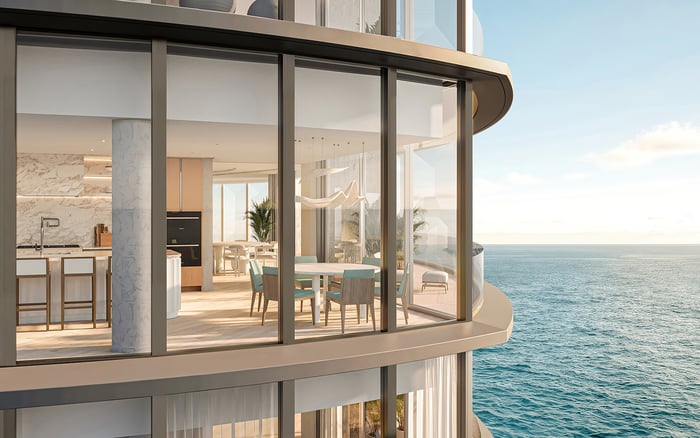
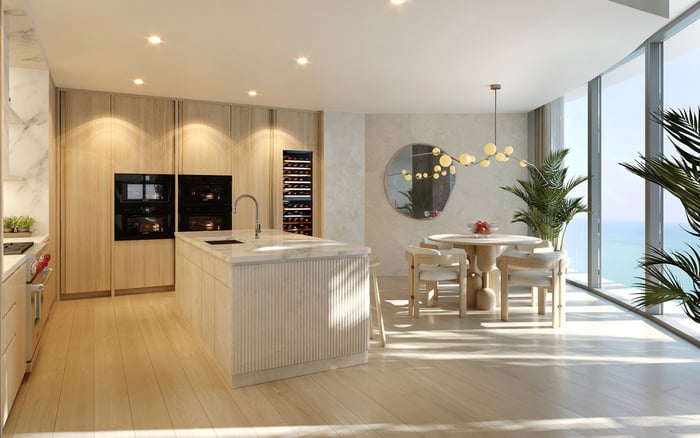
For buyers evaluating Rivage Bal Harbour, the central question is not whether reserves will affect carrying costs, but how preliminary assumptions translate into a durable, post-reform association budget. A disciplined offer should separate operations from structural funding, test future increases, and value stronger reserves as protection rather than excess expense.

For a 2026 buyer, the elegance of Rivage Bal Harbour is only one dimension of the acquisition. The planned 24-story Oceanfront condominium at 10245 Collins Avenue also belongs to a new financial era for Florida condominiums-one in which structural reserves warrant the same scrutiny as price per square foot, view corridor, and interior specification.
Rivage is identified as a 2026 building, although buyers should confirm the current delivery schedule and contractual closing date directly with the developer. More important, the supplied information establishes no public Rivage-specific Structural Integrity Reserve Study amount, stabilized reserve contribution, or final 2026 association budget. Reserve exposure is therefore a diligence question, not a number to presume.
This Buyer's Guides analysis examines Pricing & Trends that can materially affect long-term ownership costs in Bal Harbour, particularly for a Pre-Construction purchase negotiated before the association develops a mature operating history.
Florida’s Structural Integrity Reserve Study requirement applies to condominium buildings with at least three habitable stories. Rivage’s planned height places it within that statutory threshold once its condominium association is created and enters the recurring framework.
A qualifying association must complete a SIRS at least every 10 years after creation. This is not merely a desktop financial exercise: it requires a physical examination and must be completed or verified by an authorized professional, such as a licensed engineer, licensed architect, certified reserve specialist, or professional reserve analyst.
The covered components are substantial: roof, structural systems, fireproofing and fire protection, plumbing, electrical systems, waterproofing and exterior painting, windows, exterior doors, and other qualifying safety-related components. Funding is tied to the most recent study, including each component’s estimated remaining useful life and replacement cost.
Owners may not waive or reduce required funding for structural components identified through the SIRS process. The non-waiver rule applies to budgets adopted on or after December 31, 2024. Structural reserves may be held in separate accounts or through an approved pooled method, but the funding obligation remains.
A quoted association fee should be separated into three distinct categories: operating expenses, mandatory structural reserves, and discretionary reserves. A single monthly figure can obscure how much supports present services and how much accumulates for future capital obligations.
Buyers should also determine whether a quoted figure derives from a developer-controlled preliminary budget or reflects assumptions expected under a stabilized, owner-controlled association. Early budgets can be useful, but an offer should not treat them as immutable.
Florida’s general reserve threshold rose from $10,000 to the greater of $25,000 or an inflation-adjusted amount determined by the state division. For 2026, that inflation-adjusted figure is $25,675. This threshold is not a Rivage dues estimate; it is part of the broader reserve framework reshaping fee expectations across coastal high-rises.
The correct response is not simply to discount for higher dues. Fully funded reserves can represent economic value by reducing-though never eliminating-the risk of future structural special assessments. A leaner budget may appear attractive today while transferring more capital risk to a later ownership period.
Model at least a base case and a higher-cost case. The latter should account for rising replacement costs, labor, insurance, reserve thresholds, and component aging rather than assume flat dues. Buyers can then determine how that recurring carrying-cost range affects their preferred purchase price, liquidity reserve, and expected holding period.
This approach also sharpens comparisons. Oceana Bal Harbour may help frame the immediate luxury geography, while The Delmore Surfside and Eighty Seven Park Surfside broaden the nearby coastal context. Yet no headline fee comparison is complete until each property’s operating services, reserve treatment, budget stage, and legal regime are normalized.
Older condominiums whose owners historically waived contributions can be especially misleading benchmarks. Rivage should be underwritten against well-funded buildings operating under the post-reform framework-not solely against legacy dues that postponed structural funding.
Before pricing an offer, request the proposed association budget and identify every structural-reserve line item. Ask for contribution assumptions, component useful lives, replacement-cost estimates, the anticipated SIRS timetable, and whether funding will be separate or pooled.
Also confirm the delivery schedule, projected closing date, budget-control period, and point at which owners are expected to assume association control. Have current condominium documents and budgets reviewed by Florida legal and financial professionals, as statutory requirements and project assumptions can change.
The most sophisticated bid is therefore not necessarily the lowest. It recognizes a well-funded association as a balance-sheet asset, assigns a rational cost to uncertainty, and preserves sufficient flexibility for expenses to evolve after closing.
Does Rivage fall under Florida’s SIRS framework? Yes. Its planned 24 stories exceed the statutory threshold of three habitable stories.
Is there a public Rivage-specific SIRS amount? No Rivage-specific SIRS amount is established in the supplied information, so buyers should request current project documents.
How often must a qualifying association complete a SIRS? A qualifying association must complete one at least every 10 years after the condominium’s creation.
Can Rivage owners vote to waive required structural reserves? Owners may not waive or reduce required funding for structural components identified through the SIRS process.
Is the 2026 reserve threshold the same as the monthly HOA fee? No. The $25,675 inflation-adjusted threshold is part of the statutory framework, not a Rivage monthly-fee quote.
Can stronger reserves prevent every special assessment? No. Higher recurring contributions can reduce structural-assessment risk, but they cannot eliminate it.
Why distinguish operating expenses from reserves? Operations pay current costs, while reserves accumulate capital for covered future repairs and replacements.
Should buyers rely on a preliminary developer budget? It is a useful starting point, but buyers should test how it may differ from a stabilized, owner-controlled budget.
What should an offer model stress-test? Test higher dues driven by replacement costs, labor, insurance, reserve thresholds, and component aging.
Does the December 31, 2025 deadline control a new Rivage purchase? That deadline principally concerns qualifying existing associations; a new condominium enters the recurring framework after creation.
If you'd like a private walkthrough and a curated shortlist, connect with MILLION.
If branded residences are on your mind — as a home or as an allocation — we would be glad to share what we are seeing, privately.
Begin a quiet conversation