A practical North Bay Village buyer’s guide to reviewing flood information, insurance terms, deductibles, association finances, and waterfront responsibilities before prioritizing interior finishes.

Interior finishes are immediately visible, but insurance terms, flood records, association finances, and waterfront obligations can be more difficult to assess. Serious North Bay Village buyers should include these matters in valuation and due diligence rather than defer them until closing.
The objective is not simply to confirm that policies exist. Buyers should identify the available coverage documents, applicable deductibles, potential gaps, and the parties responsible for costs that are not covered. The review should be tailored to the residence, building, ownership structure, and proposed use.
A neighborhood-level description cannot replace property-specific records. Buyers should request current flood-zone and elevation information for the parcel and building, then have the documents reviewed by qualified insurance, legal, and inspection professionals as appropriate.
The same discipline applies whether the purchase is financed or made without financing. Any insurance requirement, coverage decision, or risk assessment should be confirmed for the individual transaction rather than inferred from a nearby property or an older listing.
Wind, hurricane, flood, and unit-owner coverage should be examined through their actual policy documents and quotations. Buyers should ask which events and property components each policy addresses, what exclusions or limitations apply, and whether more than one deductible could become relevant to the same incident.
Policy terminology should not be assumed to have a universal meaning. The declarations, endorsements, definitions, and proposed coverage should be reviewed together so that the buyer understands how the policies are intended to interact.
A percentage by itself does not show the cash exposure associated with a deductible. Buyers should ask the insurer, association, and appropriate advisers to identify the applicable insured value, calculate the current dollar amount, and explain how responsibility could be allocated.
For a condominium, the master policy and a proposed unit-owner policy should be reviewed separately. The buyer should also investigate whether association reserves are intended or available for relevant costs and whether the governing documents permit another funding method.
The diligence file should include complete available policy declarations rather than a summary certificate alone. Buyers should also request available reserve information, current financial statements, pending assessments, claims history, prior special assessments, meeting records, and relevant governing documents.
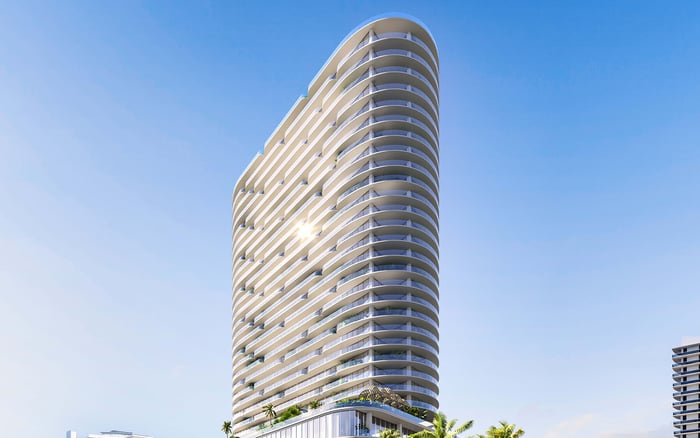
These questions can be applied while comparing Continuum Club & Residences North Bay Village, Shoma Bay North Bay Village, and Tula Residences North Bay Village. The records available and the appropriate review may differ among projects, so each opportunity should be assessed on its own documentation.
For a waterfront property, the physical review should extend beyond the residence. Buyers should investigate the seawall’s documented condition, maintenance responsibility, available inspection records, planned work, and any related budget or assessment information.
A comparable process may be useful when considering nearby bayfront options such as Onda Bay Harbor. The purpose is not to presume that different properties share the same circumstances, but to compare them through a consistent document-based framework.
Before a contractual deadline, buyers should organize the available flood and elevation records, master-policy documents, proposed unit and flood quotations, deductible calculations, association financial materials, claims and assessment records, governing documents, and waterfront infrastructure information.
Qualified professionals can then help identify missing documents, explain policy language, assess physical conditions, and evaluate contractual implications. This approach gives buyers a clearer basis for comparing ownership obligations with the value they place on design, views, amenities, and finishes.
Why review insurance before focusing on finishes? Insurance terms and potential uninsured costs can affect the ownership analysis, while finishes can be evaluated separately as a design preference.
Should buyers rely on a neighborhood flood description? No. Request current records for the specific parcel and building and have them reviewed for the transaction.
Which insurance documents should a condominium buyer request? Request the complete available declarations, endorsements, certificates, proposed unit-owner quotations, and any separate flood documents relevant to the property.
Why convert a percentage deductible into dollars? A dollar calculation makes the potential cash exposure easier to evaluate and compare with available association resources.
Is a master-policy certificate sufficient? A certificate may not contain every term needed for diligence, so buyers should request the complete available policy materials and professional guidance.
Why compare the master policy with unit-owner coverage? Reviewing them together can help identify how the policies are intended to interact and where questions or possible gaps remain.
Which association records deserve attention? Review available financial statements, reserve information, assessments, claims records, meeting materials, and governing documents.
Why investigate prior special assessments? They can help a buyer understand how the association has addressed significant costs in the past without predicting future decisions.
What waterfront records should a buyer seek? Ask for available seawall inspections, maintenance records, responsibility provisions, planned-work information, and related budget materials.
Who should review the diligence file? Depending on the transaction, buyers may consult qualified insurance, legal, inspection, engineering, lending, and financial professionals.
To compare the best-fit options with clarity, connect with MILLION.
If branded residences are on your mind — as a home or as an allocation — we would be glad to share what we are seeing, privately.
Begin a quiet conversation