With five-figure monthly rents now common in prime Miami luxury condos, affluent residents are re-evaluating whether it still makes sense to lease or if those payments should be redirected into ownership. This editorial unpacks how record-high rents, a buyer-friendly inventory backdrop and new condo reserve laws are reshaping the rent vs buy equation at the very top of the market. It outlines when long-term commitment and equity building justify a purchase, and when flexibility, mobility and capital efficiency make renting the smarter play.
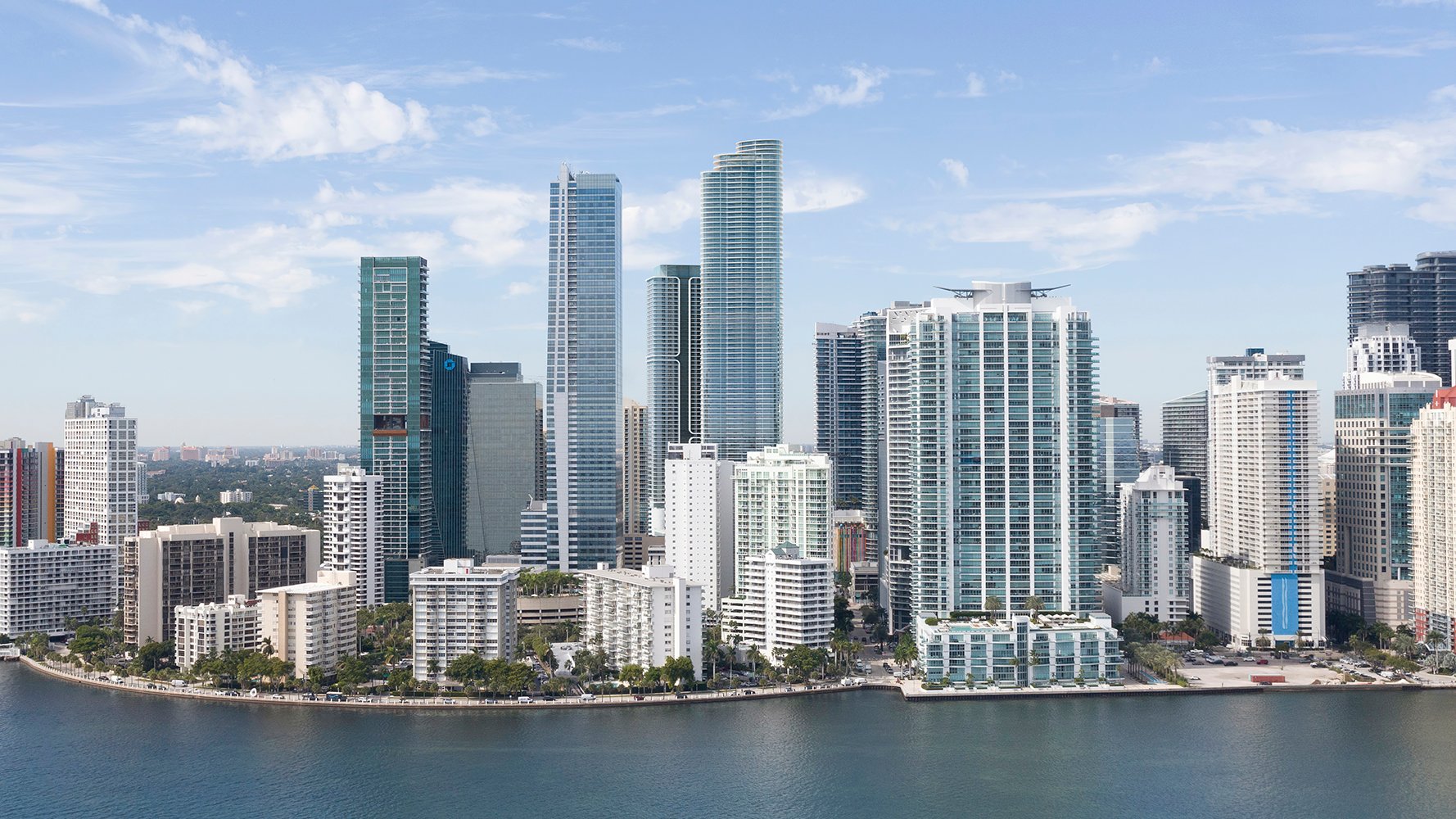
Miami luxury condos are now at the center of one of the sharpest rent vs buy debates in the United States. Five-figure monthly rents that used to be reserved for trophy penthouses have become common in the upper tiers of the market, with prime three and four bedroom residences in new towers regularly leasing in the 12,000 to 30,000 per month range and waterfront homes pushing well beyond 50,000 in peak season. Against that backdrop, affluent residents who expect to make Miami a long-term base are asking a simple question: at what point does writing such a large rent check stop making sense?
What has changed is not only the level of rent, but the profile of the typical tenant. The city has welcomed an influx of senior finance professionals, founders and global families who are relocating for lifestyle, tax efficiency and connectivity. Many arrive without a fixed neighborhood preference, so they choose to rent first, using a year in Brickell, Edgewater or Miami Beach to understand commutes, school options and daily rhythms before committing to a purchase. This wave of high-income newcomers has tightened the supply of top-tier rentals even as the pipeline of new luxury buildings continues to expand.
At the same time, the for sale market for Miami luxury condos has shifted decisively toward buyers. Across the main coastal submarkets, inventory above the one million threshold sits near a year and a half of supply, and recent quarterly reports show transaction volumes down close to ten percent year over year while prices per square foot are still posting modest low single digit gains. In other words, sellers must compete harder for committed buyers, whereas landlords in best-in-class buildings enjoy multiple applications for well presented residences.
This divergence is what makes the rent vs buy question uniquely acute today. On one hand, national analysis of the 2025 rent vs buy landscape still concludes that in most large metro areas the typical monthly mortgage payment exceeds the typical rent for a comparable home. On the other, the very top of the Miami market is anything but typical: a 25,000 to 35,000 monthly lease can easily exceed the full carrying costs of ownership for an all cash buyer in the same building. Threading that needle requires moving beyond rules of thumb and into a bespoke evaluation of your time horizon, capital structure and lifestyle priorities.
For buyers planning to call the city home, owning in one of Miami luxury condos can be as much an identity statement as a financial decision. In branded and design driven developments such as Aston Martin Residences, St. Regis Residences Brickell or Missoni Baia, a purchased residence offers permanence, privacy and the ability to craft a highly customized interior that truly reflects the owner. Over time you are not just occupying an address; you are building a long-term relationship with the building community, its staff and the surrounding neighborhood.
From an economic perspective, ownership turns a recurring housing cost into a balance sheet asset. Each dollar that goes toward principal builds equity, while any long-term appreciation in the Miami condominium market accrues to you rather than a landlord. In Florida, primary residents can also benefit from valuable structural advantages, including homestead protections, caps on annual property tax increases and the broader benefit of no state income tax. For a high earning household who makes Miami their tax domicile, these features can be substantial when viewed over a ten year horizon.
However, the true cost of owning a luxury condominium extends far beyond the headline purchase price. A typical acquisition in the three to seven million dollar range might involve a 20 to 40 percent cash down payment, six figure closing costs and the opportunity cost of tying up capital that could otherwise be deployed into businesses or investment portfolios. Ongoing property taxes often fall in the 1.5 to 2 percent of assessed value range annually, so a five million dollar residence may carry 75,000 to 100,000 per year in tax alone. To that, owners must add comprehensive homeowners and windstorm insurance, which has risen sharply across coastal Florida, particularly in high rise oceanfront and bayfront locations.
Condominium association dues are another significant line item that buyers of Miami luxury condos must understand in detail. The very amenities that attract purchasers to ultra luxury towers, from spa complexes and fitness pavilions to private marinas, residents clubs and white glove security, are funded via monthly or quarterly assessments. It is common for maintenance fees in full service buildings to run from roughly 1.50 to over 2.00 per square foot per month. For a 2,500 square foot residence, that translates into 3,750 to 5,000 every month before setting aside any reserves for repairs inside the unit itself.
On top of routine monthly carrying costs, Florida's new reserve and inspection laws implemented after the Surfside tragedy have introduced a further dimension for owners. Associations must now maintain dedicated structural reserves and adhere to stricter inspection schedules, which is unquestionably positive for safety but has led to headline making special assessments in some communities. In one Brickell tower, for example, residents were presented with an assessment in excess of 20 million dollars collectively, resulting in individual bills in the mid five figures or higher for many owners. These are by definition infrequent events, but they illustrate that condo ownership involves exposure to building level decisions and capital projects in a way renting does not.
For buyers who can absorb these obligations comfortably and expect to keep their residence for at least five to seven years, the drawbacks of ownership are often outweighed by its benefits. The ability to lock in your housing cost in nominal terms, enjoy tailored design and finishes and participate fully in the governance of your building can be compelling. For many clients of MILLION Luxury, a primary condominium in a flagship building becomes a multigenerational asset, a Miami base that anchors both family life and business activity.
Despite that, renting at the top of the market can be a strategically sound choice in specific scenarios. The clearest advantage of leasing a residence in one of the leading towers is flexibility. Instead of wiring a seven figure sum at closing, a tenant typically commits only to a security deposit and a few months of rent in advance, even if the monthly figure is 20,000 or more. That lower upfront requirement allows a new arrival to experience neighborhoods such as Brickell, Coconut Grove and Miami Beach before deciding where they truly want to embed their lifestyle.
Renting also fits naturally into a pre construction strategy. Buyers who secure a residence years in advance in projects like Aston Martin Residences, St. Regis Residences Brickell or Missoni Baia often choose to rent nearby while their future home rises from the ground. They enjoy full access to Miami's restaurants, cultural calendar and waterfront lifestyle without carrying the taxes, insurance and association fees of a currently owned residence during the construction period. When their new home delivers, they can transition from tenant to owner seamlessly, without having to sell an interim property.
A further advantage of renting is insulation from surprise capital events. When a building undertakes a major structural repair, implements new hurricane protection systems or upgrades common areas, the landlord bears the responsibility for funding assessments and coordinating work with the association. A tenant may need to accommodate temporary inconvenience, but they are not asked to write large additional checks beyond their agreed rent. In a period where new reserve laws have increased scrutiny of older structures in particular, some households value the ability to enjoy full service living without being exposed to the tail risk of extraordinary assessments.
The trade-off is that high rent, even in exchange for high service, builds no equity. A household paying 30,000 per month spends 360,000 in a single year; over three years, that sum approaches 1.1 million. For many Miami luxury condos in the three to five million dollar range, that figure is broadly in line with a typical down payment and closing costs. There are also cases, particularly for all cash buyers, where the monthly carrying costs of ownership, including taxes and association dues, may be materially lower than prevailing market rents for identical residences. In those instances, continuing to rent is effectively paying a premium for flexibility.
For globally mobile clients, that premium can be justified. If your career or business could plausibly relocate you within a year or two, the friction costs of buying and later selling a high end condo may overwhelm any equity built in the interim. Some clients also achieve returns in their operating companies or investment portfolios that exceed the expected long-term appreciation of a single property. They may quite rationally choose to keep capital working elsewhere and pay a high, but finite, rent to enjoy Miami life on their own terms.
The key, then, is to treat your current or projected rent as a strategic signal rather than a sunk cost. As a rule of thumb, once your monthly rent in Miami luxury condos approaches the full carrying cost of owning a comparable residence in the same building, it is time to consider buying. For some clients this threshold may be around 15,000 per month, for others 25,000 or more, depending on building, unit size and financing assumptions. At that point, each lease renewal becomes an active decision either to continue paying for flexibility or to redirect that cash flow into equity.
Time horizon is equally important. If you expect to make Miami your primary home for at least three to five years, the scales often begin to tilt toward ownership, particularly in a buyer friendly environment where inventory is elevated and developers are offering meaningful incentives. Over a multi year period, even modest appreciation layered on top of principal reduction can offset transaction costs and much of the interest expense for financed buyers. For cash buyers choosing between a high rent and a fully paid residence, the comparison is starker still.
Quality of life factors round out the picture. Owners are typically able to commission interior designers, integrate technology and art collections and make structural changes in ways that tenants cannot. They also tend to build deeper ties within their building community and gain influence over association decisions that shape everything from amenity upgrades to pet policies. For households selecting among addresses like Aston Martin Residences on the Miami River, St. Regis Residences Brickell on the bayfront or Missoni Baia in Edgewater, these qualitative distinctions are often as important as the spreadsheet.
Because every building and buyer profile is different, sophisticated guidance matters. At MILLION Luxury, rent vs buy analyses are prepared line by line, comparing scenarios across neighborhoods and specific towers and often drawing on detailed market intelligence from partners such as Miami Ultra Lux Condos and Aston Martin Residences. For a confidential, data driven assessment tailored to your situation and target buildings, you can begin a conversation with MILLION Luxury and transform high rent into a strategic path to ownership.
At what monthly rent level should I seriously consider buying instead? There is no single threshold, but many clients revisit the question when their rent reaches a level that could cover taxes, association dues, insurance and, if applicable, interest on a comparable condo; in Miami, that often occurs once rent consistently exceeds the mid five figures each month.
How long should I plan to stay in Miami before buying a luxury condo? As a general framework, if you are highly confident you will remain in the city for at least three to five years, ownership becomes easier to justify because that time frame helps spread closing costs and potential market volatility over enough years for equity growth to work in your favor.
Can I offset ownership costs by renting my condo when I travel? Many buildings do allow owners to lease their residences on a seasonal or annual basis, but policies vary widely, so it is essential to review each condominium rental rule in detail before you buy if secondary rental income is part of your plan.
Are newer buildings always safer choices than older ones because of the new reserve laws? Not necessarily; newer towers often have more modern systems, but older properties that have completed structural inspections and funded reserves can be equally robust, so the safest path is to review engineering reports, reserve studies and association financials with experienced advisors before committing to any building.
If branded residences are on your mind — as a home or as an allocation — we would be glad to share what we are seeing, privately.
Begin a quiet conversation