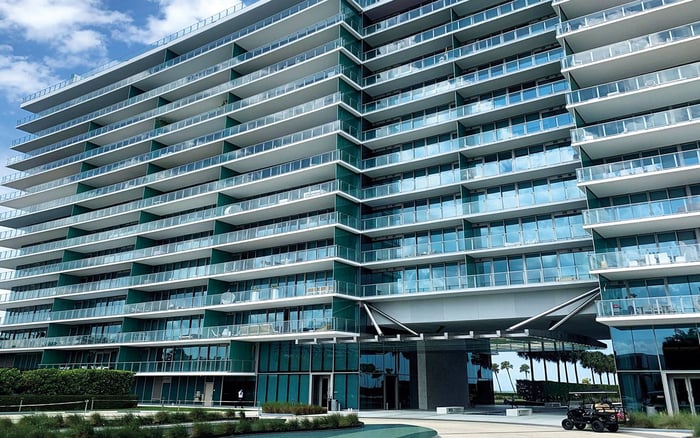
A considered move from Zurich to Key Biscayne begins before closing, with coordinated estate planning, appropriate title coverage, realistic property-tax assumptions, and a residence budget that separates acquisition costs from ongoing obligations.

Relocating from Zurich to Key Biscayne deserves the same care as selecting the residence itself. Beyond architecture and setting, the first year requires decisions about ownership, accessible capital, insurance, and the practical administration of a home across borders. The objective is not simply to complete a purchase, but to make the residence comfortable to own from the outset.
For a household considering Oceana Key Biscayne, begin with a coordinated brief: who will own the property, how it will be used, which funds will support it, and who will oversee obligations if the principal decision-maker is unavailable. Keep those questions separate from aesthetic preferences, then bring both conversations together before committing to a closing timetable.
Estate-plan liquidity and purchase affordability are distinct planning questions. The first-year review should establish not only whether the acquisition is funded, but also which resources advisers expect to be available for household obligations and any estate-related needs. A property budget alone cannot determine the appropriate estate reserve.
Ask Swiss and U.S. advisers to reconcile the proposed ownership structure, estate documents, beneficiary designations, funding arrangements, and operating reserve before closing. Their advice should reflect the household’s circumstances, not assume that a move from Zurich produces a standard Swiss-U.S. estate-tax result or a predictable probate outcome.
Separate three allocations: acquisition and setup money, recurring residence expenditure, and a contingency amount chosen with advisers. These are budgeting categories, not a prescribed legal structure or mandatory reserve formula. Each allocation should reflect the intended ownership arrangement, expected spending, and professional advice.
Ask advisers to document which arrangements are intended to keep residence expenses funded if ordinary household payment arrangements are interrupted. This requires confirmation; it is not an assurance that a particular account or designation will provide access.
Beneficiary coordination should begin with a document review, not an assumption that naming the same individuals everywhere creates a complete plan. Ask counsel to examine how the proposed deed, estate documents, and relevant beneficiary designations are intended to work together. Questions about inheritance consequences belong in that review.
The practical discussion should also establish responsibilities. Who should receive insurance correspondence, oversee payments, or contact advisers when circumstances change? Record those intended roles alongside questions about legal authority. A household contact list is not a substitute for legally effective arrangements.
If the search extends to Coconut Grove and Park Grove Coconut Grove, retain the same coordination brief. A different residential choice should prompt an updated property budget, not defer ownership and estate questions to a separate conversation after the purchase.
Florida owner’s title insurance protects against loss or damage from covered defects in the property’s title. It does not insure the residence against physical damage. Ownership protection and property protection therefore belong in separate parts of the acquisition plan.
An owner’s policy protects the purchaser’s ownership interest; a lender’s policy protects the mortgage lender. Buyers using financing should not treat lender coverage as a substitute for owner coverage. The owner’s policy should reflect the property’s full insurable value, generally its sale price.
Unlike annually renewed property coverage, an owner’s title policy has no expiration date and generally continues while the insured or qualifying heirs own the property, without annual renewal premiums. Budget the premium as an acquisition cost rather than a recurring annual expense, and ask the closing team to explain the proposed coverage and any endorsements.
Florida regulates title-insurance premiums. For original owner’s coverage, the rate is $5.75 per $1,000 for the first $100,000 and $5.00 per $1,000 for the portion above $100,000 through $1 million, with lower marginal rates thereafter. A $1 million policy therefore illustrates a base premium of $5,075, excluding endorsements and other closing charges. This is neither a complete closing-cost estimate nor a flat rate to extrapolate across a larger purchase.
The seller’s property-tax bill is not a reliable forecast of your ownership costs. A change of ownership generally triggers reassessment at just value as of January 1 following the transfer, subject to applicable exceptions. Request a buyer-specific estimate that accounts for the transfer rather than carrying the existing bill into the household budget.
Save Our Homes generally limits subsequent assessment increases on qualifying homestead property. It does not simply transfer the seller’s capped assessment with the residence. For budgeting purposes, distinguish the purchase-year cash requirement from the tax position following reassessment.
Florida’s homestead tax exemption also requires qualifying ownership and permanent-residence conditions. The deed or qualifying instrument must be recorded in the property’s county before the exemption may be granted. Purchasing a Florida address alone does not establish eligibility.
A household retaining Zurich as its permanent home should not assume that seasonal use of Key Biscayne qualifies. Homestead tax exemption is also distinct from creditor protection and inheritance restrictions. Have advisers address those issues separately rather than treating the term as a single package of benefits.
Separate purchase and setup expenses from recurring taxes, insurance, association charges where applicable, utilities, staffing, maintenance, and storm preparation. Obtain property-specific figures and identify which services the household intends to use. A well-constructed residence budget makes responsibilities visible rather than relying on a broad percentage of the purchase price.
Flood insurance merits its own review. Ordinary homeowners insurance generally does not cover flood damage. Properties in Special Flood Hazard Areas may require flood insurance when financed through a federally regulated or insured lender. Discuss the property’s flood-zone status, financing requirements, and coverage choices before finalizing the insurance allocation.
For buyers also weighing Brickell and Una Residences Brickell, compare the same expense categories across each candidate. Do not assume that association charges, insurance arrangements, or maintenance responsibilities are interchangeable. Request the relevant documents and quotes for each residence rather than using another property’s figures as a proxy.
Before closing, seek a coordinated review of ownership, estate documents, beneficiary arrangements, title coverage, and funding. After closing, confirm recording and retain the final policies and transaction documents. Revisit the operating budget as actual invoices arrive, and clarify the tax assumptions for the January 1 following transfer.
The goal is a residence whose financial administration feels as considered as its interiors, with professional advice guiding the legal questions and property-specific figures informing the budget.
Explore your next South Florida residence with MILLION.
If branded residences are on your mind — as a home or as an allocation — we would be glad to share what we are seeing, privately.
Begin a quiet conversationNo universal reserve should be assumed. Ask Swiss and U.S. advisers to assess the household’s ownership arrangements, funding needs, and estate circumstances before setting an amount.
Ask them to reconcile the proposed ownership structure, estate documents, beneficiary designations, funding arrangements, and first-year operating reserve.
It protects against loss or damage from covered defects in the property’s title, rather than physical damage to the residence.
A lender’s policy protects the mortgage lender. An owner’s policy protects the purchaser’s ownership interest.
No. An owner’s policy has no expiration date and generally continues while the insured or qualifying heirs own the property, without annual renewal premiums.
Applying Florida’s original-policy rates produces a $5,075 base premium. Endorsements and other closing charges are additional.
Not as a reliable forecast of their ownership costs. A change of ownership generally triggers reassessment at just value as of January 1 following the transfer, subject to applicable exceptions.
No. Eligibility depends on qualifying ownership and permanent-residence conditions, and the deed or qualifying instrument must be recorded before the exemption may be granted.
Ordinary homeowners insurance generally does not cover flood damage. Flood insurance requires separate consideration and may be required for certain financed properties in Special Flood Hazard Areas.
Include property taxes, insurance, applicable association charges, utilities, staffing, maintenance, and storm preparation. Keep those expenses separate from acquisition and setup costs.