A disciplined first-year budget for a multigenerational move to Key Biscayne separates condominium dues and buyer-specific taxes from quoted insurance, household services, furnishing, and reserves.
Moving a multigenerational household from Washington, D.C. to Key Biscayne requires more than converting a purchase price into an annual carrying cost. Parents, children, and grandparents may share an address but need different levels of privacy, transportation, care, and daily support. The financial plan should make those distinctions clear before the move.
Divide the first-year budget into four categories: recurring ownership expenses, optional household services, one-time furnishing and relocation, and contingency reserves. Then distinguish annual cost from payment timing. A monthly allocation for insurance or taxes is useful, but it does not establish when cash must leave the account.
Treat this as an operating and move-in budget, not an acquisition statement. Keep the purchase price, financing, and closing costs in a separate schedule so they do not obscure the household's ongoing commitments.
A September 2026 sample of 102 Key Biscayne condominium listings with usable fee information showed median association dues of $1,720 monthly, or $20,640 annually. The middle 50% ranged from $1,269 to $2,538 monthly, equivalent to $15,228 to $30,456 annually. These are planning benchmarks, not promised charges for a particular residence.
The same sample showed median dues of approximately $1.10 per square foot monthly. Applied to a hypothetical 1,500-square-foot condominium, that implies $19,800 annually before special assessments. The size-based illustration and the overall listing median are distinct reference points, not competing quotations.
A separate September 2026 sample of 29 listings across eight buildings showed a median building-level fee of $1.23 per square foot monthly. It included buildings with at least three active listings. Keep that figure separate; do not average it with the broader sample.
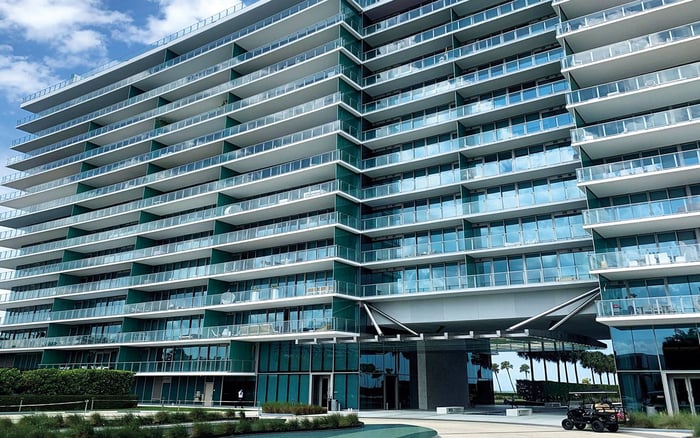
For a residence under consideration at Oceana Key Biscayne, request the unit's current dues, approved budget, and assessment information. Do not substitute an island-wide median for the property's documented obligations. Review what dues include before adding utilities or services elsewhere in the worksheet.
The first twelve months of ownership and the purchase calendar year are not necessarily the same period. Buyers purchasing after January 1 may temporarily benefit from the seller's homestead exemption and assessment limitation for that calendar year. Those seller-specific benefits are removed the following year, potentially increasing assessed value.
Build one estimate for the purchase year and another for the following tax year. Use a buyer-specific calculation rather than carrying forward the seller's bill. This distinction matters especially when an apparently comfortable initial budget becomes the family's long-term spending baseline.
Ad valorem taxes are calculated from property value less applicable exemptions, multiplied by the applicable millage rate. Key Biscayne's adopted 2025 municipal rate was 2.8846 mills. The proposed 2026 municipal rate was 3.0066 mills, but that proposal does not establish the final adopted rate. Neither number represents the complete tax burden: county, school-board, and other applicable levies also contribute.
For a family retaining a Washington residence, homestead eligibility requires careful review. It requires permanent residency to the exclusion of other residences, and the stated application deadline is March 1. Do not assume that buying a Florida condominium automatically establishes eligibility.
The 2025 homestead exemption amount was up to $50,722, reflecting that year's inflation adjustment. The first $25,000 applies to all taxing authorities; the full stated amount should not be applied identically to every levy. Treat this as a dated reference, not an automatic deduction for a later tax year.
Senior, portability, widow/widower, and disability-related benefits warrant household-specific review. The presence of an older parent alone is not a basis for entering savings into the budget. Confirm ownership, residency, and eligibility before recognizing any benefit.
Insurance belongs among recurring ownership expenses, but the amount should come from unit-specific quotations. Ask an insurance adviser to reconcile proposed coverage with the association's documents and the household's circumstances. Record premiums, payment dates, deductibles, and unresolved coverage questions separately.
For optional services, prepare a weekly schedule before requesting pricing. Define housekeeping frequency, elder-care responsibilities, transportation needs, and any additional household support. Although grouped as optional spending, some services may be indispensable to the family's chosen living arrangement. Distinguish essential support from conveniences that can be adjusted.
If the search also includes Coconut Grove and Park Grove Coconut Grove, use the same service brief for the comparison. Ask what is included, separately charged, or independently arranged at each property. Compare how each arrangement serves the household rather than assuming an amenity description establishes a service allowance.
Keep unquoted items marked as awaiting a quotation, not as zero. Utilities, insurance, and household services should enter the final cash-flow schedule only with an explicit pricing basis.
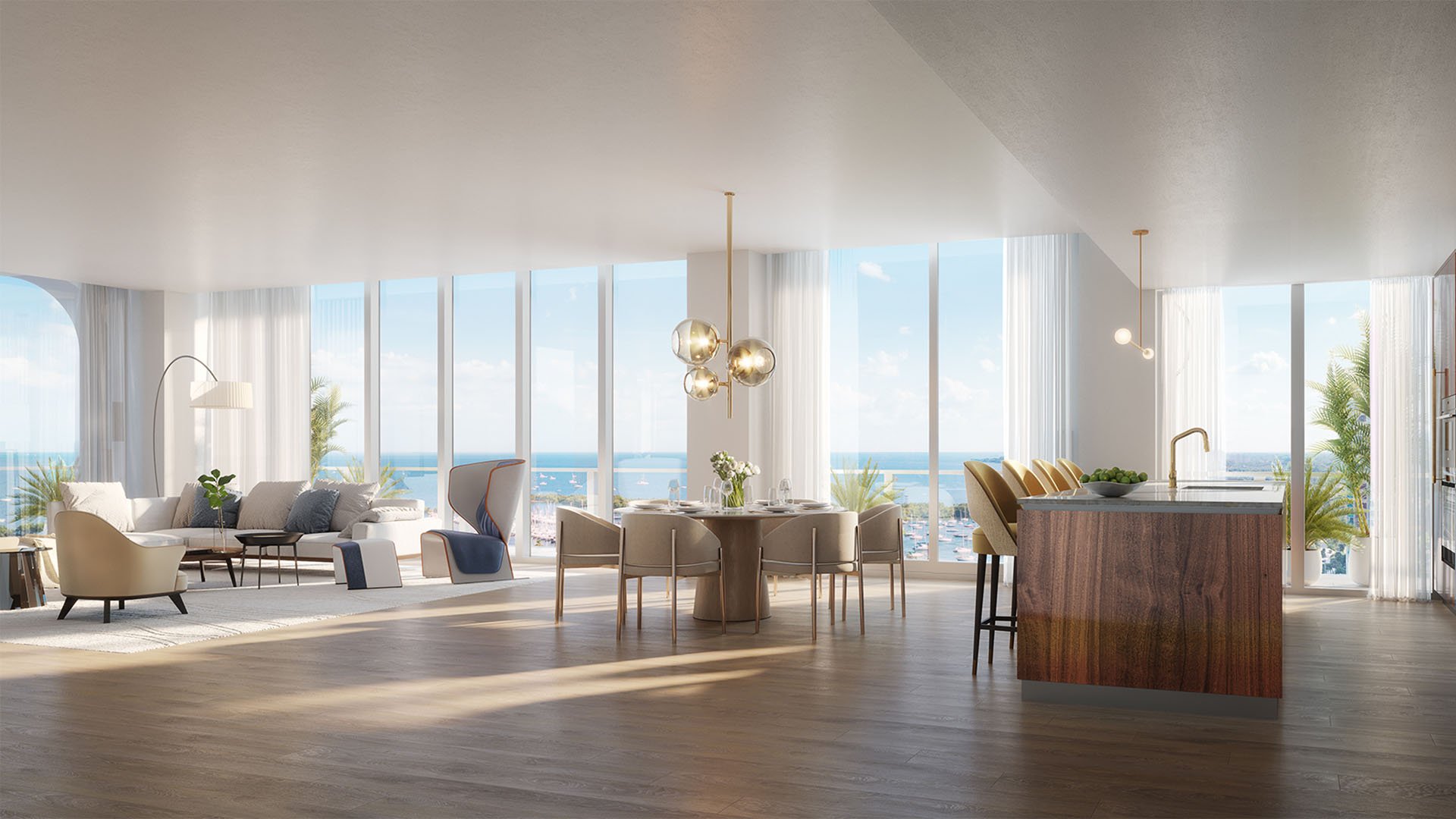
A multigenerational furnishing plan should begin with room assignments and daily routines. Identify which Washington pieces will move, which rooms require new furniture, and which accessibility or comfort priorities deserve early attention. Separate essential move-in purchases from decorative work that can wait.
Request household-specific furnishing and moving scopes. Ask for explicit delivery, installation, storage, and payment terms wherever relevant. Enter deposits and balances in the months they are due rather than spreading every one-time purchase evenly across twelve months.
For families also evaluating Brickell through Una Residences Brickell, repeat the room-by-room exercise for the actual floor plan. Do not carry a furnishing allowance from one residence to another without reviewing what the household would retain, replace, or commission.
In the 102-listing September 2026 sample, 6.9% mentioned a special assessment and 1% described one as pending or payable by the buyer. These are listing-disclosure frequencies, not forecasts of a particular building's risk.
Request assessment details, payment schedules, and clarification of buyer and seller obligations. Enter any confirmed buyer responsibility in the dated cash-flow schedule. Keep a separate contingency reserve rather than using the listing percentages as a formula for estimating an assessment.
The same discipline applies to insurance deductibles and changes in care needs. Earmarked liquidity is not money already spent, and the worksheet should preserve that distinction.
Create columns for the expense, pricing basis, annualized amount, due date, and responsible family member. Populate association dues from the unit documents, taxes from buyer-specific estimates, and insurance and services from quotations. Add furnishing and moving payments by milestone, with reserves shown separately.
Do not force a first-year total before those inputs are settled. The objective is a household that can enjoy its new address without confusing predictable ownership costs, personal service choices, and exceptional cash demands.
For a discreet conversation about aligning your household's needs with a South Florida residence, connect with MILLION.
If branded residences are on your mind — as a home or as an allocation — we would be glad to share what we are seeing, privately.
Begin a quiet conversationSeptember 2026 data covering 102 listings showed median dues of $1,720 monthly, or $20,640 annually. Use the actual unit's documented dues for the purchase budget.
The middle 50% ranged from $1,269 to $2,538 monthly, equivalent to $15,228 to $30,456 annually. This is a sample range, not a quotation for an individual residence.
The broader sample's median of approximately $1.10 per square foot monthly implies $19,800 annually for a hypothetical 1,500-square-foot condominium before special assessments.
No. The $1.10 figure and the separate $1.23 building-level figure reflect different samples and aggregation approaches and should remain separate reference points.
A buyer purchasing after January 1 may temporarily benefit from the seller's exemption and assessment limitation for that calendar year. Those benefits are removed the following year, potentially increasing assessed value.
No, county, school-board, and other applicable levies also contribute. The municipal rate was 2.8846 mills adopted for 2025; the 3.0066-mill figure for 2026 was proposed, not established here as final.
Eligibility requires permanent residency to the exclusion of other residences, and the stated application deadline is March 1. Confirm eligibility and the applicable tax-year exemption before counting savings.
Use unit-specific insurance quotations and household-specific scopes for housekeeping, elder care, and transportation. Record payment timing separately from annualized costs.
No. The 6.9% assessment-mention rate and 1% pending-or-buyer-payable rate describe listing disclosures, not building-specific risk forecasts.
Schedule furnishing and moving deposits and balances when due, using tailored quotations. Show contingency reserves separately from confirmed expenses so earmarked cash is not confused with spending.