A disciplined approach to Key Biscayne condominium turnover separates engineering, financial records, warranty deadlines, and unfinished amenities, giving owners a clearer basis for long-term stewardship.

In Key Biscayne, residence management deserves the same scrutiny as architecture and interiors. Developer turnover transfers association control from the developer to owners. It is also a critical opportunity to examine construction condition, financial obligations, and unfinished work. A polished arrival experience should never substitute for a documented handover.
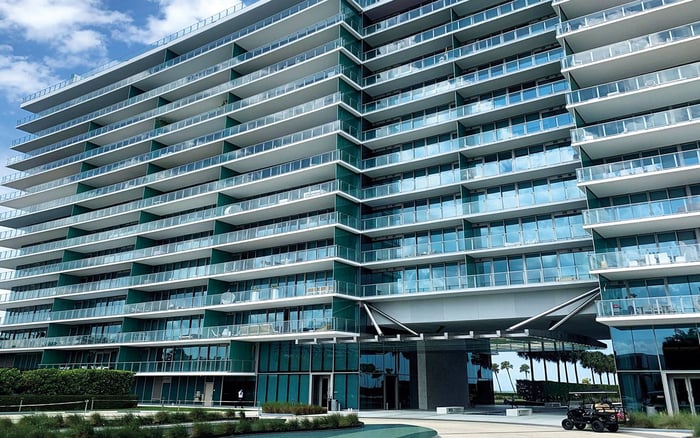
For a buyer considering Oceana Key Biscayne, the question is not simply whether turnover occurred, but whether the association can explain the records, responsibilities, and unresolved items it inherited. That question belongs in any condominium acquisition review. Project references here are comparison points, not assertions of defects, disputes, or incomplete work at those properties.
The strongest management strategy separates four workstreams: document delivery, independent technical review, financial reconciliation, and preservation of legal rights. Each should have a responsible adviser and a written record of outstanding questions.
A turnover archive should include plans, specifications, permits, approvals, warranties, insurance policies, contracts, financial records, maintenance records, and records of the developer-controlled board. Receipt is only the beginning. The incoming board should determine whether those materials are complete, organized, and consistent with delivered conditions.
Create an index identifying each document, its date, the party supplying it, and any missing attachments. Keep unresolved requests visible; a large electronic folder is not proof of completeness.
Financial diligence warrants a separate review. Florida law requires delivery of detailed financial records to the post-turnover association. A building inspection cannot establish whether the accounting handover is complete, just as a ledger cannot establish whether construction is sound.
Buyers should request a clear explanation of unresolved financial matters and who is reviewing them. Boards should keep accounting questions separate from the construction punch list so that neither is obscured by the other.
The required sealed architect’s or engineer’s turnover report addresses major common elements and systems, including condition, maintenance requirements, useful life, and replacement costs. Its value lies in what it reveals about the building’s operation, not merely its presence in the archive.
A Structural Integrity Reserve Study, or SIRS, serves a different purpose. Applicable condominium buildings of three or more stories have SIRS obligations associated with turnover. The study primarily supports reserve planning; it does not replace an independent transition study or construction-defect investigation. Confirm current applicability and timing with the association’s professionals.
An independent pre-turnover structural evaluation, also called a transition study, helps the incoming board assess building conditions before assuming control. Ask the engineer to explain the scope, inaccessible areas, limitations, and recommended follow-up. A condition assessment is not a guarantee that every concealed issue has been ruled out.
For a purchaser comparing Key Biscayne with Coconut Grove, including Park Grove Coconut Grove, these distinctions provide a consistent diligence framework. Ask what each study examined, what it left unanswered, and how its recommendations were incorporated into the maintenance and reserve plan.
Turnover is not a universal starting date for legal protection. Warranty expiration, limitations periods, and repose are distinct deadlines, and their application requires project-specific legal advice.
Florida’s statutory developer warranty for each condominium unit generally runs for three years from completion of the building containing that unit. The roof-and-structure developer warranty is generally described as three years from completion or one year after turnover, whichever is later, subject to a five-year maximum. Contractors, subcontractors, and suppliers may have separate statutory warranty exposure: three years for specified structural components and building-serving systems, and one year for other improvements and materials.
These periods should not become a do-it-yourself claims calendar. Construction-defect filing deadlines can depend on certificate, completion, abandonment, or latent-defect discovery events rather than turnover alone. A seven-year construction-defect repose period can run from the earliest applicable certificate or abandonment event, subject to limited exceptions.
Have Florida condominium counsel verify applicable law, trigger dates, coverage, and required procedures. Maintain a separate deadline register alongside the engineering issue log. Do not assume an ongoing repair discussion preserves a claim.
An unfinished common area should be described with the same precision as a private residence’s specifications. Compare promised amenities and approved plans with delivered conditions, then maintain a dated punch list supported by photographs, correspondence, and relevant documents.
Each entry should identify the location, observed condition, applicable promise or specification, party asked to respond, and criteria for completion. Distinguish incomplete work from suspected defective work and ordinary maintenance. Each category calls for different technical and legal analysis.
Associations may pursue claims involving defective common areas or amenities where negligent construction, poor materials, or code violations caused the problems. Incompleteness alone should not be treated as proof of a construction defect or an established legal remedy.
For buyers also evaluating Brickell residences such as Una Residences Brickell, the same principle applies: assess documented delivery obligations separately from presentation. Before signing releases or accepting unfinished common areas, consider independent engineering and legal advice. Closeout should reflect evidence and professional review, not an informal assurance that everything is nearly finished.
Key Biscayne’s governance history reinforces the importance of clear responsibility without proving anything about a particular developer handover. In June 2023, EmeraldBay was identified as a defendant in litigation brought by the Key Colony Homeowners Association, which maintains shared spaces in the complex. In April 2024, the dispute centered on EmeraldBay’s withholding of certain HOA maintenance payments when individual owners were delinquent.
Those dated events illustrate shared-cost and governance tensions. They do not establish a developer-turnover or unfinished-amenity claim, nor should they be read as a statement of current litigation status.
The practical lesson is to identify which entity maintains each shared space, who funds it, and how payment disputes are handled. Buyers should seek clarity on those relationships rather than assume one board controls every aspect of the residential experience.
A sound handover leaves more than a document archive. It leaves a usable record of building condition, financial questions, legal deadlines, and completion commitments. Boards should assign responsibility for each open item and preserve that record through changes in management or leadership.
For buyers, the decisive question is whether the association can explain what remains unresolved and how it is being addressed. That is a more useful measure of stewardship than reassurance alone.
Explore South Florida residences with a more discerning ownership perspective at MILLION.
If branded residences are on your mind — as a home or as an allocation — we would be glad to share what we are seeing, privately.
Begin a quiet conversationDeveloper turnover transfers association control from the developer to owners. It is a critical opportunity to review construction condition, financial records, and outstanding obligations.
The file should include plans, specifications, permits, approvals, warranties, insurance policies, contracts, financial records, maintenance records, and developer-controlled board records.
It addresses major common elements and systems, including their condition, maintenance requirements, useful life, and replacement costs.
No. A SIRS primarily supports reserve planning and does not replace an independent transition study or construction-defect investigation.
Applicable condominium buildings of three or more stories have SIRS obligations associated with turnover. The association’s professionals should confirm current applicability and timing.
An independent evaluation helps the incoming board assess building conditions before assuming control. Its scope and limitations should be understood alongside any recommended follow-up.
It generally lasts three years from completion of the building containing the unit. Florida condominium counsel should confirm the applicable coverage and project-specific dates.
No. Filing deadlines may depend on certificate, completion, abandonment, or latent-defect discovery events, and warranty expiration is distinct from limitations and repose.
Compare promised amenities and approved plans with delivered conditions, then maintain a dated punch list with evidence, responsible parties, and completion criteria. Consider independent engineering and legal advice before acceptance or releases.
No. The June 2023 and April 2024 events illustrate governance and shared-cost disputes, not an established developer-turnover or unfinished-amenity claim.