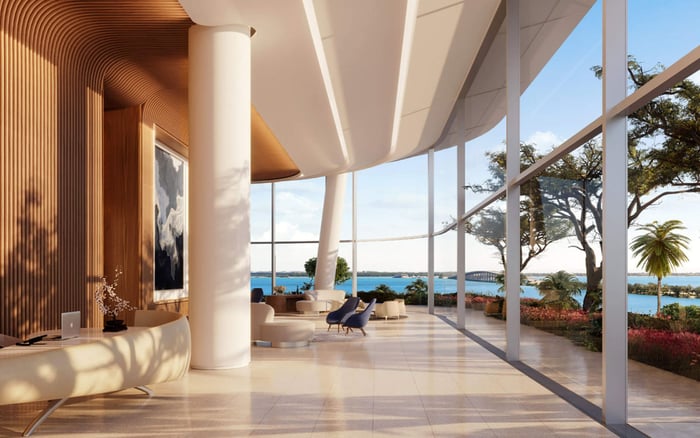
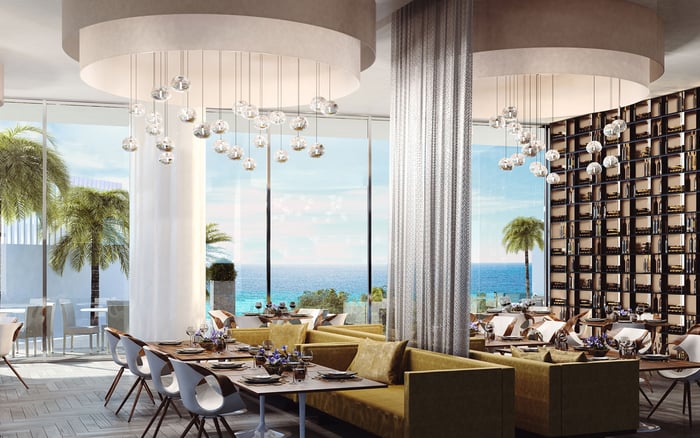
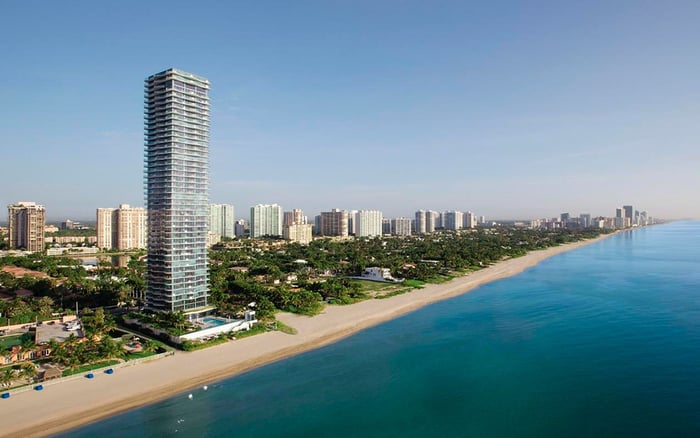
A buyer-focused comparison of Regalia Sunny Isles Beach and The Ritz-Carlton Residences® Miami Beach through the lens of operational hurricane readiness, including exposure, design, systems, power, staffing, and documentation.
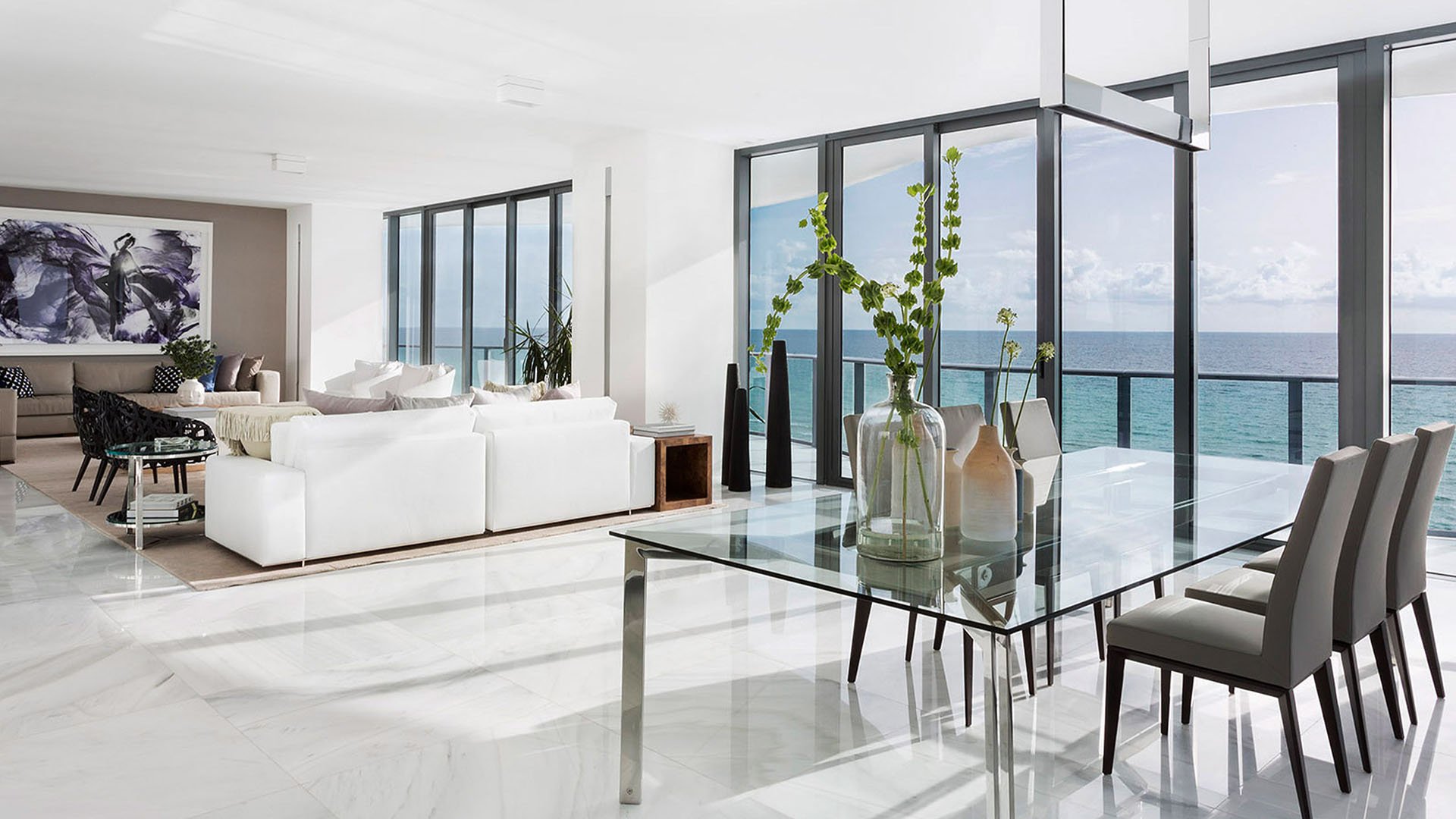
For a certain South Florida buyer, hurricane readiness is not a brochure phrase. It is a practical requirement that determines whether a residence can remain viable before, during, and after a major weather event. That buyer is not asking only whether a building is luxurious. The more important question is whether the building can operate under pressure.
That is the sharper way to compare Regalia Sunny Isles Beach and The Ritz-Carlton Residences® Miami Beach. One represents the Sunny Isles Beach option in this decision. The other represents the Miami Beach option. Both occupy a luxury market where architecture, service, and privacy matter, yet the storm-season buyer must look beyond brand language and into operational reality.
Some buyers may frame the decision in shorthand as Sunny Isles versus Miami Beach, but the real distinction is not postal identity. It is whether the residence can answer practical questions about exposure, building design, mechanical systems, power strategy, and on-site operations with clarity.
In South Florida, “built to code” is a starting point, not a complete answer. For a primary residence, a resale purchase, or a second home that may sit empty during part of storm season, buyers should treat code compliance as one layer of diligence rather than the end of the conversation.
Operational readiness asks different questions. How does the site experience physical hazard exposure? How does the structure’s design support protection and recovery? Where are critical mechanical systems located, and how are they protected? What is the backup power strategy? Who is on site when the weather turns, and what can they actually do?
The buyer who needs hurricane readiness to be operational, not rhetorical, should expect evidence. That evidence may come through association records, engineering summaries, insurance materials, capital improvement histories, emergency procedures, and direct conversations with building management. The point is not to accept confidence. The point is to confirm capability.
Regalia Sunny Isles Beach should be evaluated first through exposure. A buyer considering this Sunny Isles Beach residence needs to understand the property’s specific physical context rather than rely on the broader reputation of the area. Exposure is not abstract. It affects wind considerations, water-management concerns, access conditions, and the way residents plan for arrival or departure before a storm.
Building design is the next lens. Serious buyers should ask how the building’s envelope, vertical circulation, common areas, garage areas, and access points are addressed in emergency planning. The goal is not to elicit a polished answer. It is to identify which elements are designed for protection, which rely on procedure, and which may require resident preparation.
Mechanical resilience matters just as much. Buyers should ask where key systems are located, how they are maintained, and what has been done to reduce vulnerability. Elevators, cooling infrastructure, pumps, life-safety equipment, communications systems, and access controls all become part of the operational conversation during storm season.
Power strategy deserves particular scrutiny. A residence can feel effortless on a normal day and become difficult quickly if backup systems are narrow in scope. The question is not simply whether backup power exists. The question is what it supports, for how long, under what conditions, and with what service priorities.
The Ritz-Carlton Residences® Miami Beach should be studied with the same discipline. The name may suggest service culture and residential polish, but hurricane readiness must still be evaluated through practical systems. For this Miami Beach option, the buyer’s diligence should focus on whether operational expectations are documented and repeatable.
Building era is an important part of the review. Different eras of design and construction can produce different assumptions about systems, materials, and storm planning. Buyers do not need to be engineers, but they should bring engineers, counsel, and insurance advisors into the conversation before treating any luxury address as automatically resilient.
The on-site operations question is especially important for buyers who travel often. A building may have elegant common spaces and a strong hospitality posture, yet the storm-season question is more specific: who communicates with residents, who secures shared spaces, who monitors systems, who coordinates vendors, and what happens if access to the area is interrupted?
For The Ritz-Carlton Residences® Miami Beach, the decisive issue is not whether the residence feels prepared in ordinary conditions. It is whether management can describe a storm protocol in enough detail for a buyer to understand what is covered, what is not covered, and what remains the owner’s responsibility.
The best comparison between Regalia Sunny Isles Beach and The Ritz-Carlton Residences® Miami Beach is a five-part scorecard.
First, evaluate exposure. This includes the property’s physical hazard profile and the practical realities of access, evacuation, re-entry, and surrounding infrastructure. Two luxury residences can sit in the same regional market and still present very different operational considerations.
Second, evaluate design. Buyers should look for clarity around the building envelope, common-area protection, water-management assumptions, vertical movement, and how the building is intended to behave during severe weather.
Third, evaluate mechanical systems strategy. A beautiful residence depends on less visible infrastructure. If the mechanical strategy is not easily explained, the buyer should slow down.
Fourth, evaluate power. Backup power is not a binary topic. It has scope, duration, fuel assumptions, maintenance requirements, and prioritization. A serious buyer should ask what remains functional and what does not.
Fifth, evaluate staffing. Human execution is part of resilience. Procedures that sit in a binder are not the same as trained personnel with clear responsibilities.
The better fit is the residence that can document readiness most convincingly. If Regalia Sunny Isles Beach can provide stronger clarity on exposure, design, mechanical resilience, power strategy, and storm-season operations for a particular buyer’s needs, it becomes the stronger operational choice. If The Ritz-Carlton Residences® Miami Beach can provide more complete answers and more confidence around managed continuity, then it may be the better fit.
This is not a comparison that should be won by lifestyle language. It should be won by records, procedures, engineering comfort, and the buyer’s own risk tolerance. A buyer who prioritizes oceanfront beauty, service, and privacy should still keep the practical hierarchy intact: life safety first, continuity second, luxury third.
For ultra-premium buyers, the most elegant purchase is often the one that removes uncertainty. In this case, the winning residence is not necessarily the one with the more recognizable setting or the more seductive presentation. It is the one that can show, in plain operational terms, how it is prepared to perform when conditions are not ideal.
Is Regalia Sunny Isles Beach automatically more hurricane-ready than The Ritz-Carlton Residences® Miami Beach? Not automatically. The better choice depends on documented exposure, design, systems, power, and operational procedures.
Is The Ritz-Carlton Residences® Miami Beach automatically the safer operational choice because of its brand? No. Brand strength may matter for service expectations, but storm readiness must be verified through building-specific information.
What should buyers ask first when comparing these residences? Start with exposure and access. A buyer should understand the property’s physical risk profile and what happens before and after a storm.
Does “built to code” settle the hurricane-readiness question? No. Code compliance is important, but operational readiness also depends on systems, power, staffing, maintenance, and procedures.
Why does mechanical systems strategy matter so much? Mechanical systems affect comfort, access, safety, and recovery. Their location, protection, and maintenance can shape post-storm continuity.
What is the most important power question to ask? Ask what backup power actually supports. Buyers should distinguish between life-safety coverage, common-area function, and residence-level comfort.
Should seasonal owners evaluate hurricane readiness differently? Yes. Owners who are away during storm season need confidence in communication, property access, staff protocols, and owner responsibilities.
How should a buyer compare staffing between the two buildings? Ask who is on site, what they are trained to do, how residents are updated, and how vendors are coordinated after a storm.
Can a luxury presentation obscure operational gaps? It can. Buyers should separate finishes, amenities, and service language from the practical details that determine storm performance.
What is the final decision rule? Choose the residence that provides the clearest documented plan for exposure, design, systems, power, and operations.
If you'd like a private walkthrough and a curated shortlist, connect with MILLION.
If branded residences are on your mind — as a home or as an allocation — we would be glad to share what we are seeing, privately.
Begin a quiet conversation