A buyer-focused look at how households should evaluate potential commercial-tenant noise around Regalia Sunny Isles Beach, from outdoor livability to document review, visit timing, and resale positioning.

For households evaluating Regalia Sunny Isles Beach, commercial-tenant noise should be analyzed as part of practical purchase diligence. In South Florida coastal condominium settings, the surrounding environment can include hospitality activity, street circulation, deliveries, valet movement, beach use, and occasional event patterns. Those factors may influence how a residence feels at different hours.
The central question is not whether a home is perfectly silent. Coastal living has a natural ambient character, and an active corridor may carry background sound. The more important question is whether any recurring sound pattern affects sleep, work, entertaining, or outdoor enjoyment in a way that changes the value of the residence for a specific household.
A careful buyer separates ordinary location noise from operational sound tied to a nearby tenant or use. That distinction helps the household decide whether the condition is acceptable, manageable, or significant enough to affect pricing and long-term confidence.
A polished showing can make a residence feel calm, especially when doors are closed and mechanical systems are running. Noise diligence requires a wider lens. Buyers should spend time in primary bedrooms, living spaces, secondary rooms, balconies, and terraces to understand how sound changes across the home.
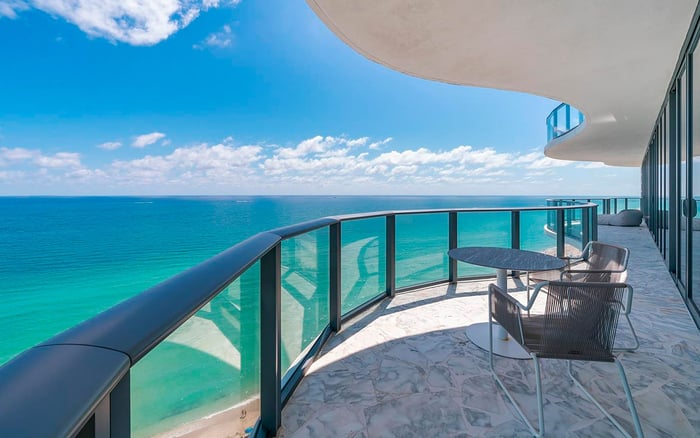
Outdoor areas deserve particular attention because they are part of the lifestyle proposition in a South Florida residence. A terrace or balcony that feels peaceful at one hour may feel different during a busier evening or weekend period. Testing the home with doors open and closed can reveal whether sound is mainly an outdoor condition or whether it meaningfully enters the interior.
The character of sound matters as much as volume. A steady background hum may be less disruptive than intermittent bass, repeated loading activity, mechanical cycling, or short bursts of amplified sound. Buyers should listen for pattern, duration, and predictability rather than relying on a single impression.
Before judging risk, a household should try to understand where the sound originates. Potential sources may include activity within the condominium environment, adjacent properties, street-facing operations, beach-facing uses, or nearby hospitality and retail activity. Each category raises a different diligence question.
If the issue appears internal, the buyer can review building rules, enforcement procedures, and any relevant complaint history. If the source is outside the condominium, the review becomes more contextual, because neighboring uses may operate on schedules the association does not control. The source also matters for resale, since future buyers may react differently to routine ambient sound than to a recurring operational disturbance.
Sound should be evaluated alongside floor position, exposure, glass performance, outdoor-space use, and the household’s daily routine. The best answer is rarely universal; it depends on how the buyer expects to live in the residence.
A single appointment is usually not enough to understand sound conditions. Buyers should request access at varied times, including daytime, evening, weekend, and higher-activity periods when feasible. The goal is to compare calm conditions with moments when surrounding uses are more likely to be active.
During each visit, the household should pause in the rooms that matter most. That may include the primary suite, home office area, main living room, dining area, and principal outdoor spaces. It is also useful to note whether the sound is constant, intermittent, directional, or vibration-based.
Written observations can help avoid relying on memory. Buyers may want to record the time of day, weather conditions, open or closed door positions, and whether nearby activity was visible. This creates a clearer basis for discussion with advisors before making a final decision.
Commercial-tenant noise should be part of the same diligence conversation as governance, rules, reserves, maintenance expectations, and resale positioning. Buyers should ask for condominium documents, nuisance provisions, rules related to use and conduct, and any available history of complaints or enforcement involving noise.
The purpose is not only to understand current conditions. It is also to evaluate how concerns may be addressed if the environment changes after purchase. A sound condition that is stable, documented, and limited may be easier to accept than one with an unclear source or uncertain enforcement path.
This diligence can also affect negotiation strategy. If a household finds that sound is present but manageable, the issue may simply become part of the overall value analysis. If the impact is material, recurring, or difficult to verify, the buyer may decide to seek additional review, adjust expectations, or compare other South Florida options.
Noise is both a livability issue and a resale issue. Ultra-luxury buyers tend to place high value on privacy, rest, outdoor enjoyment, and predictability. A residence that supports those priorities across different times of day can be easier to explain when it returns to the market.
Households should therefore consider how the sound environment would be described to a future buyer. If the answer is clear and evidence-based, the ownership story is stronger. If the answer depends on minimizing uncertainty, the risk may deserve more weight.
The most confident approach is disciplined and unemotional: observe the residence in real conditions, review the documents, identify the source, and decide whether the sound profile matches the household’s actual lifestyle.
What is commercial-tenant noise? It is sound associated with nearby business operations, hospitality activity, retail use, deliveries, events, valet movement, or mechanical equipment.
Why does commercial-tenant noise matter for Regalia Sunny Isles Beach buyers? It can affect how a household uses bedrooms, living areas, balconies, terraces, and entertaining spaces.
Is ordinary coastal sound the same as commercial-tenant noise? No. Ambient coastal sound is part of the setting, while recurring tenant-related sound may be more operational and time-specific.
Should a buyer rely on one showing to judge sound? No. A single showing may not reveal evening, weekend, or higher-activity patterns.
Which areas of the residence should be tested for sound? Buyers should listen from sleeping areas, main living spaces, work areas, and outdoor spaces such as balconies or terraces.
Why do outdoor areas need separate review? Outdoor spaces can experience sound differently than sealed interiors, especially when nearby activity is active or amplified.
What documents should a buyer request? Buyers should review condominium rules, nuisance provisions, use restrictions, and any available complaint or enforcement history.
Can sound conditions affect resale? Yes. Future buyers may weigh privacy, quiet enjoyment, and predictable outdoor use when assessing value.
What if the source of sound is unclear? The buyer should continue diligence, request additional information, and avoid treating uncertainty as a minor detail.
How should a household make the final decision? The decision should combine personal tolerance, documented rules, observed sound patterns, and the expected effect on daily living.
For a tailored shortlist and next-step guidance, connect with MILLION.
If branded residences are on your mind — as a home or as an allocation — we would be glad to share what we are seeing, privately.
Begin a quiet conversation