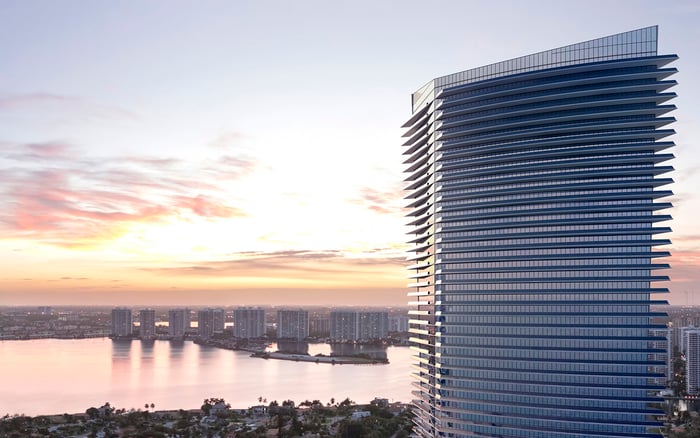
In a Surfside pre-construction purchase, flexibility and downside protection are created by the contract. Early review should test assignment controls, default remedies, force majeure extensions, outside closing dates, and the way those provisions operate together.

A Surfside purchase may be inspired by architecture, privacy, service, and proximity to the ocean. Yet in a pre-construction transaction, the most consequential design may be the contract itself. Assignment restrictions, deposit remedies, force majeure provisions, and closing extensions determine how much flexibility the buyer retains if circumstances change.
This is especially important for a purchaser balancing primary-residence, second-home, or investment objectives. The agreement may allocate disruption and delay in ways that are not apparent from the business terms. This buyer’s guide offers a straightforward perspective: review these provisions together and early enough for counsel to identify ambiguity, request clarification, and evaluate whether the risk allocation fits the purchase strategy.
When considering Surfside opportunities such as The Delmore Surfside, legal review should begin before enthusiasm hardens into an assumption that every future option will remain available.
An assignment transfers the buyer’s contractual position before closing. There is no uniform Florida right to assign a pre-construction purchase agreement, so the contract language controls. A buyer should not assume that a residence can be transferred to an affiliate, family entity, trust, or third party simply because closing has not occurred.
Counsel should determine whether assignment is prohibited, permitted only with developer consent, or subject to objective conditions. The review should also identify assignment fees, notice requirements, timing limitations, financial qualification standards, and whether the original buyer remains liable after an approved transfer. If consent is discretionary, the practical value of an assignment right may be limited.
The issue deserves attention even when the buyer has no present intention to sell. Estate planning, financing, tax planning, family circumstances, and portfolio decisions can evolve during construction. The same analysis applies when comparing established oceanfront addresses such as Arte Surfside with a new purchase whose transfer rights exist only on the signed page.
Liquidated damages are an amount agreed when the contract is formed to compensate for a future breach. Under Florida contract principles, enforceability generally turns on whether damages were difficult to ascertain at formation and whether the stipulated amount bears a reasonable relationship to the expected loss rather than functioning as punishment.
For a condominium buyer, the immediate question is often the deposit. The agreement may specify forfeiture as the developer’s remedy after buyer default, but the full remedies section warrants review. A provision allowing the non-breaching party to choose between liquidated damages and actual damages may be more vulnerable to characterization as a penalty. Conversely, an agreed liquidated remedy may limit recovery of actual damages for the same loss.
The existence of a clause does not guarantee enforcement as drafted. Florida courts can reject poorly constructed liquidated-damages or no-damages-for-delay provisions. Construction disputes illustrate principles of drafting and enforceability, but they should not be treated as automatically controlling a condominium purchase agreement. The purchase contract, applicable common law, and transaction-specific facts remain central.
For buyers comparing waterfront ownership, including Ocean House Surfside, the useful inquiry is not merely how much has been deposited. It is what conduct constitutes default, which notices and cure periods apply, and whether forfeiture is the exclusive remedy.
Traditional Florida construction-law treatment defines an act of God as a natural event, without human intervention, that reasonable care and foresight could not prevent. Contractual force majeure language, however, can be drafted more broadly. Its practical effect depends on the listed events, the required causal connection, notice obligations, mitigation language, and the extensions or other relief granted.
A buyer should ask whether the clause covers only truly extraordinary events or also labor, material, governmental, utility, financing, or other disruptions when expressly included. The review should determine whether extensions are limited to the actual period of impact, whether multiple extensions can accumulate, and whether any overall cap applies.
The central concern is not predicting the next disruption. It is understanding who bears the calendar and financial consequences when a stated event affects performance.
A projected completion window is not the same as a binding outside closing date. Whether a delay permits cancellation depends on the agreement, extension rights, force majeure language, applicable statutory deadlines, and whether the developer’s conduct amounts to a material breach.
A material breach may provide grounds to terminate and seek return of the deposit, but that conclusion is both fact- and contract-specific. Buyers should therefore map every provision that can move the closing date, including notice mechanics and the conditions that activate termination rights.
When evaluating new construction alongside completed properties such as Fendi Château Residences Surfside, buyers should also consider the practical consequences of delay: expiring financing, rate changes, interim housing, planned asset sales, and entity or estate-planning timelines. Those considerations do not rewrite the contract, but they reveal why an uncapped extension can matter.
The strongest review is a scenario test. If the buyer cannot close, can the contract be assigned? If assignment is denied, is the deposit the developer’s exclusive remedy? If construction is delayed, does force majeure extend the outside date before termination becomes available? Do notice and cure provisions create additional time?
Early counsel review should focus on objective assignment standards, fees, deposit exposure, force majeure scope, extension caps, the outside closing date, and express termination rights. No single clause provides complete protection. Their interaction determines whether the buyer has flexibility, a defined exit, or prolonged exposure.
Is there a uniform Florida right to assign a pre-construction contract? No. Assignment depends principally on the agreement’s language and conditions.
What does an assignment accomplish? It transfers the buyer’s contractual position before closing, subject to any prohibition, consent requirement, fee, or continuing-liability provision.
Can developer consent make an assignment right less useful? Yes. If consent is discretionary rather than governed by objective standards, the buyer may have limited certainty that a proposed transfer will be approved.
What are liquidated damages? They are an amount agreed at contract formation to compensate for injury from a future breach.
When can liquidated damages resemble a penalty? A stipulated amount is vulnerable when it lacks a reasonable relationship to the expected loss or operates primarily as punishment.
Does a deposit-forfeiture clause automatically control every default? Not necessarily. Counsel should review the default definition, cure rights, remedy language, and enforceability of the clause as drafted.
What should buyers inspect in a force majeure provision? Review covered events, causation, notice, mitigation, extension calculations, cumulative extensions, and any overall cap.
Does a construction delay automatically permit cancellation? No. Cancellation depends on the contract, extension rights, force majeure terms, statutory deadlines, and whether a material breach occurred.
Why is the outside closing date important? It can establish the point at which prolonged delay may trigger a contractual termination right, subject to permitted extensions and notice requirements.
When should counsel review these provisions? Review should occur before signing, while there is still time to clarify the risk allocation and assess whether it suits the buyer’s objectives.
To compare the best-fit options with clarity, connect with MILLION.
If branded residences are on your mind — as a home or as an allocation — we would be glad to share what we are seeing, privately.
Begin a quiet conversation