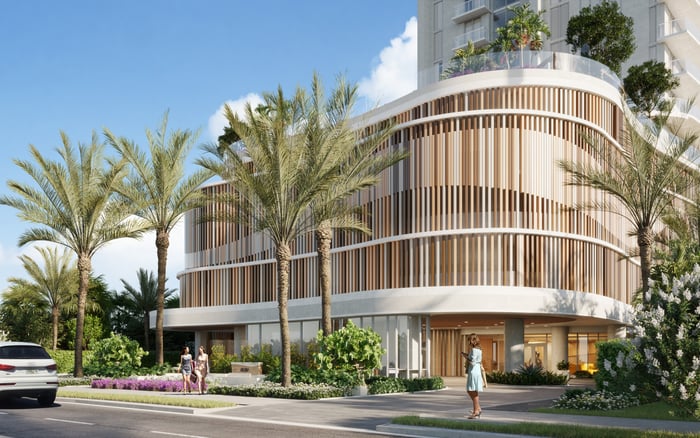
A buyer-focused framework for evaluating façade sealants, balcony drainage, waterproofing documentation, and any wind-driven-rain claims at The Berkeley Palm Beach, without presuming defects or a repair history.
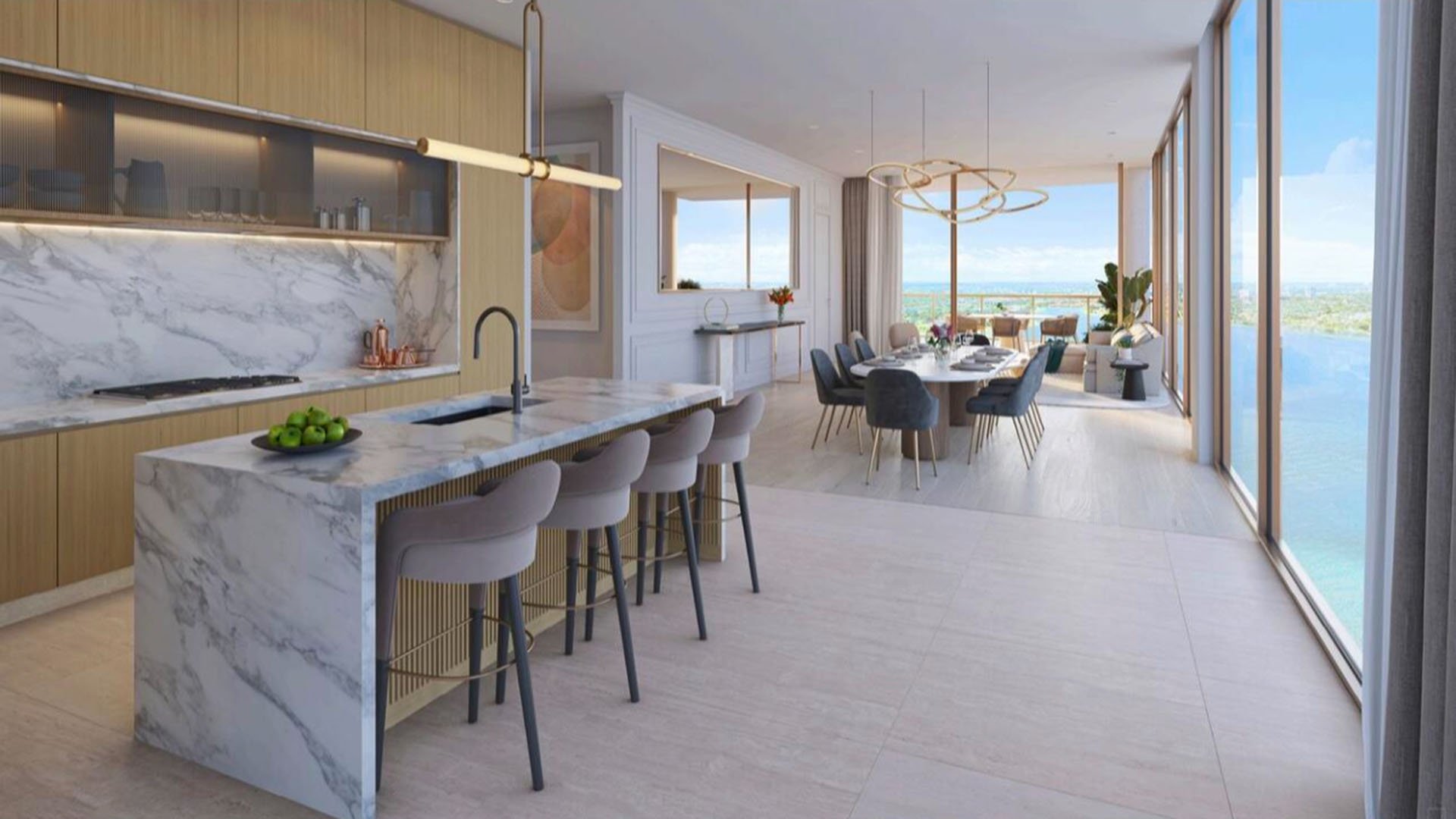
At The Berkeley Palm Beach, the most useful building-envelope questions concern what sits behind the finish: façade sealant specifications, balcony waterproofing details, and documentation of any water-intrusion history. For a discerning purchaser, these are questions of ownership clarity, not reasons to presume a defect.
This article does not establish a Berkeley-specific façade-sealant program, balcony-waterproofing project, wind-driven-rain claim, related lawsuit, or special assessment. That does not establish their absence. The project's development status also requires confirmation before a buyer assumes that an operating association, completed repairs, or historical inspection records exist.
The approach should therefore remain conditional: establish what exists, request the relevant documents, and have qualified advisers distinguish design intent from installed condition. Waterfront buyers should apply that discipline with the same care they bring to layout, outlook, and interior craftsmanship.
First confirm the building's status, age, governing jurisdiction, and the parties responsible for providing information. Direct requests to the appropriate developer, seller, or association representative. An unavailable document is not evidence that an inspection or repair was unnecessary.
Ask qualified advisers to verify whether milestone-inspection requirements apply, which authority administers them, and what deadlines or professional qualifications are required. Do not assign a Berkeley-specific inspection obligation without confirming jurisdiction, current rules, and applicability.
Keep the regulatory inquiry separate from the purchase inspection. Ask an independent building-envelope consultant to define the review needed for the residence, terrace, adjacent façade, and available common-element records. Neither a project name nor a Palm Beach address establishes which authority governs the property.
This article establishes no Berkeley-specific sealant installation date, warranty, maintenance schedule, or replacement interval as a basis for a calendar. Assigning a generic replacement cycle would create false precision. Instead, request the actual product specifications, installation records, warranty terms, and applicable inspection or maintenance instructions.
Have the consultant identify the joints and interfaces within the review's scope. Request documentation showing where sealants are specified, how they connect with adjoining waterproofing, and whether any proposed work addresses isolated locations or a broader area. A reference to resealing should prompt a request for defined locations, materials, responsibilities, and acceptance criteria.
Where prior work exists, seek the repair contract, applicable permits, inspection sign-offs, and warranty documentation. Where work remains prospective, request the proposed specification and maintenance obligations rather than assuming a repair history. Treat installation, inspection, localized repair, and eventual replacement as distinct entries in the ownership plan.
For a purchaser also considering Alba West Palm Beach, the meaningful comparison is the quality and completeness of each property's documentation, not an assumed shared sealant cycle.
Evaluate a balcony's drainage rather than relying on a surface that appears waterproof. Request the specified slope and drainage details, and ask the consultant to assess the actual design and installed conditions against applicable requirements. Do not substitute a generic slope recommendation for a verified Berkeley specification.
The review should follow water through the assembly. Does the deck direct it toward the intended discharge points? Is there a functional drip detail at the edge? Does waterproofing remain continuous where the deck meets adjoining walls? Where a membrane is covered, is there a drainage layer above it?
For a walking surface, request confirmation that the selected waterproofing system is suitable for its intended pedestrian use; do not assume a roof coating is suitable. Request specification details for the membrane, primer, reinforcement, crack treatment, topcoat, terminations, drains, and compatible sealants, as applicable. These are general review considerations, not findings about Berkeley's materials.
Ask the technical reviewer to assess crack-bridging capability and explicit treatment of cracks and joints. For an exposed system, request verification of topcoat suitability for UV exposure and drainage before approving work. These checks focus on the complete assembly, not simply the appearance of its final coat.
A terrace review is most useful when drawings, specifications, and accessible conditions are considered together. Ask the independent consultant to explain which areas can be evaluated visually, which details remain concealed, and whether further investigation is warranted. A clean finish is not proof of concealed waterproofing continuity.
If repairs are documented, connect the original scope to the closeout evidence. Confirm which locations were addressed, what materials were used, what inspections occurred, and what warranty applies. If repairs are proposed, seek the same clarity before treating a budget or brief description as a complete technical solution.
Keep the unit-level review connected to adjoining walls and available common-element information. The objective is a coherent understanding of the relevant envelope interfaces, not separate assurances about individual finishes.
Do not assume that a wind-driven-rain claim exists at The Berkeley. If one is disclosed, evaluate the insurance record and the physical repair record separately. A claim's administrative status is no substitute for technical evidence about the affected area.
Request available insurance loss runs, open and closed claim files, coverage correspondence, expert assessments, repair invoices, and unit-level leak histories. Have counsel or an insurance adviser interpret coverage positions while the envelope consultant evaluates the documented conditions and corrective scope. Ask that each conclusion be tied to the relevant location and event.
A useful chronology connects the reported intrusion, investigation, proposed remedy, completed work, and any subsequent observations. Unrelated disputes involving similarly named places or other condominiums do not establish a Berkeley claim. Nor does the absence of a disclosed claim file guarantee that no water intrusion has occurred.
For buyers weighing Forté on Flagler West Palm Beach alongside The Berkeley, apply the same document questions without implying comparable conditions. Across a West Palm Beach shortlist, the objective is consistent scrutiny, not a ranking built on unsupported assumptions.
Where applicable, review reserve studies, board minutes, repair contracts, and special-assessment notices together. Ask advisers to identify documented obligations, unresolved technical questions, and items requiring further confirmation. Do not assign a Berkeley repair cost or assessment exposure without supporting evidence.
The strongest purchasing position is neither blanket reassurance nor reflexive concern. It is a clear account of what is specified, what has been inspected, what has been corrected if necessary, and who remains responsible. That clarity allows the residence's design and daily enjoyment to be considered alongside its ownership obligations.
For a discreet perspective on South Florida residences and buyer due diligence, explore MILLION.
If branded residences are on your mind — as a home or as an allocation — we would be glad to share what we are seeing, privately.
Begin a quiet conversationNo. It presents general due-diligence considerations, not verified findings of defects, repairs, claims, litigation, or special assessments at The Berkeley.
Confirm the project's development status, building age, governing jurisdiction, and appropriate document provider. Do not assume an operating association or historical inspection records exist.
This article establishes no Berkeley-specific replacement interval. Request the applicable specifications, installation records, warranty terms, and maintenance instructions.
No. Ask qualified advisers to confirm the governing jurisdiction, current requirements, and applicability before assigning an inspection obligation or deadline.
Ask qualified advisers to verify regulatory requirements and required professional qualifications. Separately, engage an independent building-envelope consultant to define the technical review's scope.
No. Request the project's specified slope and drainage details, then have the consultant assess the design and installed conditions against applicable requirements.
Ask the consultant to review drainage, edge drip details, deck-to-wall waterproofing continuity, and drainage above covered membranes. Request a complete specification suitable for the intended walking surface.
Request available loss runs, claim files, coverage correspondence, expert assessments, repair invoices, and unit-level leak histories. Evaluate the insurance position separately from evidence of corrective work.
Do not treat administrative closure as proof of completed corrective work. Request repair documentation, applicable inspection sign-offs, and technical review of the affected locations.
Request reserve studies, board minutes, repair contracts, and special-assessment notices. Use supporting records rather than assumptions to evaluate potential ownership obligations.