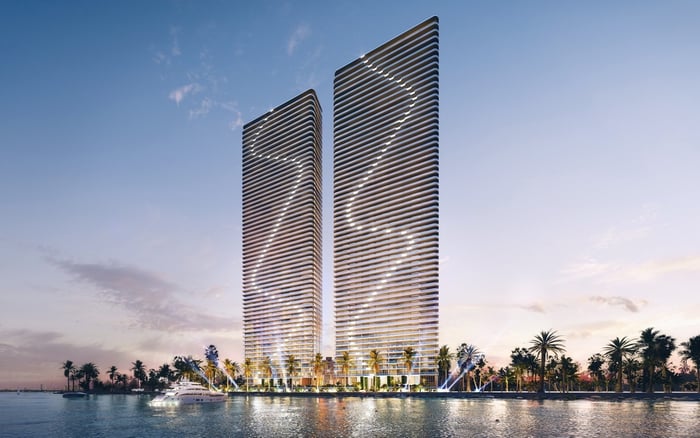
A buyer-focused framework for reviewing wind, flood, deductible, reserve, and HO-6 exposure at One Thousand Museum before committing to a luxury residence.

Insurance diligence for a residence at One Thousand Museum in Downtown Miami should begin with current documents rather than assumptions. A buyer should request the association's master property, wind, and flood policies, including declarations, forms, endorsements, exclusions, limits, sublimits, valuation provisions, and deductible schedules.
The review should identify the boundary between association responsibility and owner responsibility. Counsel and insurance advisers can compare the policy language with the condominium declaration, amendments, budget, financial statements, and assessment notices before the buyer commits to the acquisition.
Wind-related diligence should test the actual terms of the current program. Any named-storm, hurricane, or percentage deductible should be identified and converted into dollars using the basis stated in the policy.
Buyers should also examine exclusions, sublimits, ordinance-or-law coverage, valuation provisions, and the association's plan for funding uninsured amounts. No deductible amount or coverage conclusion should be assumed without the operative documents.
The same document-based method can support comparisons with Aston Martin Residences Downtown Miami and Waldorf Astoria Residences Downtown Miami. The useful comparison is among verified policy terms, financial capacity, and owner-level coverage-not marketing descriptions.
A buyer should ask whether the association maintains flood coverage and, if so, obtain the complete policy. The review should address insured property, locations, limits, deductibles, exclusions, and any restrictions affecting lower-level spaces or building systems.
The proposed HO-6 policy should then be checked for its own flood terms. Neither the master policy nor the owner's policy should be presumed to cover a loss unless the applicable forms and endorsements confirm it.
Premiums do not show the full financial exposure. Deductibles, exclusions, sublimits, and uninsured losses may require funding, but the source and allocation of that funding must be determined from the governing documents, association records, and applicable decisions.
Request a schedule of material deductibles and ask how each could be funded. Review operating cash, reserve balances, borrowing information, board materials, and pending or contemplated assessment notices without assuming that any single resource will be available.
A comparison with The Residences at 1428 Brickell should likewise focus on verified coverage boundaries, deductible burdens, reserves, and the coordination of master and owner policies.
Buyers considering valuable interiors or owner-installed improvements should determine how those items are classified under the condominium documents and insurance policies. Finish schedules, renovation records, inventories, and valuations can help an insurance adviser evaluate suitable owner-level limits.
The association's latest insurance appraisal should be reviewed alongside policy limits and valuation terms. Buyers should separately ask about ordinance-or-law coverage and equipment-breakdown coverage rather than treating them as automatic parts of a broad property policy.
Reserve and insurance diligence should proceed together. Request the current reserve study, budget, recent financial statements, reserve balances, insurance appraisal, loss runs, claims information, and notices concerning pending or contemplated assessments.
These records should be evaluated against the actual deductibles and coverage gaps identified in the policies. The purpose is not to declare reserves adequate without evidence, but to determine whether the available materials support an informed assessment of financial resilience.
The association's policy and the proposed HO-6 should be compared side by side. Confirm responsibility for interior finishes, fixtures, improvements, contents, and owner-installed upgrades under both the insurance documents and condominium documents.
The owner-level review should consider loss-assessment coverage, additional living expense, wind coverage, flood coverage, exclusions, limits, and deductibles. Qualified advisers should identify overlaps or gaps before coverage is bound.
Before closing, request all current master property, wind, and flood policies; declarations and endorsements; deductible schedules; insurance appraisals; reserve studies; budgets; financial statements; loss runs; claims information; and assessment notices. Insurance, legal, and financial advisers should review the package together because each document may affect the interpretation of another.
Does wind-resistant design eliminate the need for insurance review? No. A buyer still needs the current policies to evaluate limits, deductibles, exclusions, and valuation terms.
Is the current wind deductible established here? No. It must be verified from current declarations, endorsements, and the deductible schedule.
Should a buyer assume the master policy includes flood coverage? No. The association's current flood policy and related forms must confirm whether coverage exists and what it includes.
Why should percentage deductibles be converted into dollars? A dollar calculation helps the buyer and advisers evaluate the potential funding burden using the basis specified by the policy.
What reserve records should a buyer request? The request should include the current reserve study, budgets, financial statements, reserve balances, and assessment notices.
Why review loss runs and claims information? These records can help qualified advisers assess reported loss history and how the insurance program responded.
Does an HO-6 automatically cover everything inside a residence? No. Coverage depends on the owner policy, the master policy, and the responsibility boundaries established by the condominium documents.
What is loss-assessment coverage? It is owner-level coverage that may respond to certain association assessments, subject to the policy's terms, exclusions, deductibles, and limits.
Why review the association's insurance appraisal? It provides a document for advisers to compare with current policy limits and valuation provisions without assuming that coverage is sufficient.
Who should evaluate the complete diligence package? A buyer should coordinate qualified insurance, legal, and financial advisers familiar with Florida condominium transactions.
If you'd like a private walkthrough and a curated shortlist, connect with MILLION.
If branded residences are on your mind — as a home or as an allocation — we would be glad to share what we are seeing, privately.
Begin a quiet conversation