A buyer-focused look at private elevator efficiency in Sunny Isles Beach, contrasting spectacle-led arrival with the hospitality-led service model associated with The Ritz-Carlton Residences Sunny Isles Beach.
In Sunny Isles Beach, the private elevator has moved beyond spectacle. For the buyer of an ultra-luxury coastal condominium, it is part of the home’s operating system: the progression from porte cochere to lobby, from staffed reception to residential foyer, from public arrival to private retreat. The best systems do more than move residents upward. They preserve discretion, reduce friction, and make daily life feel composed.
That is why the comparison between Porsche Design Tower and The Ritz-Carlton Residences Sunny Isles Beach is useful for sophisticated buyers. One represents the more dramatic end of the private-arrival conversation, where vertical movement becomes part of the building’s identity. The other is best understood through a hospitality lens, where elevator service supports privacy, quiet control, and a polished residential rhythm.
For MILLION readers, the question is not simply which elevator is faster. Publicly available mechanical detail is limited, and precise wait times, handling capacity, maintenance histories, and real-time performance metrics are not broadly disclosed. The more valuable question is how each building’s private elevator experience performs as daily infrastructure.
Elevator efficiency in an ultra-premium tower is a blend of measurable and experiential qualities. Speed matters, but so do the number of intermediate stops, the predictability of access, the quality of the lobby sequence, the staffing culture around arrival, and the building’s ability to shield residents from unwanted encounters.
In a conventional discussion, an elevator is efficient if it arrives quickly and reaches the desired floor without delay. In a luxury residence, efficiency is broader. It includes whether guests are routed gracefully, whether service activity remains discreet, whether residents feel observed or buffered, and whether the transition into the home feels seamless after dinner, school drop-off, a flight, or a day on the water.
Private or semi-private elevator configurations can reduce uncontrolled encounters by linking access to protected residential foyers or lobbies. Fewer intermediate stops can also improve the perceived speed and exclusivity of vertical travel. Even when two rides take similar time, one may feel materially superior because it is calmer, more direct, and better supported by the building’s service protocol.
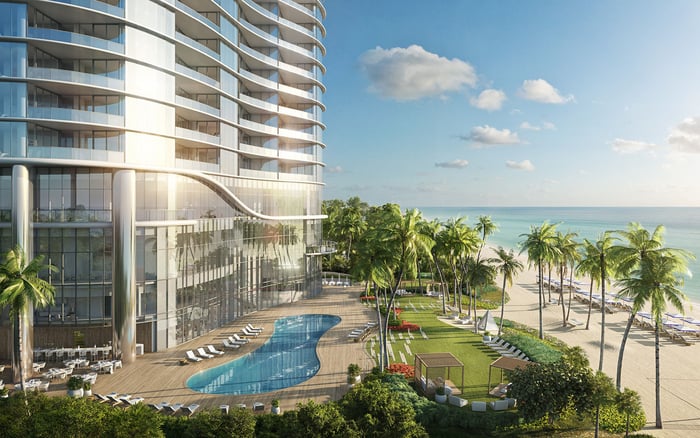
The Ritz-Carlton Residences Sunny Isles Beach is best framed as a hospitality-led private elevator model rather than an automotive elevator concept. Its elevator experience belongs to a broader branded-residence language: privacy, discretion, professional service, and a residential arrival that feels curated rather than theatrical.
Private elevator lobbies are central to that experience. They create a threshold between the shared life of the tower and the intimacy of the residence. For owners who value calm over display, that threshold can be as meaningful as a panoramic terrace or a spa-caliber amenity level. It is not about calling attention to movement. It is about removing unnecessary exposure from the resident’s day.
The Ritz-Carlton style of service also changes how buyers should judge elevator performance. A wait may feel shorter when the lobby is well staffed, the sequence is intuitive, and the transition from arrival to residence is handled with discretion. In this environment, service culture becomes part of elevator efficiency. The mechanical system matters, but so does the choreography surrounding it.
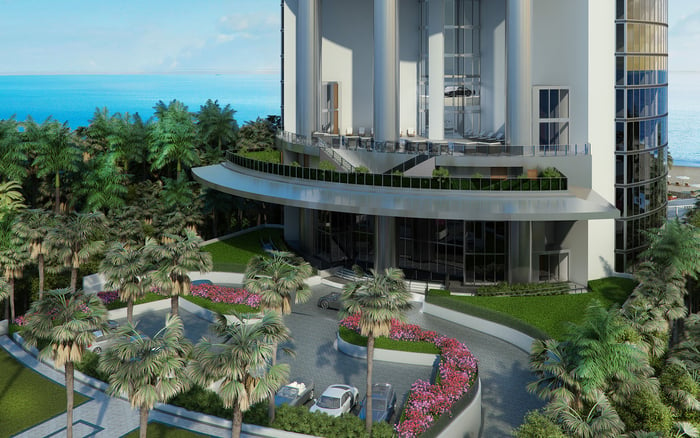
Porsche Design Tower belongs in the conversation because buyers associate it with a more spectacle-driven idea of private vertical arrival. In that framing, the elevator experience becomes part of the building’s personality and a visible expression of lifestyle. It is the opposite pole from a quiet hospitality model: more theatrical, more identity-led, and more closely tied to the emotional appeal of a signature concept.
For a certain buyer, that drama is a feature. Arrival is not simply a background function. It is part of the story of ownership. For another buyer, the more compelling luxury is invisibility: fewer interactions, fewer delays, fewer moments when the building calls attention to itself.
The key is to resist judging either approach by spectacle alone. A dramatic concept still needs operational reliability. A discreet hospitality model still needs strong throughput and maintenance discipline. In Sunny Isles Beach, the most discerning buyers increasingly understand that private elevator value is not a brochure promise. It is a lived experience repeated several times a day.
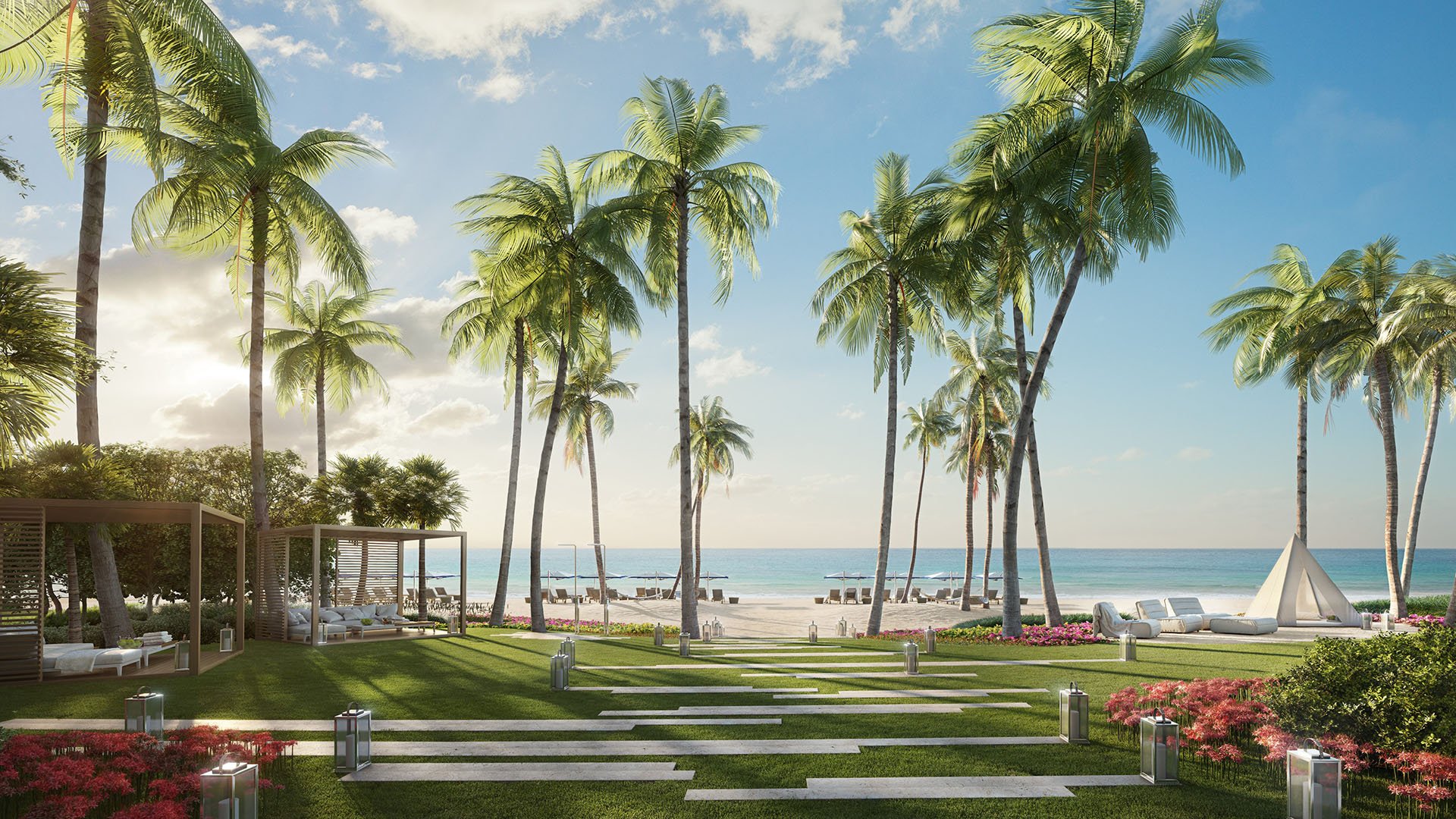
Sunny Isles Beach is an oceanfront market where privacy and controlled arrival are core buyer expectations. The underlying buyer intent is highly specific: secure coastal living, high-floor views, branded service, and a sense of separation from the public realm.
That is why elevator planning matters so much. A residence can offer exceptional water views, refined finishes, and expansive rooms, yet still feel compromised if vertical circulation is inconsistent or overly public. The journey home should not dilute the home itself.
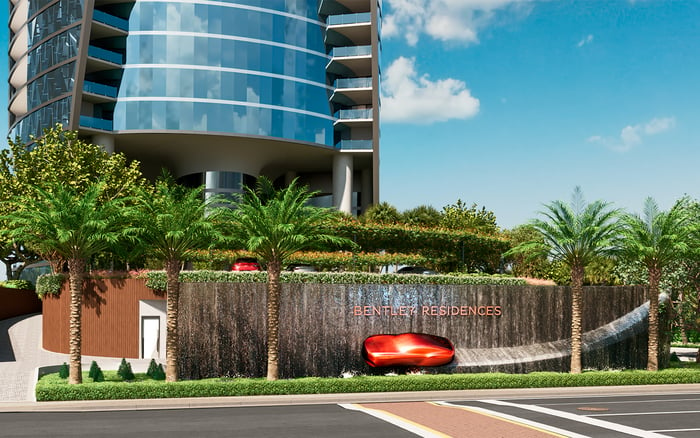
Buyers comparing The Ritz-Carlton Residences® Sunny Isles with other local luxury references such as Bentley Residences Sunny Isles, Jade Signature Sunny Isles Beach, and Turnberry Ocean Club Sunny Isles are often thinking beyond floor plans. They are considering how each tower manages access, service, privacy, and the emotional tone of arrival. In this tier of the market, those details shape long-term satisfaction as much as an amenity checklist.
A private elevator should be experienced at the pace of real life. Buyers should pay attention to the garage or valet sequence, the staffed arrival, the clarity of access control, and the feel of the elevator lobby itself. Is the route intuitive? Does the building feel calm during a busy window? Are residents and guests naturally separated from service movement? Does the private foyer feel like an extension of the residence?
It is also worth observing how the building handles peak moments. Dinner hours, weekend afternoons, and holiday periods reveal more than a quiet weekday tour. The goal is not to demand unpublished performance data, but to understand whether the tower’s vertical circulation feels consistent, composed, and aligned with the price point.
Maintenance reliability should be treated as part of the luxury equation. Even the most impressive elevator concept loses value if service disruptions are frequent or poorly managed. Buyers should ask practical questions through appropriate advisory channels and focus on how the building communicates, responds, and preserves resident convenience when systems require attention.
The strongest private elevator experiences share a common trait: they give residents control. Control over who they encounter. Control over how guests arrive. Control over the boundary between public building and private home. Control over the small daily transitions that determine whether a residence feels effortless or merely expensive.
In that sense, Porsche Design Tower and The Ritz-Carlton Residences Sunny Isles Beach represent two distinct visions of luxury arrival. One leans toward the memorable statement. The other leans toward disciplined service. Neither should be reduced to elevator speed. The better evaluation is how each model supports the owner’s preferred style of privacy, convenience, and identity.
For the South Florida buyer, the lesson is clear. Private elevator efficiency is not a single metric. It is a harmony of design, staffing, access, maintenance, and atmosphere. When it works well, it disappears into the background. When it does not, it becomes impossible to ignore.
What does private elevator efficiency mean in Sunny Isles Beach? It means more than speed. It includes privacy, fewer unnecessary stops, service coordination, reliability, and the quality of the arrival experience.
Is The Ritz-Carlton Residences Sunny Isles Beach an automotive elevator concept? No. It is better understood as a hospitality-led private elevator model focused on discretion, controlled arrival, and branded residential service.
Why is Porsche Design Tower part of this comparison? It represents the more dramatic side of the private-arrival conversation, where vertical movement is closely tied to building identity and lifestyle perception.
Are exact private elevator wait times publicly available? Detailed wait times, handling capacity, and maintenance records are not broadly public, so buyers should evaluate the lived experience carefully.
Do private elevators improve privacy? They can. Private or semi-private configurations may reduce uncontrolled encounters by connecting access to protected residential foyers or lobbies.
Do fewer elevator stops matter? Yes. Fewer intermediate stops can make vertical travel feel faster, calmer, and more exclusive, even when exact ride times are not disclosed.
What should buyers observe during a tour? Buyers should study the arrival sequence, staff coordination, elevator lobby privacy, guest flow, and how calm the system feels during active periods.
Is service staffing part of elevator efficiency? In ultra-luxury towers, yes. Staff can shape the ease, discretion, and perceived smoothness of the entire arrival experience.
Which model is better for privacy-focused buyers? Buyers who value quiet discretion may prefer a hospitality-led model, while those drawn to statement arrival may respond to a more dramatic concept.
What is the main takeaway for luxury buyers? Treat the private elevator as daily-use infrastructure, not simply an amenity, and judge it by how well it supports the way you live.
If you'd like a private walkthrough and a curated shortlist, connect with MILLION.
If branded residences are on your mind — as a home or as an allocation — we would be glad to share what we are seeing, privately.
Begin a quiet conversation