Private aviation is less about spectacle than it is about control: time, privacy, and predictable transitions. In South Florida, that mindset is reshaping what affluent buyers ask of a residence, from arrival sequences and storage to staffing, security, and service culture. This editorial reframes “jet-ready” living as a series of design and operational decisions that reduce friction on departure day and restore calm on arrival night. It also offers a discreet checklist for evaluating condos and homes across Miami-beach, Brickell, Sunny-isles, and Fort-lauderdale without over-optimizing for flash.
Private aviation changes the cadence of daily life. Departures can tighten into minutes, arrivals can land late, and the tolerance for inconvenience gets smaller. For jet-set buyers in South Florida, a residence becomes part of the travel system: a place designed to keep transitions quiet, fast, and composed.
What reads as a “perk” in a listing often functions, for a frequent flyer, as risk management. The most successful homes and buildings do not amplify attention. They make it easy to move from car to front door without being turned into a moment. They protect privacy without theatrics, and they support a household that has to perform even when the owner is away.
That is also why aviation-minded buyers can appear surprisingly conservative. Rather than chasing novelty, they underwrite predictability. They want a building that operates consistently and a home that feels as if it can run smoothly in the background. On landing, they want the space to settle the nervous system, not compete for it. In this context, luxury is measured in friction removed.
South Florida offers an unusual pairing of international energy and resort ease, which is precisely what many high-frequency travelers are buying into. Premium inventory ranges from privacy-first single-family homes to high-rise living that can feel like a private club. The decisive difference is not the property type. It is the operating philosophy. A jet-ready residence, in any form, must function at the speed of an itinerary.
Aviation-driven buyers rarely describe their needs in aviation terms. They describe outcomes. The right home delivers those outcomes quietly, without announcing itself.
The most common optimization targets include:
The through line is control, not spectacle. Buyers with private aviation access tend to evaluate time differently. They may not need to be close to everything, but they do need their personal routine to be predictable. That can put a premium on neighborhoods where access routes, valet flow, and the surrounding pace feel consistent. It can also favor buildings where discretion is part of the culture and staff understand that some residents prefer minimal interaction.
Another subtle priority is handover quality. When an owner travels, the home becomes a managed environment. Returning should feel like stepping into a space that has been gently maintained, not merely wiped down. In condos, this is where management standards and service consistency can matter as much as finishes. In single-family homes, it is where the local vendor ecosystem becomes part of the asset, because the experience depends on how reliably the home is looked after while you are away.
Finally, the best residences flex smoothly between personal retreat and polished hospitality. The same living room should support solitude, family time, and a late-night toast with friends arriving unexpectedly. Jet-set living rewards homes that do not need to be reconfigured to feel right.
Without relying on hype, “jet-ready” design is easy to recognize once you know what to look for. It starts at the threshold and continues into how the home stores, protects, and simplifies.
An arrival sequence that preserves privacy is foundational. In a condo, this can show up in controlled access and a route from curb to door that feels calm. In a single-family setting, it can be landscaping, setbacks, or a well-planned entry that reduces exposure. The goal is not grandeur. The goal is decompression, a short pause that separates public life from private life.
Storage is where luxury becomes visible over time. Frequent travelers accumulate categories: formalwear, resortwear, seasonal pieces, sports gear, gifting, and luggage itself. Homes that absorb those realities without looking busy tend to feel more expensive years later than homes that photograph well but live poorly. Generous closets, secondary storage rooms, and back-of-house zones that are easy to keep tidy allow the visible rooms to stay serene even during high-activity weeks.
Acoustics and light control matter disproportionately when arrivals happen at odd hours. Bedrooms that can fully darken, and interiors that do not amplify street, corridor, or elevator noise, can be decisive. When evaluating a condo, listen for how sound travels from common areas, not just from outside. A quiet street does not guarantee a quiet building.
Layouts matter in a specific way for aviation-minded owners. The best plans protect the primary suite while keeping entertaining spaces open and natural. Guests should feel accommodated rather than placed, and family movement should not cross the owner’s private zones. This is less about square footage and more about how the home manages circulation and sightlines.
For single-family homes, many jet-set buyers gravitate toward plans that handle the practicalities: secure deliveries, discreet vendor access, and the ability to implement security protocols without turning the house into a fortress. The strongest properties read as serene competence. They feel welcoming, but they are designed to be operated.
In high-rise living, the “private aviation perk” is often less a single amenity and more a choreography of service. A jet-set schedule rewards buildings that reduce coordination: packages handled cleanly, vehicles managed efficiently, and arrivals treated with discretion.
Look for operational maturity, not just polish. Mature operations show up in staff training, responsiveness, and a consistent tone. A residence can be visually spectacular and still fail this test if the daily experience is uneven, communication is unclear, or small tasks become negotiations.
Valet and lobby flow matter more than most buyers expect. Owners who come and go on short notice want the process to feel predictable. They also want the building to stay composed during peak hours and high-activity weekends. If a lobby routinely becomes a social theater, that may not align with a discretion-first lifestyle, even if the finishes are flawless.
Service apartments and branded residences can appeal because they often promise an elevated baseline: hospitality-minded staffing, a coherent tone, and a higher degree of polish. Still, performance varies. A brand can set expectations, but it does not automatically guarantee the experience. The most sophisticated buyers ask operational questions: how services are staffed, how requests are handled, and what happens when the owner is away.
If you are considering a building in Brickell or Miami-beach, observe it across different hours and different days. Keep the evaluation practical. Does the building feel calm at night? Does it stay organized on weekends? Does it remain discreet when a resident wants to move quietly? These signals often predict satisfaction better than any amenity list.
South Florida’s luxury landscape is not one market. It is a collection of micro-markets with distinct social temperature, access patterns, and service ecosystems. For jet-set buyers, the best choice is usually the one that matches how you want to live between trips.
Miami-beach can be a natural fit for buyers who want resort energy and a deep hospitality ecosystem around them. The appeal is a curated environment: dining and social life close at hand when you want them, and easy to ignore when you do not. The tradeoff, for some, is visibility. The rhythm can feel more public, and the sense of being “out” can be higher depending on where and how you live.
Brickell often attracts residents who want a more urban, business-forward cadence. Many aviation-driven buyers like its efficiency and the way vertical living can operate as a controlled environment. You can move from meetings to home without changing worlds. For others, the density can be a negative if their definition of recovery requires quieter edges and less public flow.
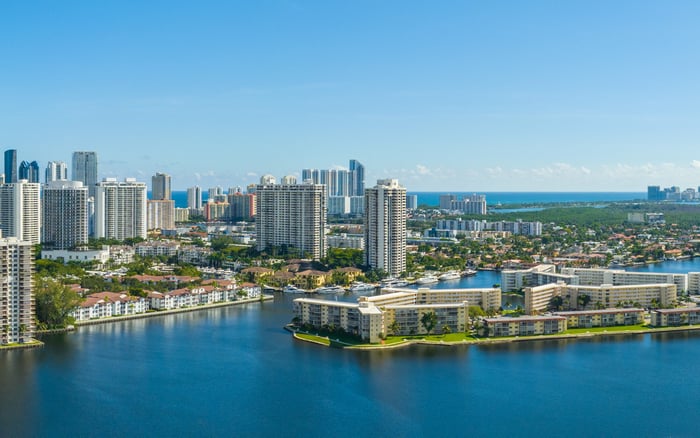
Sunny-isles can read as a middle ground for buyers who want a coastal setting with a different pace than the most central corridors. Depending on the building and the season, it can feel tranquil or highly active. Jet-set buyers tend to respond well when their building creates a clean buffer between private life and the public beachfront layer.
Fort-lauderdale appeals to buyers who want waterfront culture with a slightly different texture, including a boating-forward lifestyle and residential pockets that can feel more lived in year-round. For aviation-driven owners, the key is not the headline. It is the ease of routines: vendor reliability, management quality, and confidence that your home can be maintained beautifully while you are away.
Across all of these areas, the most decisive factor is often not location alone, but the match between building culture and personal temperament. Jet-set living is not always about being in the center of the scene. Often it is about having a controlled sanctuary that is close enough to everything you might want, and quiet enough to disappear into when you do not.
Aviation-minded buyers can be tempted to shop for “extras” rather than outcomes. The smarter approach is to underwrite the home the way you underwrite a schedule: identify what can break, then choose the environment that reduces the likelihood of breaks.
Start with operating realities that vary by building and by home type. Confirm how staffing is handled, what vendor access looks like, how deliveries are managed, and how owner absences are supported. If you plan to travel frequently, ask what the actual process is for maintaining the residence while you are away. Clarity matters here, because a vague answer often predicts inconsistent execution.
Next, pressure-test privacy. In a condo, that means evaluating elevator and corridor exposure and understanding how guest access is handled. Pay attention to whether your route from vehicle to door can be quiet when you want it to be. In a single-family setting, think through approach, visibility, and the practicality of security measures that do not turn daily life into a project. True privacy should feel natural, not labor-intensive.
Then evaluate resilience. Jet-set owners often prefer homes that handle disruptions without becoming urgent. Weather events, maintenance issues, and schedule changes are less stressful when the property does not demand constant supervision. You do not need to assume worst-case scenarios to value resilience. You simply need a home that holds steady under normal South Florida realities and does not punish you for being away.
Finally, look beyond lifestyle and evaluate the asset as a long-term holding. Luxury real estate can be emotional, but fundamentals still win. Ask whether the property’s appeal relies on short-lived trends, or whether it is anchored by privacy, quality of construction, thoughtful planning, and an operating environment that stays consistent. The best “jet-ready” homes feel relevant because they are designed to work, not to perform.
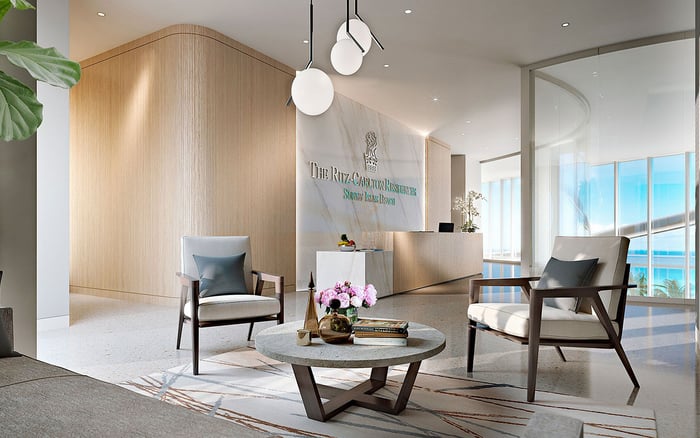
For buyers calibrating what service-forward living can feel like in South Florida, it can be useful to review a branded option as a reference point, even if you ultimately choose a different style of residence. Explore The Ritz-Carlton Residences® Miami Beach as a neutral starting point, then compare any prospective building against the same priorities: discretion, operational consistency, and a home that supports travel rather than complicating it.
What should I ask a condo building if I travel frequently? Ask how the building handles owner absences, vendor access, package management, and resident privacy. Listen for specifics, not marketing language. Strong buildings explain procedures clearly, and the tone is consistent whether you ask the doorman or the manager.
How do I evaluate privacy in a high-rise without relying on marketing language? Visit at different times and watch the flow from curb to lobby to elevator. Notice whether common areas feel composed, whether staff manage visibility thoughtfully, and whether your route home can be quiet when you want it to be.
What matters most in a jet-ready home when I arrive late or leave early? Prioritize the arrival sequence, sound control, and lighting control. A home that lets you enter discreetly, sleep deeply, and reset quickly will outperform flashier features that do not change the lived experience.
Is a branded residence automatically better for jet-set living? A brand can signal an intended service culture, but it is not a guarantee. Evaluate the actual operating environment, including responsiveness, discretion, and how the building performs when residents are coming and going on short notice. For tailored guidance on jet-ready living across Miami-beach, Brickell, Sunny-isles, and Fort-lauderdale, connect with MILLION Luxury.
If branded residences are on your mind — as a home or as an allocation — we would be glad to share what we are seeing, privately.
Begin a quiet conversation