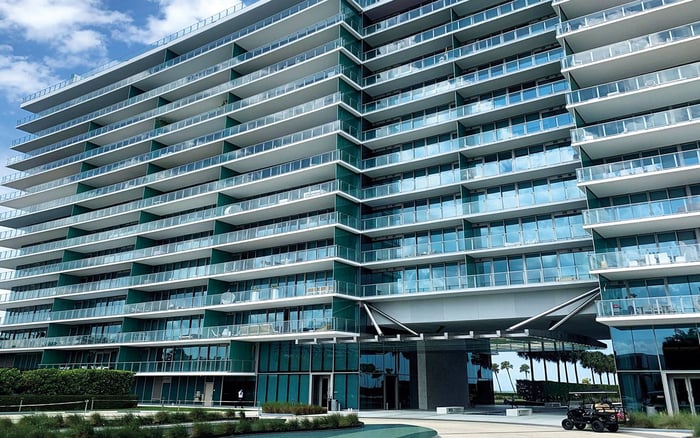
For globally mobile buyers, a Key Biscayne purchase is best evaluated as part of a coordinated plan linking residence, travel, documentation, privacy, and long-term use.

For a Silicon Valley principal, the appeal of a South Florida home is rarely confined to its architecture. The decision may intersect with family routines, private aviation, business travel, estate planning, privacy, and the formal work of establishing domicile. Key Biscayne enters that conversation not as a universal answer, but as a candidate for buyers seeking a residence that supports a coherent operating pattern.
That distinction matters. A beautiful property can satisfy the emotional brief while failing the practical one. Conversely, an address that works on paper may feel disconnected from the owner’s preferred pace of life. A disciplined shortlist therefore begins with behavior: where the buyer will spend time, how the household will travel, where important decisions will be made, and which residence can be maintained consistently.
This buyer’s guide treats the home as one component of a broader private-client strategy. It is especially relevant to the second-home buyer considering whether a seasonal purchase may eventually assume a more central role.
Domicile should not be reduced to signing a contract or receiving keys. It is a legal concept that should be addressed with qualified tax, legal, and estate advisers, particularly when a buyer has homes, companies, trusts, or family interests across multiple jurisdictions.
The practical question is whether the selected residence can support an authentic, well-documented life. Buyers should discuss personal records, voting and licensing choices, financial relationships, estate documents, business ties, and patterns of physical presence with their advisers. No single action should be assumed to settle the matter.
For technology founders and investors, coordination is essential. Corporate counsel may focus on one set of obligations, while personal tax and estate advisers address another. Real estate professionals can clarify property considerations, but they should not substitute for legal or tax advice. The strongest plan separates these roles while keeping the broader strategy aligned.
Private aviation is most useful as a planning lens when measured across the complete journey. Buyers can map frequent city pairs, preferred departure windows, ground-transfer tolerances, luggage requirements, traveling parties, and contingency plans. They should then test those routines during the hours they are most likely to travel.
The relevant comparison is not simply air time. It is the sequence from residence to aircraft, from arrival point to final destination, and back again. Crew positioning, aircraft availability, weather, security protocols, and household coordination may all shape the experience. These variables should be reviewed with the buyer’s aviation team rather than inferred from a map.
For a globally mobile household, repeatability often matters more than a single ideal trip. A property earns its place on the shortlist when the travel routine remains workable across board meetings, school calendars, family visits, and last-minute departures.
Key Biscayne should be evaluated through actual use. A buyer can begin by defining expectations for privacy, entertaining, staffing, outdoor time, and access to recurring appointments. The goal is to determine whether the residence supports both quiet days and high-demand periods without forcing the household into constant improvisation.
A waterfront home may be central to the emotional brief, but orientation, exposure, maintenance planning, insurance review, and operating costs still require specialist diligence. The same applies to a condominium, where governance, reserves, services, rules, and privacy protocols merit close examination.
Buyers exploring the island can include Oceana Key Biscayne in a property-level conversation without treating one development as a proxy for the entire market. The decision remains specific to the residence, its condition, its documentation, and the owner’s intended pattern of use.
Lifestyle is not a decorative consideration. It is evidence of whether a domicile plan can be lived naturally. If a household repeatedly prefers another home for work, family, or leisure, advisers may need to consider how that behavior interacts with the broader plan.
A Key Biscayne shortlist becomes more useful when tested against alternatives that reflect different residential priorities. Vita at Grove Isle can serve as one comparison for buyers considering another residential setting, while The Residences at Mandarin Oriental, Miami may prompt a different discussion about city-oriented living.
For buyers drawn to Miami Beach, Apogee South Beach offers another reference point. These comparisons should not be reduced to amenities or visual impact. They are most valuable when each option is measured against the same criteria: daily rhythm, travel routine, privacy, household operations, advisory considerations, and long-term flexibility.
An investment analysis should remain separate from the domicile analysis. Resale prospects, carrying costs, renovation exposure, liquidity preferences, and ownership structure belong in the financial review. Personal use and legal intent require their own review. A property may be compelling through one lens and less convincing through another.
Before making an offer, the buyer’s team can prepare a single decision file covering property diligence, travel scenarios, household requirements, ownership questions, and professional advice. Assumptions should be labeled, responsibilities assigned, and unresolved issues addressed before closing.
A trial period can also be instructive when feasible. Repeating normal routines reveals more than a short visit organized around viewings and dinners. The objective is not to manufacture certainty, but to identify friction early and determine whether the chosen home can support a credible, durable life.
Does buying in Key Biscayne automatically establish Florida domicile? No. Domicile is a legal matter that should be evaluated with qualified advisers based on the buyer’s complete circumstances and conduct.
Should aviation access be judged by flight time alone? No. Buyers should assess the entire door-to-door journey, including ground transfers, operating preferences, and contingency planning.
Can a second home later become a primary residence? Potentially, but the transition should be planned carefully and documented with guidance from legal, tax, and estate professionals.
What should a buyer test during a stay in Key Biscayne? Test ordinary routines, recurring appointments, household logistics, travel days, privacy expectations, and the pace of daily life.
Is a condominium suitable for a privacy-focused buyer? It can be, depending on the specific residence, building procedures, staffing model, access controls, and the buyer’s expectations.
Should property ownership be placed in an entity or trust? That decision depends on legal, tax, estate, financing, privacy, and liability considerations. Specialist advice is essential.
How should buyers compare Key Biscayne with other Miami areas? Apply the same criteria to every option, including use patterns, travel logistics, household operations, costs, privacy, and flexibility.
Are tax considerations enough to justify a purchase? They should not be considered in isolation. The residence must also support the buyer’s real life and long-term objectives.
What diligence matters for a waterfront property? Buyers should commission appropriate legal, physical, insurance, environmental, title, and financial reviews for the specific property.
Who should participate in the decision? The core team may include legal, tax, estate, aviation, insurance, security, property, and household advisers suited to the buyer.
For a confidential assessment and a building-by-building shortlist, connect with MILLION.
If branded residences are on your mind — as a home or as an allocation — we would be glad to share what we are seeing, privately.
Begin a quiet conversation