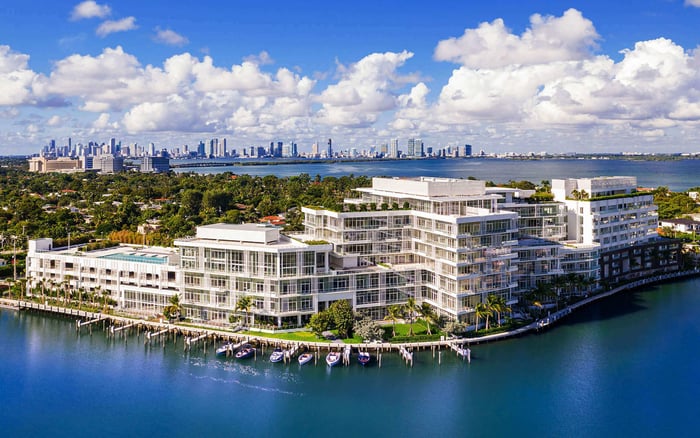
A buyer-focused framework for assessing how arrival, vertical circulation, security, and service routes shape residential privacy at The Ritz-Carlton Residences® Miami Beach.
At an ultra-premium residence, privacy is rarely defined by a guarded door, a discreet lobby, or any single feature. It emerges through a sequence: the curb, arrival threshold, reception, elevator access, residential corridors, service entry, and, finally, the private home. Each transition either reduces exposure or introduces another point of contact.
That sequence offers a useful lens for evaluating The Ritz-Carlton Residences® Miami Beach. Buyers should look beyond broad service language to examine how the property accommodates residents, guests, deliveries, vendors, and staff-on ordinary days and during busy periods. The most convincing privacy strategy feels natural rather than defensive.
This editorial sits at the intersection of Miami Beach, Branded Residences, Design & Architecture, Lifestyle, and Waterfront ownership. Those categories shape expectations, but they do not replace a close reading of how the building operates.
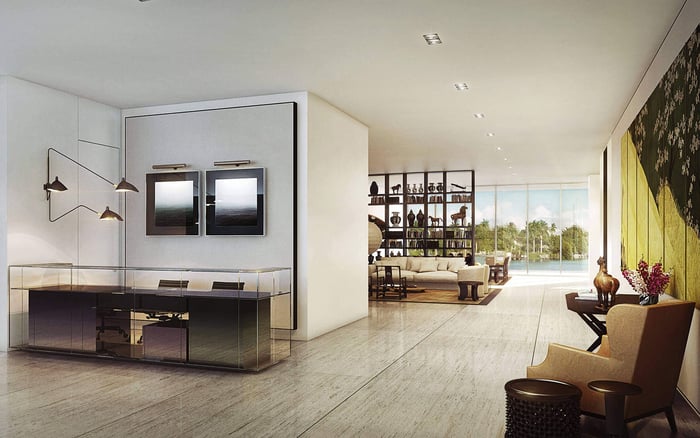
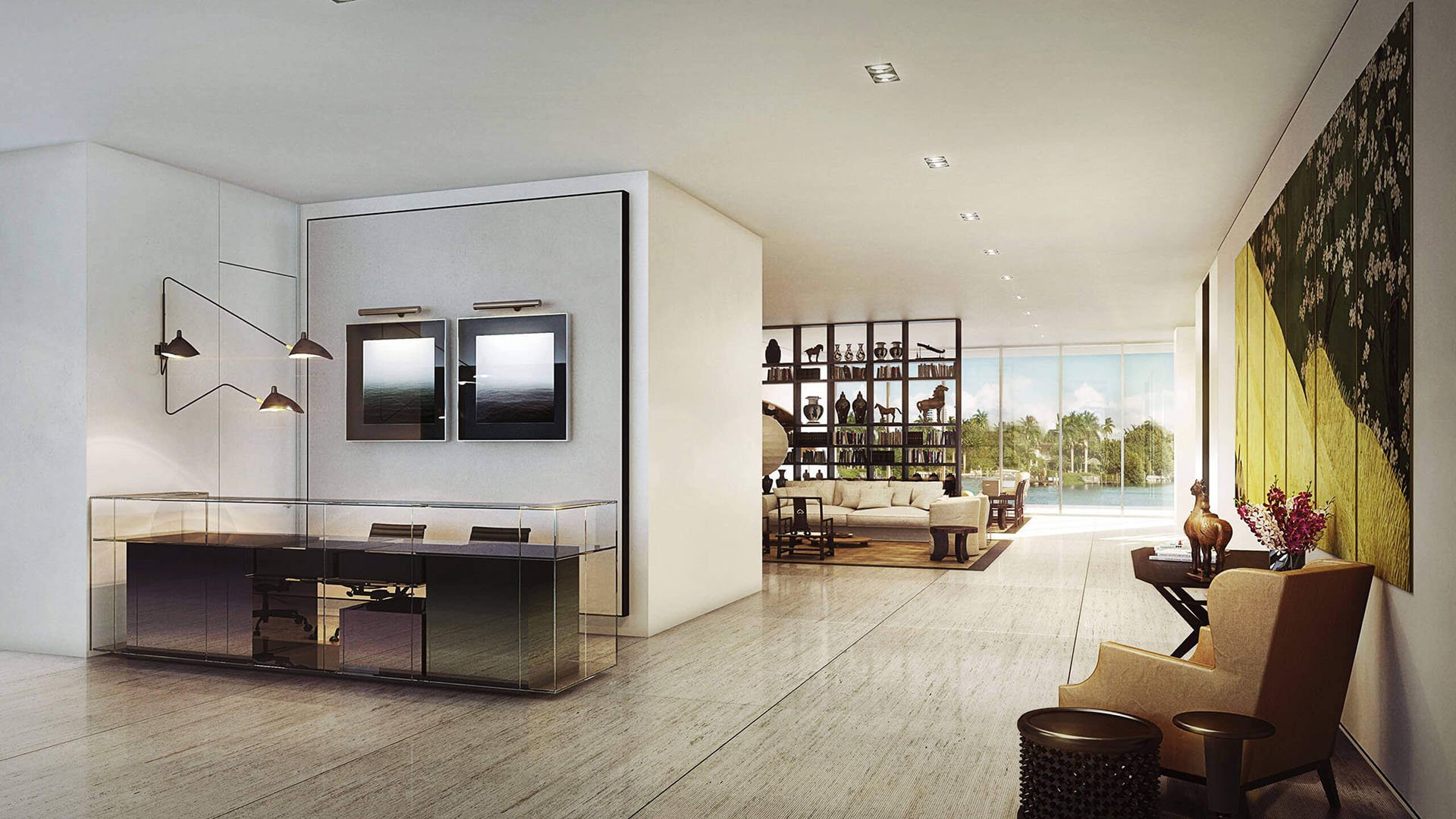
A lobby serves two roles at once: offering a gracious welcome while limiting unnecessary visibility into residential movement. The essential buyer question is not simply whether the room appears luxurious, but whether its plan allows arrivals to be recognized, directed, and separated without creating spectacle.
During a visit, study the sightlines from the entrance to reception and from reception to the elevators. Note whether waiting visitors remain in direct view of residents, whether delivery activity crosses the principal arrival path, and whether residents can move through the space without repeatedly stopping. Acoustic discretion matters as well. Conversations at a desk should not carry across the room.
Time is part of the design. If possible, visit at more than one hour. A composed morning may differ from an active evening, and privacy should remain legible under both conditions. Buyers comparing the experience with The Ritz-Carlton Residences® South Beach should assess each property through its own circulation and operating protocols rather than assume that a shared brand vocabulary creates an identical arrival.
Elevator privacy begins before the doors open. Access credentials, destination controls, guest authorization, and staff procedures can determine who reaches residential levels and how movement is monitored. Technology, however, is only one component. The resident experience depends just as much on how consistently those controls are applied.
Request a walkthrough of four scenarios: a resident returning home, an invited dinner guest arriving first, a household employee beginning work, and a vendor making a large delivery. Who grants access? Where does each person wait? Is authorization tied to a particular floor or route? What happens when credentials fail? Clear answers reveal more than a general promise of controlled access.
Examine the transition after the elevator as well. A private or limited-use ride can still open onto an exposed corridor or awkward shared threshold. Consider the entire journey, from lobby to front door. Buyers may use Setai Residences Miami Beach as another Miami Beach point of comparison, focusing on the lived sequence rather than drawing conclusions from branding alone.
Effective security may be visible, discreet, or a calibrated combination of both. For residents, the central question is whether personnel and procedures work together coherently. A prominent desk may signal oversight, but it does not, by itself, explain visitor screening, incident escalation, credential management, camera governance, or after-hours response.
Seek practical clarity. Buyers should understand how guests are announced, how temporary access is issued, how lost credentials are handled, and which team receives a resident’s concern. Families may also want to address recurring caregivers, drivers, tutors, and household staff. The goal is not maximum friction, but predictable control with minimal exposure.
Privacy extends to information. Ask who can view resident arrival patterns, visitor details, or access records; why that information is retained; and how permissions are limited. These are operational rather than decorative questions, and the answers may evolve. Material representations should be confirmed in current governing, management, and purchase documents.
In a well-resolved property, service feels immediate without becoming visually dominant. Achieving that balance depends on routes and staging. Deliveries, maintenance teams, housekeeping personnel, and moving crews all require a practical path through the building. If their circulation repeatedly overlaps with resident arrival, the lobby may feel less private regardless of its finishes.
Buyers should ask where packages are received, where vendors check in, which elevators they use, and how oversized items reach a residence. Waste removal and maintenance access merit equal attention. These routines occur far more often than special events, giving their design an outsized influence on everyday calm.
A useful comparison visit might include The Perigon Miami Beach, applying the same questions consistently. The purpose is not to declare a universal winner, but to identify the circulation model best suited to a buyer’s household, entertaining style, staffing needs, and tolerance for shared movement.
Begin outside and narrate the entire arrival as though you lived there. Note who can see the vehicle approach, where a guest pauses, and how quickly the residence becomes inaccessible to an unverified visitor. Then repeat the exercise for a delivery and a service appointment.
Next, ask management to explain, not merely describe. A diagram of resident and service circulation can clarify overlaps that are difficult to detect during a polished tour. Request the current rules governing guests, vendors, moves, and household employees. If a particular degree of separation is essential, have the relevant provisions reviewed and documented before purchase.
Finally, distinguish preference from necessity. Some buyers prioritize anonymity upon arrival. Others place greater value on direct service, tightly controlled elevator travel, or seamless staffing. The strongest choice is the one whose physical plan and operating culture align with the household’s actual routine.
Does a private-looking lobby guarantee residential privacy? No. Privacy depends on sightlines, access procedures, circulation, and staff execution throughout the complete arrival sequence.
What should buyers inspect first in the lobby? Study the path from the entrance to reception and the elevators, including where guests and deliveries wait.
Why does elevator authorization matter? It can limit vertical movement, but buyers should also understand guest approval, credential failure, and staff access procedures.
Should buyers ask whether service elevators are separate? Yes. The answer helps reveal where deliveries, vendors, maintenance teams, and residents may intersect.
How can a buyer evaluate staff flow? Walk through realistic delivery, housekeeping, maintenance, and move-in scenarios with the management team.
Is visible security always more effective? Not necessarily. Performance depends on clear protocols, trained personnel, access controls, and consistent response.
What privacy questions apply to household employees? Ask how recurring access is approved, limited, changed, and revoked for caregivers, drivers, and other staff.
Do package procedures affect privacy? Yes. Receiving, storage, notification, and final delivery can influence both discretion and lobby traffic.
Can privacy practices change after a purchase? Operating rules can evolve, so buyers should review current documents and confirm any essential representations.
What is the best way to compare luxury residences? Apply the same arrival, elevator, security, and service-flow scenarios to every property under consideration.
For a discreet conversation and a curated building-by-building shortlist, connect with MILLION.
If branded residences are on your mind — as a home or as an allocation — we would be glad to share what we are seeing, privately.
Begin a quiet conversation