At The Ritz-Carlton Residences® Miami Beach, a waterfront purchase deserves a precise understanding of what transfers at closing. Survey scope, recorded easements, title coverage and boat-slip documents help distinguish an exceptional setting from the enforceable rights that accompany it.
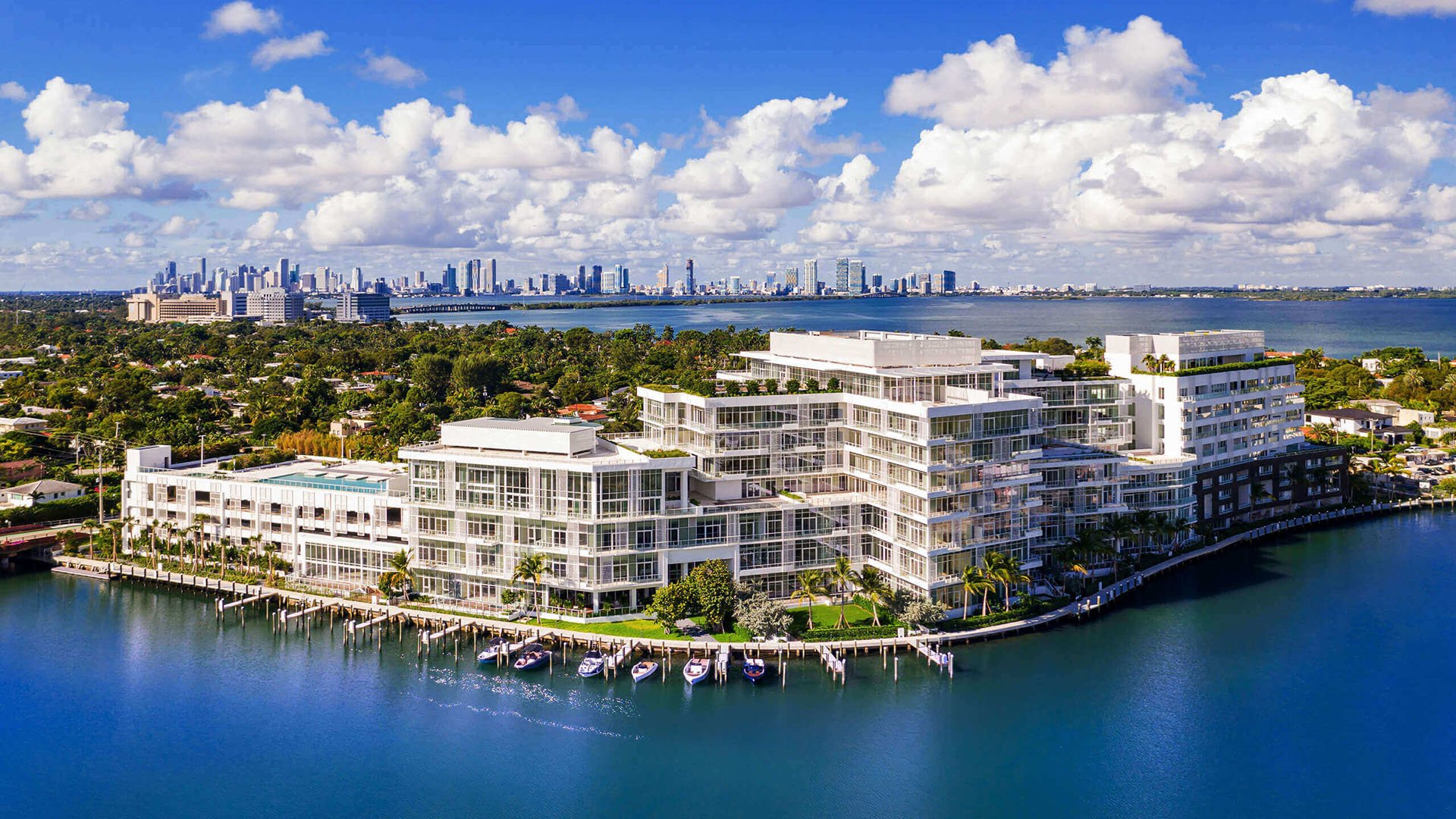
At The Ritz-Carlton Residences® Miami Beach, the appeal begins with a waterfront, residential-only setting at 4701 North Meridian Avenue, Miami Beach, FL 33140. A private marina with boat slips is among the property's amenities. For a buyer, however, the closing question is more precise than whether the setting supports a particular lifestyle: which rights will actually transfer with the residence?
A condominium purchase should not obscure the underlying property's boundaries, easements or access arrangements. The appropriate diligence may differ from a whole-property acquisition, but the objective is straightforward: counsel should reconcile the interest being conveyed, the recorded rights affecting it and the physical layout relevant to its use.
An amenity's presence is not the same as an enforceable right to use it. That distinction deserves attention before the purchase becomes unconditional-not after arrival with keys and a moving schedule.
The marina makes this distinction tangible. Buyers should verify whether boat-slip ownership is restricted to residence unit owners and review the governing documents for the terms of eligibility, transfer and use.
If a slip is part of the negotiated purchase, ask counsel to compare the purchase agreement, proposed conveyance documents and legal description. The specified interest should be identifiable across those documents. Any mismatch deserves clarification before closing.
The practical questions extend beyond the slip number. Is the interest deeded, and what documents establish its ownership structure? Which governing provisions control its transfer? What use rules apply? How does the slip interest relate to ownership of the residence? The answers belong in the documents; they cannot safely be inferred from a marina tour or the word “private.”
A survey connects legal descriptions with physical conditions. Depending on the agreed scope, an ALTA/NSPS survey can document boundaries, building footprints, easements, setbacks and access points. Utilities, flood-zone determination and requested Table A items also warrant attention when defining that scope.
For a condominium buyer, this does not establish a blanket requirement to commission a new whole-site ALTA/NSPS survey. A more useful approach is to ask counsel and the title insurer which existing survey materials are available, whether they are sufficiently current for the transaction and which unresolved questions require additional work.
In a South Florida purchase, obtaining a current boundary survey before closing can help identify potential easement, encroachment and boundary concerns. For an individual condominium purchase, that decision calls for transaction-specific judgment. A survey should answer an identified question, not become an expensive formality disconnected from the interest being purchased.
For buyers also considering The Perigon Miami Beach, the same review principle applies: evaluate each property's own documents rather than carry assumptions from one purchase to another. This is a diligence framework, not a statement that the projects share access arrangements.
Private ownership and exclusive access are not interchangeable. Privately owned land can be subject to easements for public passage or vehicular access. Ownership of land does not, by itself, determine who may cross it or under what authority.
That principle does not establish that a public-access easement burdens this condominium. The buyer's team should review title and public records, identify relevant easements and locate them on the available survey where appropriate. Visible use is not a substitute for documented rights. An attractive arrival sequence or apparently private passage should prompt a document check, not an assumption of legal exclusivity.
The same discipline applies to a comparison with Shore Club Private Collections Miami Beach: ask what the governing instruments establish for the specific property under consideration. A project's name or presentation cannot resolve the legal scope of an access right.
When a slip is included, review ownership and access documentation together. Ask counsel to confirm both the interest being conveyed and the documented route and rights needed to reach and use it.
A useful review starts with the intended use and works back through the paperwork. Identify the slip, examine its relationship to the residence and governing documents, and check how relevant access rights correspond to the physical layout. Where an easement is involved, consider its location and terms together.
These are diligence questions, not assertions of an access defect at the property. Their purpose is to ensure that the lifestyle contemplated during negotiations is supported by the transaction's legal instruments.
A title policy is not a universal answer to survey concerns. Standard coverage may leave some survey-related matters unprotected. Buyers should ask the title insurer which exceptions apply and what survey coverage, if any, is available for the particular transaction.
Have counsel connect that discussion to the transaction documents and any relevant survey findings. The objective is to understand what the policy covers, what it excludes and which issues still require resolution outside insurance.
If a boundary, easement or encroachment concern emerges, address it before closing rather than assume it is minor or necessarily curable afterward. A written explanation of the proposed resolution is more useful than reassurance that the matter can wait.
Before authorizing closing, the buyer should be able to identify the residence interest, any included slip interest, relevant transfer restrictions, documented access rights and applicable title exceptions. The survey materials and conveyance documents should provide a coherent account of what is being acquired.
The enduring luxury is not simply a waterfront address. It is confidence that the rights supporting daily use have been examined with the same care as the residence itself. Property-specific legal advice remains essential to that assessment.
For a considered approach to South Florida condominium ownership, explore MILLION.
If branded residences are on your mind — as a home or as an allocation — we would be glad to share what we are seeing, privately.
Begin a quiet conversationThe waterfront, residential-only condominium development is at 4701 North Meridian Avenue, Miami Beach, FL 33140.
A marina amenity does not establish that a slip is included. The purchase agreement, conveyance documents and legal description should confirm any included slip interest.
Review the governing documents to determine whether ownership is restricted to residence unit owners. Counsel should also check eligibility, transfer and use provisions.
Ask counsel to compare the legal description, proposed conveyance documents and governing documents. A slip number or the word “private” does not establish the interest being conveyed.
A new whole-site survey should not be assumed necessary for every condominium purchase. Counsel and the title insurer should assess existing materials and determine the appropriate scope for the transaction.
Depending on scope, it can document boundaries, building footprints, easements, setbacks and access points. Utilities, flood-zone determination and requested Table A items may also be relevant.
Yes, private ownership can coexist with public passage and vehicular-access easements. This general principle does not establish that such an easement affects this condominium.
Ask counsel to review the documented rights needed to reach and use any included slip. Relevant access instruments should be considered alongside the physical layout.
Standard title coverage may leave some survey-related matters uncovered. Buyers should ask about applicable exceptions and available survey coverage for their transaction.
Address it before closing rather than assume it can necessarily be resolved afterward. Counsel should explain the issue and any proposed resolution before the buyer authorizes closing.