A buyer-focused framework for preparing a residence at Four Seasons Coconut Grove, separating acquisition and installation costs from recurring assessments, staffing exposure, contract escalators, and optional household services.

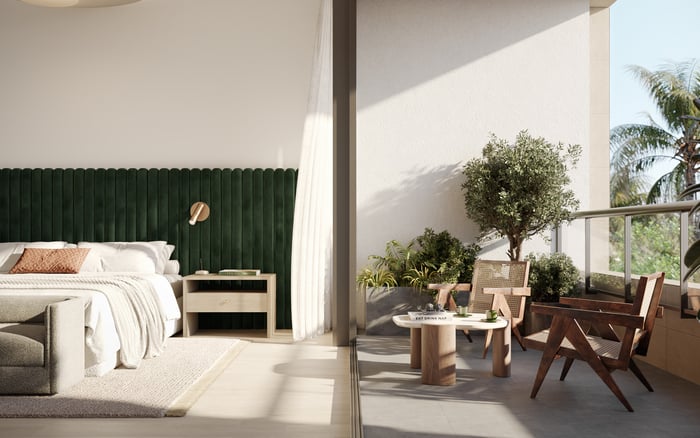
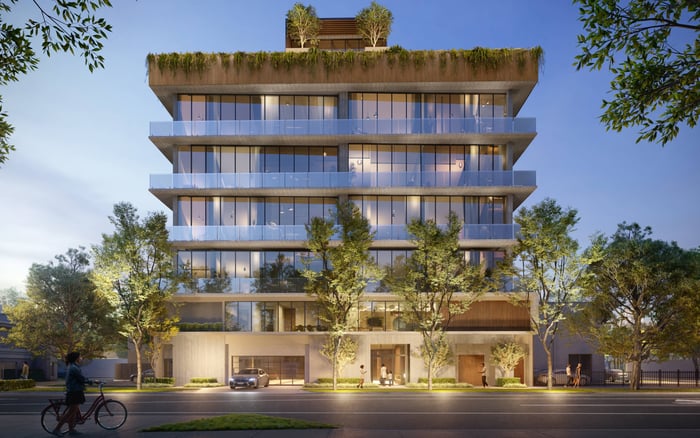
At Four Seasons Residences Coconut Grove, preparing a home should begin with two parallel briefs: how the residence will feel and how ownership will function. The planned 70-residence development is a standalone private-residences property, not a conventional hotel. That distinction makes the allocation of service costs an essential part of purchase diligence.
The appeal is clear: a dedicated private arrival and valet entry, a residential-service team, and shared spaces designed around dining, wellness, and leisure. But an amenity description is not an operating budget. The question is not simply whether a service exists, but who funds it, when it operates, and how its cost can change.
For buyers evaluating branded residences, the most useful financial document is a consolidated ownership budget that separates shared obligations from household choices. Service availability should never be treated as evidence that usage is included in assessments.
Build three distinct schedules. The first covers acquisition cash flow. The advertised purchase schedule includes 20% at contract and 20% at groundbreaking. These are purchase-stage payments, not recurring operating charges, and should remain outside the annual ownership comparison.
The second covers residence preparation: furnishings, installation, technology, art, window treatments, millwork, and post-delivery corrections. Request itemized proposals, identify dependencies between trades, and separate essential move-in work from improvements that can wait. Set out a distinct contingency based on the actual scope rather than assuming one allowance suits every residence.
The third captures recurring ownership costs: assessments, owner-paid utilities, property taxes, insurance, reserves, and optional services. Reconcile each category with the assessment budget to avoid double-counting costs already funded collectively. Distinguish association insurance from any owner policy your advisers recommend.
This discipline also improves comparisons with Park Grove Coconut Grove. Normalize cost categories before comparing totals, without assuming the two properties include the same services.
For a pre-construction purchase, request both the first-year budget and a stabilized operating projection. Ask for the assumptions behind each, including operating hours, staffing deployment, utility consumption, insurance, maintenance, and reserves. A starting assessment is more useful when the buyer understands the conditions that support it.
Create a variance schedule showing each budget line, its underlying assumption, a tested alternative, and the resulting change in annual cost. Keep association-level changes separate from the amount allocated to your residence. Ask the relevant advisers to confirm the applicable allocation method rather than dividing every expense equally among 70 homes.
Run three scenarios: the documented base case, a labor-and-insurance inflation case, and a high-service-use household case. Test utilities, repairs, and reserves independently. This distinguishes additional exposure from building operations from that driven by personal consumption-two very different budgeting decisions.
The advertised residential-service team includes a Director of Residences, concierge, doorman, bellman, and valet. The project also advertises 24-hour security and 24-hour emergency repair. Neither round-the-clock commitment, on its own, establishes a staffing headcount or confirms that every function has a dedicated employee continuously on site.
Request a roster by department and shift showing scheduled hours, relief coverage, overtime assumptions, benefits, supervision, and outsourced labor. Ask whether emergency repair means on-site coverage, an on-call response arrangement, or another service structure. These are diligence questions, not established project provisions.
The amenity program warrants the same scrutiny. Plans include a serviced pool deck, signature restaurant, bar and lounge, library, private event space, gym, yoga room, and children’s area. Wellness facilities include a spa, cold-plunge and thermal experiences, Finnish saunas, and a jacuzzi.
For the restaurant, spa, and pool in particular, establish who employs personnel, who pays operating costs, and whether any costs flow through assessments or usage charges. A clear staffing matrix should connect each service promise to its hours, funding mechanism, and responsible party.
Treat every material service contract as a separate review item. Request its scope, staffing minimums, operating hours, initial term, renewal mechanism, termination rights, and price-adjustment language. Do not assume a particular escalation formula applies to this project without reviewing the relevant agreement.
For each contract, determine whether increases are fixed, linked to a consumer-price index, linked to wages, or calculated on a cost-plus basis. Ask which components can change, how often adjustments occur, whether caps apply, and what documentation supports pass-through expenses. Check whether changes require notice or approval.
Then compare the escalators with the budget assumptions. If the budget anticipates one path for labor expense while a service agreement permits another, the difference belongs in the variance analysis. The objective is not to predict a single perfect number, but to understand the mechanisms that could change ownership costs.
Advertised à-la-carte household services include in-residence dining, housekeeping, laundry, grocery provisioning, maintenance and repair, and butler service. Additional offerings include wellness programming, personal trainers, dog grooming, catering, and car washing. Availability does not establish that these services are included in condominium assessments.
Obtain a written schedule separating included services, mandatory charges, usage-based charges, and optional purchases. For services you expect to use, ask about minimum bookings, cancellation terms, supplies, gratuities, and any applicable service charges. Model usage around your own occupancy and entertaining habits.
Buyers also considering Mr. C Tigertail Coconut Grove should apply the same worksheet rather than infer equivalence from branding. Compare documented inclusions and household preferences, not merely the length of an amenity menu.
Standard residences are advertised with two-, three-, and four-bedroom layouts spanning approximately 2,025 to 3,980 square feet. The four penthouses range from approximately 6,430 to 9,690 square feet. Those differences call for residence-specific preparation plans, not a universal installation budget.
For a penthouse purchase, review furnishings, technology, window treatments, and maintenance scope against the actual plans. For any layout, confirm delivery and installation procedures, contractor requirements, and responsibility for post-delivery corrections before committing to a move-in sequence.
The final ownership brief should bring together acquisition milestones, preparation proposals, recurring costs, contract sensitivities, and household-service assumptions. In Coconut Grove, that clarity allows the residence to deliver its intended ease without leaving the financial details to chance.
For a discreet perspective on your next residence, connect with MILLION.
If branded residences are on your mind — as a home or as an allocation — we would be glad to share what we are seeing, privately.
Begin a quiet conversationThe development is planned with 70 residences and is described as a standalone private-residences property rather than a conventional hotel.
Standard two-, three-, and four-bedroom residences span approximately 2,025 to 3,980 square feet. Four penthouses range from approximately 6,430 to 9,690 square feet.
No. The advertised 20% at contract and 20% at groundbreaking are purchase-stage payments and should be separated from annual operating costs.
Budget separately for furnishings, installation, technology, art, window treatments, millwork, and post-delivery corrections. Establish allowances through residence-specific proposals.
Service availability does not establish inclusion in assessments. Request a written schedule distinguishing included, mandatory, usage-based, and optional charges.
The advertised team includes a Director of Residences, concierge, doorman, bellman, and valet. Staffing levels and shift coverage should be confirmed separately.
No staffing headcount is specified for that commitment. Ask whether coverage is on site, on call, or provided through another arrangement.
Check for fixed, consumer-price-index-linked, wage-linked, or cost-plus adjustments, along with renewal and termination terms. No project-specific escalation formula should be assumed without reviewing the agreement.
Compare a documented base case with labor-and-insurance inflation and high-service-use scenarios. Test staffing, utilities, insurance, repairs, reserves, and optional services separately.
Offerings include in-residence dining, housekeeping, laundry, grocery provisioning, maintenance and repair, and butler service. Additional options include personal trainers, dog grooming, catering, and car washing.