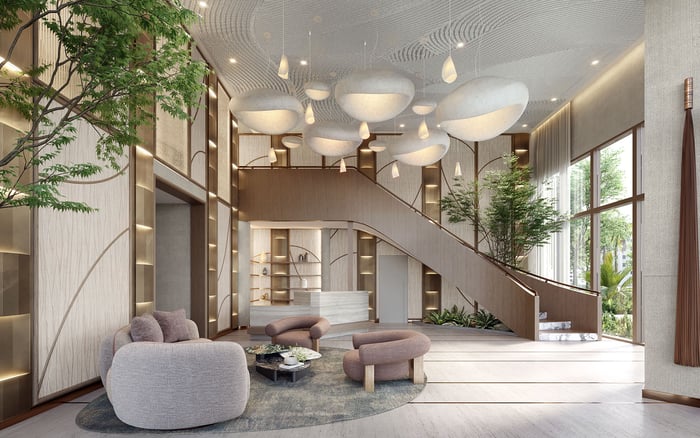
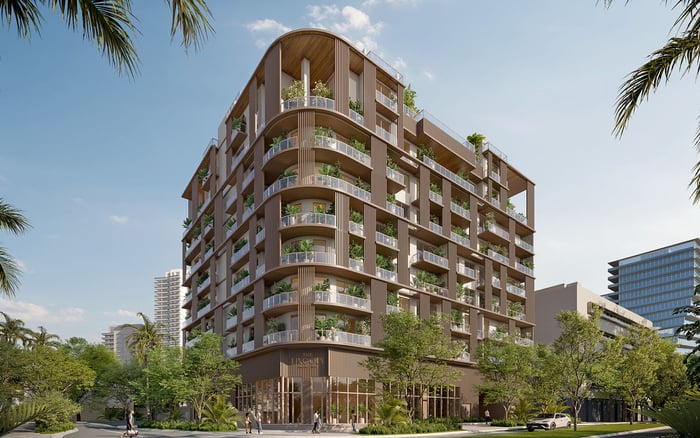
Opus Coconut Grove’s planned 14-residence scale offers a boutique proposition, not a guarantee of anonymity. This prospective buyer’s review separates resident-directory policies, visitor-facing intercom settings and public property records, with practical questions for second-home ownership.
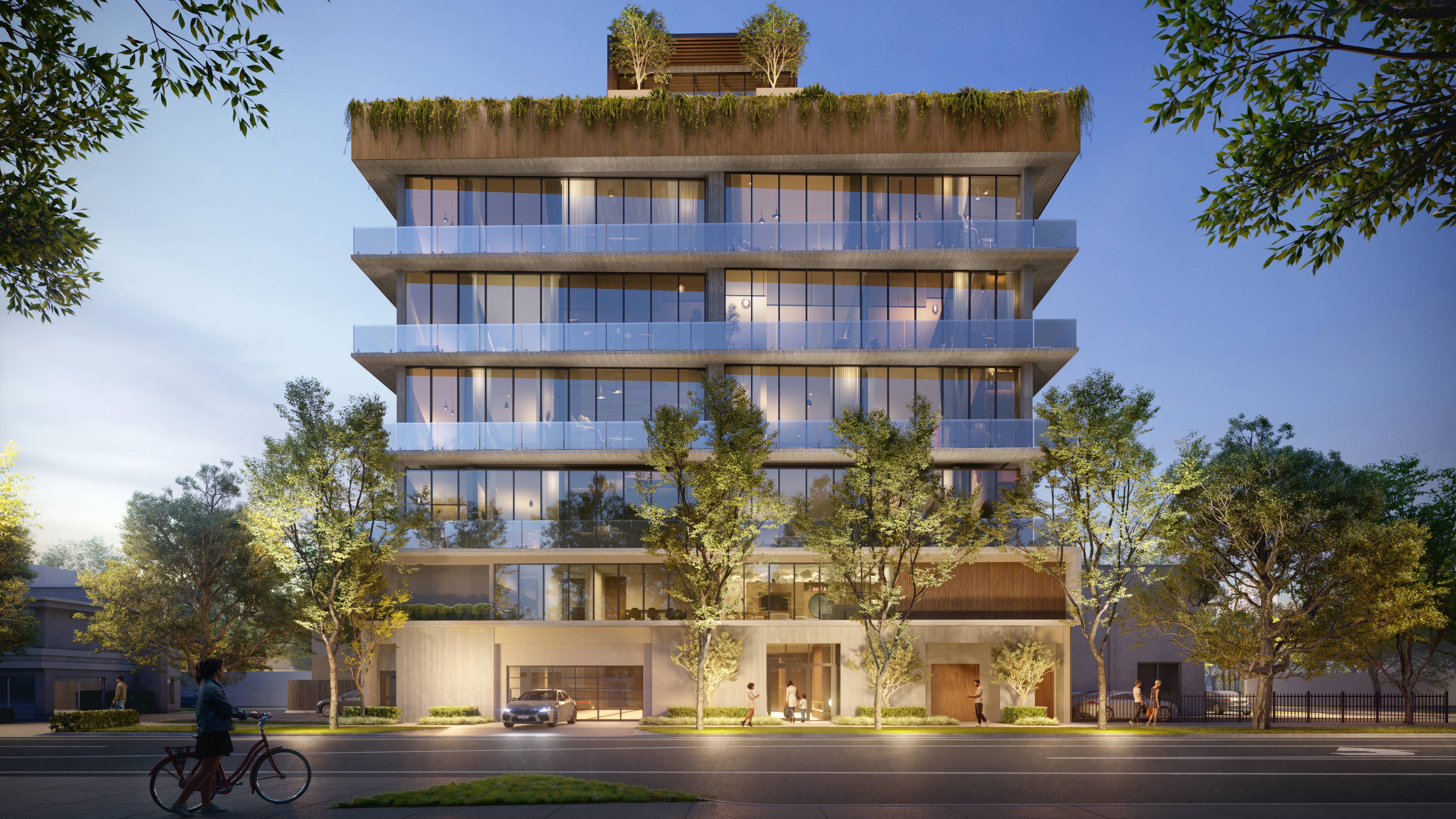
For a second-home buyer, discretion depends less on how few neighbors share an address than on how a building handles names, visitors and information. Opus Coconut Grove offers an intimate proposition: a planned six-story condominium with 14 residences, including two penthouses. That scale merits consideration, but it does not establish confidentiality.
This is a prospective review, not a firsthand assessment of life inside an occupied building. Three distinct questions guide it: what an outsider can discover through public-facing property records, what management collects and shares, and what a visitor sees when attempting to contact a resident. A satisfactory answer in one category does not resolve the others.
For an owner who spends only part of the year in Miami, the objective is straightforward: convenient arrivals and reliable household access without unnecessary disclosure of personal information or occupancy patterns.
Opus broke ground in April 2026. First residents were expected to arrive in summer 2027, but that remains a projected schedule, not confirmed delivery. Construction activity should not be mistaken for an established operating record.
META Development, a joint venture between Miami-based Lucid Investment Group and Brazil’s Iron Capital, is the developer. The design team includes Kobi Karp Architecture & Interior Design, with Brazilian architect João Armentano associated with the design and interiors. These credentials describe the development team, not the future association’s information-handling practices.
That distinction matters during a sales presentation. A planned access feature, a proposed management procedure and an enforceable obligation are not interchangeable. Ask which privacy provisions will appear in governing documents, which will sit in operating rules and which remain subject to selection or revision.
Two street addresses are associated with the project: 3137 SW 27th Avenue, Miami, FL 33133, and 3127 SW 27th Avenue. The reason for the discrepancy is not established. Neither a casual search nor an assumption about a typographical error should settle it.
Ask the developer and title company to confirm the final legal condominium address and the identifiers appropriate to the intended purchase. Use both street numbers when investigating records, then have the title team reconcile the results with the actual property. The appointment-only sales gallery at 3390 Mary Street, Suite 116, Coconut Grove, is separate from the development site.
The next request should be specific: have counsel and the title company explain which records apply to the purchase and what owner-identifying information they contain or may eventually display. The extent of owner-identifying information available through unit-level ownership records has not been verified here. Neither an inconclusive search nor an intercom privacy setting is proof of anonymity.
No resident directory or directory policy has been publicly disclosed. That does not establish that a future internal directory will be absent, optional or confidential.
Ask for a written distinction between information required to administer the residence and information made available to other residents. Cover names, telephone numbers, email addresses, emergency contacts and household representatives, without assuming that every category will be collected.
Then clarify access: who within management can view each category, whether residents can search it, and under what circumstances vendors or brokers receive information. Consent to publication should be separate from the submission of contact details needed for building operations. Request procedures for correction, withdrawal and deletion, including any retention requirements or exceptions.
A buyer also considering Arbor Coconut Grove should take the same questionnaire to both sales teams. Comparable written answers are more useful than assumptions that a residential concept determines its directory practices.
Opus’s intercom naming conventions remain unconfirmed. There is no established basis to say that a visitor will see full names, initials, unit numbers or resident-selected labels.
Request written specifications and, when available, a demonstration of the actual visitor interface. Ask whether an owner can choose unit-number-only calling, omit a surname or avoid a searchable name listing while remaining reachable. These are requested capabilities, not confirmed Opus features.
The demonstration should follow a visitor’s experience from arrival to contact. What appears before a call is placed? Does a mobile connection reveal a personal number? Who may change the display label? Ask about mobile credentials, temporary guest access and the process for removing names after a sale or lease.
For buyers comparing Opus with Four Seasons Residences Coconut Grove, the same visitor-interface test offers a useful comparison without presuming either project’s configuration. Judge the documented settings, not the familiarity of the name over the entrance.
An intermittently occupied residence requires clear delegation. A property manager may need continuing access; a housekeeper, visiting relative or contractor may need narrower permission. Ask how each category is authorized, amended and revoked, and whether permissions can expire automatically.
Clarify whether owners can review active credentials remotely and who handles urgent revocation in their absence. Request the proposed access-log retention period, the categories of people permitted to inspect logs and the circumstances in which logs may be shared.
If leasing is part of the ownership plan, establish the applicable leasing rules first. Then ask how renter access and directory entries would be separated from the owner’s information and removed at the end of an authorized tenancy. Do not assume that guest credentials establish permission to rent.
Planned amenities include a rooftop gym and pool, spa, outdoor cooking area and children’s playroom. Plans also include fully automated, three-level parking with three dedicated spaces per residence. These features call for practical questions, not privacy conclusions.
Ask how guest parking, vehicle retrieval and amenity access will work when the owner is absent. Determine what information a household representative must provide and whether associated records would be visible beyond the staff administering them. Automation alone does not establish confidentiality.
Request the declaration, bylaws, rules, budget, developer disclosures, title commitment and planned access-control specifications. Have counsel distinguish binding provisions from proposed procedures and identify who can change them. Written answers should address directory participation, intercom labels, delegated access, retention and removal, with unresolved choices clearly identified.
The buyer’s verdict is conditional: Opus’s small residential count supports its boutique positioning, but enforceable privacy protections remain unestablished. For a second home, discretion should be a documented operating requirement, not an inference drawn from architecture or scale.
For a considered approach to second-home ownership in Coconut Grove, explore MILLION.
If branded residences are on your mind — as a home or as an allocation — we would be glad to share what we are seeing, privately.
Begin a quiet conversationOpus is planned as a six-story condominium with 14 residences, including two penthouses. Its small scale does not establish owner-name or contact-information confidentiality.
No, this is a prospective buyer’s due-diligence review. Groundbreaking took place in April 2026, and the projected summer 2027 arrival of first residents is not confirmed delivery.
Two street addresses are associated with the project: 3137 SW 27th Avenue, Miami, FL 33133, and 3127 SW 27th Avenue. Investigate both and ask the developer and title company to confirm the final legal condominium address.
The appointment-only sales gallery is at 3390 Mary Street, Suite 116, Coconut Grove. It is separate from the development site.
No resident directory or directory policy has been publicly disclosed. This does not establish whether a future internal directory will exist.
That capability is not confirmed. Buyers should request written specifications covering name choices, unit-number-only calling and removal of entries.
No, visitor-facing settings and public-facing property records require separate review. The extent of owner-identifying information available through unit-level ownership records has not been verified here.
Ask how staff, property managers and guests are authorized, how permissions expire and how credentials are revoked. Also request access-log retention and disclosure policies.
Plans include fully automated, three-level parking with three dedicated spaces per residence. Buyers should confirm operating details and access arrangements rather than infer privacy from automation.
Request the declaration, bylaws, rules, budget, developer disclosures, title commitment and planned access-control specifications. Have counsel distinguish binding privacy provisions from proposed procedures.