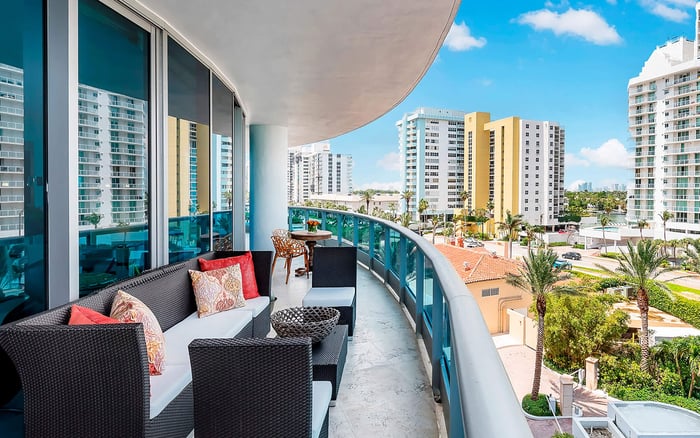
A discreet ownership guide to defining housekeeping responsibilities, assessing unit-specific linen storage, and protecting personal belongings at 57 Ocean Miami Beach.

At 57 Ocean Miami Beach, an oceanfront condominium at 5775 Collins Avenue, preparing a residence deserves the same attention as its interiors. Private elevator entries and generous walk-in closets offer a useful starting point. They do not, however, define who cleans the home, where spare linens belong, or which personal possessions remain outside a service provider’s remit.
A well-prepared home separates three matters: building services, privately arranged household work, and the owner’s privacy instructions. The aim is not to complicate ownership, but to ensure that a polished arrival never depends on assumptions about access, laundry, or the handling of valuable belongings.
That distinction also belongs in a Miami Beach buying brief. Buyers considering Faena House Miami Beach alongside 57 Ocean should ask the same questions about each residence, without assuming that service arrangements transfer from one building to another.
57 Ocean’s amenities include an on-site concierge who can help arrange private lifestyle services, including chefs, florists, sommeliers, horticulturalists, wellness providers, and event assistance. This does not establish that routine in-residence housekeeping is included in condominium assessments or performed by building employees.
Before engaging a provider, obtain a written scope identifying who performs the work, who invoices the owner, and what is included. Routine cleaning, deep cleaning, laundry, ironing, bed preparation, and guest turnover should be separate line items-not interpretations of a general promise to prepare the residence.
The household brief should specify permitted products and methods for the finishes installed. Ask the provider to identify tasks requiring specialist treatment and to seek approval before moving artwork, handling delicate objects, or opening personal storage. These are proposed owner instructions, not established building policies.
Agree on a completion standard, too. A bed made with the wrong linen set or towels returned to an owner-only cabinet can leave an otherwise immaculate home feeling poorly managed. A short room-by-room checklist can define the expected result without recording unnecessary personal information.
The residences feature large his-and-hers walk-in closets, but a dedicated linen room is not established as a standard feature in every home. Residence plans show different layouts and closet configurations. Linen capacity therefore needs to be evaluated against the precise unit being purchased, not inferred from a bedroom count or an expansive wardrobe description.
One residence type has three bedrooms, three-and-a-half bathrooms, and 2,104 interior square feet. That provides useful spatial context, not a storage guarantee. During a walkthrough, assess shelf depth, usable cabinet height, access around stored items, and the laundry area. Check that proposed linen storage will neither displace clothing nor obstruct everyday circulation.
Start with a household inventory organized by bed size and bathroom. Then choose an owner-selected rotation, such as sets in use, clean replacements, and items awaiting laundering. Quantities depend on occupancy and service frequency; a fixed linen allowance should not be treated as a building standard.
Separate beach towels, guest bedding, and personal linens where the layout permits. Labeling shelves by room rather than by occupant can simplify service while revealing less about the household. Before commissioning cabinetry, confirm any applicable approvals and test the layout with the linens intended for use.
The mention of building storage facilities does not establish that a particular residence has an assigned private locker. Nor does it establish dimensions, permitted contents, or the legal basis for use.
Request written confirmation of any storage assignment, its location, access arrangements, and restrictions before incorporating it into the household plan. Determine whether the right is documented for the residence and which procedures govern access by someone other than the owner.
Until those details are settled, plan routine linen capacity within the home. Even if additional storage is available, frequently used bedding needs a practical retrieval arrangement. Household readiness should not depend on a space whose availability or permitted use remains uncertain.
Private elevator entries support discreet arrivals, but they do not resolve every access question. Confirm vendor-entry routes, scheduling requirements, access records, credential retention, and insurance requirements with management before a household team begins work.
The owner can then establish three practical categories: routine cleaning areas, areas requiring express permission, and restricted storage. Wardrobes, document drawers, jewelry storage, and personal cabinets need instructions suited to the owner’s preferences. A closed door is no substitute for a clear written boundary.
Locked owner cabinets, limited household inventories, and service logs are optional, owner-selected safeguards-not 57 Ocean requirements. Likewise, any prohibition on photographing interiors or handling personal belongings should be agreed with the provider, including how an exception would be authorized if damage needs documenting.
Buyers also evaluating The Perigon Miami Beach can carry this privacy brief into their due diligence. The relevant comparison is not an assumed level of discretion, but the access procedures and household arrangements confirmed for each property.
For an intermittently occupied residence, distinguish pre-arrival preparation from a vacant-home inspection. The first may involve fresh linens and an agreed presentation standard; the second should define exactly what the provider is authorized to observe and communicate. Neither should be presumed to be an association service.
A private inspection brief might request a visual check for obvious leaks, unusual odors, or visible damage, with instructions for escalating concerns. This should not be described as technical maintenance or a guarantee against loss. Confirm the provider’s capabilities, reporting method, and emergency contact sequence separately.
For guest departures, specify linen collection, laundering, replenishment, and the return of approved belongings to their designated places. Any missing or damaged item should prompt a factual note, not an improvised search through private cabinets.
57 Ocean’s service offering includes 24-hour valet and security, along with pool and beach attendants. Shared amenities include a library, two infinity pools, a fitness center, a private wellness pavilion, and a club room with a chef’s kitchen and outdoor summer kitchen. These support the residential experience; they do not establish an in-home laundry or housekeeping program.
Before the first stay, bring the essentials together in one concise household brief: confirmed access procedures, cleaning scope, linen locations, restricted zones, and approved contacts. Review it after the first service visit and refine any instructions that proved ambiguous. The most discreet residence is not simply spotless; it is prepared without unnecessary access to the owner’s private life.
For a considered approach to Miami Beach ownership and residence selection, connect with MILLION.
If branded residences are on your mind — as a home or as an allocation — we would be glad to share what we are seeing, privately.
Begin a quiet conversation57 Ocean is an oceanfront condominium at 5775 Collins Avenue in Miami Beach.
The described concierge offering does not establish that routine in-residence housekeeping is included in assessments. Confirm the provider, charges, and scope before arranging service.
The concierge can help arrange private lifestyle services, including chefs, florists, sommeliers, horticulturalists, wellness providers, and event assistance.
A dedicated linen room is not established as a standard feature in every residence. Assess the exact unit’s closets and laundry area before planning storage.
Yes, residences feature private elevator entries. Vendor routes, credentials, and access procedures still require confirmation with management.
Use a written scope separating cleaning, laundry, ironing, bed preparation, and guest turnover. Identify permitted methods, restricted areas, and tasks requiring additional approval.
A general reference to storage facilities does not establish a specific locker assignment. Obtain written confirmation of rights, dimensions, access arrangements, and permitted uses.
Owners can agree on restricted zones, locked cabinets, and rules for handling or photographing belongings. These are owner-selected safeguards, not established building policies.
The published building service offering includes 24-hour security and 24-hour valet. These services do not establish the scope of in-residence housekeeping.
Define vacant-home checks separately, including authorized observations, reporting, and escalation contacts. Do not assume they are association services or technical maintenance.