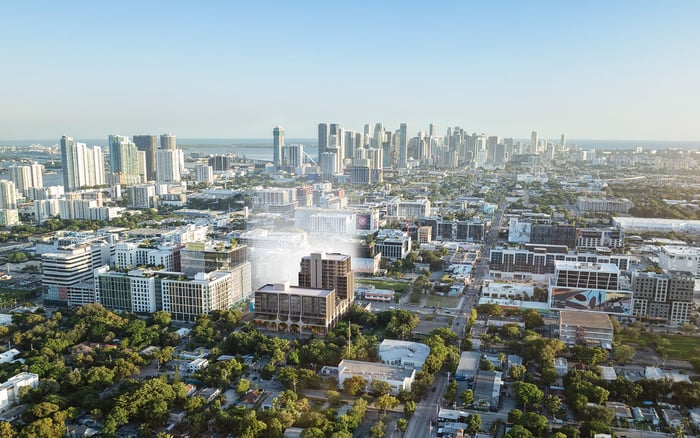
A buyer-focused guide to weighing preconstruction optionality against the certainty of completed buildings in Wynwood, with attention to timing, design, risk, and lifestyle fit.
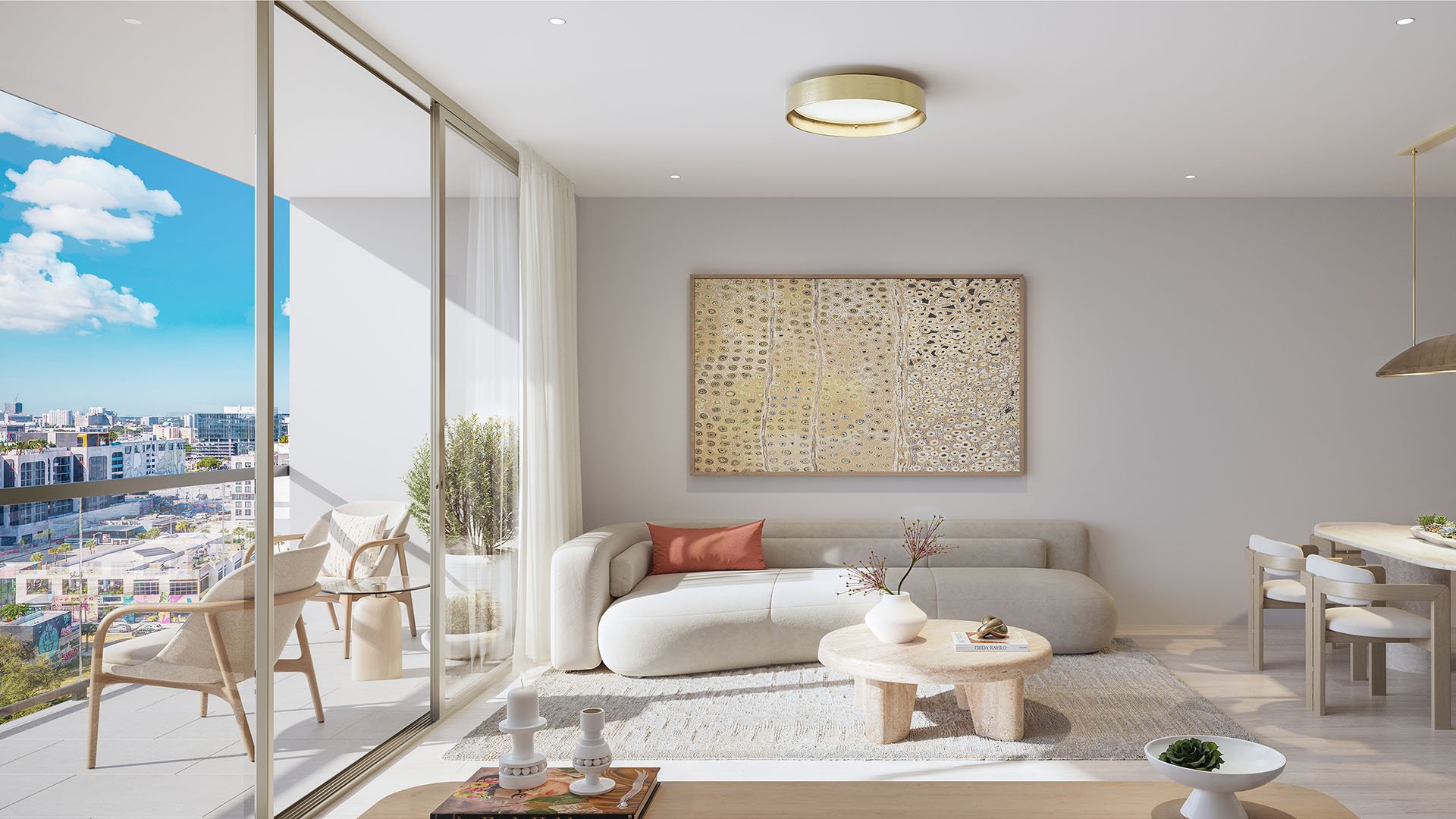
In a more established luxury district, the choice between preconstruction and a completed residence can feel almost mechanical: price, floor plan, amenities, carrying costs, and views. In Wynwood, the calculation is more layered. The neighborhood is still defining its residential identity in real time, which means the buyer is not simply choosing a home. The buyer is choosing how much uncertainty to accept in exchange for optionality.
That is why flexibility matters. Pre-construction can allow a buyer to enter earlier, consider a broader range of layouts, and potentially align a closing with a future life event rather than an immediate move. Completed-building certainty, by contrast, gives the buyer something invaluable in an emerging urban district: the ability to stand inside the residence, read the light, hear the street, measure the privacy, and understand how the building actually lives.
Wynwood intensifies both sides of the equation. Its creative energy is central to the appeal, but that same energy can define the difference between a speculative purchase and a precise one. The right answer is rarely universal. It depends on whether the residence is intended as a primary home, a pied-a-terre, a long-term hold, or a more tactical investment.
Pre-construction in Wynwood is most compelling for buyers who care about choice. Earlier participation may provide access to floor plans, exposures, and design decisions that are no longer available once a building is complete. For a buyer who knows exactly how they want to live, that optionality can be powerful.
The appeal is not only aesthetic. A buyer who does not need immediate occupancy may prefer a phased capital commitment and a future closing. That can be especially relevant for a second-home buyer planning around school years, business liquidity, or a broader portfolio shift. In this context, new construction is less about instant gratification and more about controlling the path to ownership.
Projects such as Frida Kahlo Wynwood Residences speak to the neighborhood’s art-forward residential narrative, where identity and architecture are part of the purchase psychology. The point is not simply to buy new. It is to decide whether a residence still in formation offers enough choice to justify the wait.
That choice should be approached with discipline. Buyers should study deposit structure, contract flexibility, finish standards, parking, rental rules, and the practical details of future living. In Wynwood, a beautiful rendering is only the beginning. The sharper question is whether the planned residence suits the buyer’s actual day, from arrival sequence to storage to acoustic comfort.
A completed residence answers questions that preconstruction cannot fully settle. How does the lobby feel at night? Is the elevator experience private enough? Does the unit receive the light the buyer expected? Is the balcony usable, shaded, intimate, or exposed? Does the amenity level feel curated or crowded? These details can determine whether a purchase feels effortless or compromised.
Completed-building certainty is particularly valuable in Wynwood because the surrounding context matters. A buyer can walk the streets at different hours, test the commute, understand restaurant and gallery rhythms, and sense whether the location feels residential enough for their lifestyle. In a neighborhood with a strong cultural pulse, that sensory due diligence is not optional. It is central to value.
Resale also has a different psychology. A completed home may not offer the same degree of personalization, but it can offer immediate possession, visible condition, known common areas, and an established building culture. For buyers who are relocating, downsizing, or moving capital from another property, that certainty can be worth more than theoretical upside.
This is why some buyers compare Wynwood opportunities against nearby completed or nearly tangible alternatives in adjacent urban markets. A buyer looking at the broader Miami core might also study Villa Miami in Edgewater or Casa Bella by B&B Italia Downtown Miami Downtown Miami to understand how different neighborhoods express design, service, and vertical living. The comparison helps clarify whether Wynwood’s character is a preference or merely a curiosity.
The common mistake is to frame preconstruction as risky and completed buildings as safe. The reality is more nuanced. Preconstruction carries execution risk, timing risk, and product interpretation risk. Completed buildings carry condition risk, association risk, pricing risk, and the possibility that the best lines or exposures have already been absorbed.
In Wynwood, the distinction becomes sharper because buyers are often underwriting neighborhood trajectory as much as the residence itself. A preconstruction buyer may be betting on future cohesion. A completed-building buyer can evaluate today’s street-level experience but may have less room to shape the purchase. One is a forward-looking decision with more variables. The other is a present-tense decision with less imagination required.
Neither approach should be casual. The correct lens is not fear. It is alignment. A buyer with a long time horizon, tolerance for construction timing, and a clear desire for fresh product may find preconstruction rational. A buyer who prizes immediate clarity, daily comfort, and tactile verification may prefer a completed building, even if it narrows the field.
Wynwood’s residential proposition is distinct because it is not trying to imitate waterfront Miami Beach, the financial rhythm of Brickell, or the resort atmosphere of coastal towers. It is an urban, creative, design-conscious district. That is the attraction, but it also means buyers should be honest about lifestyle fit.
A Brickell buyer may prioritize service, banking proximity, and vertical convenience. A comparison with 888 Brickell by Dolce & Gabbana, for example, can frame the difference between branded metropolitan polish and Wynwood’s more experimental residential energy. Neither is inherently better. They answer different desires.
An Edgewater buyer may value water orientation and a softer residential cadence near the urban core. A Wynwood buyer may accept less conventional residential surroundings in exchange for proximity to art, dining, design, and cultural motion. The better purchase is the one the buyer will still understand five years later, not merely the one that feels compelling during a showroom appointment.
Start with use. If the residence is for immediate personal occupancy, completed-building certainty deserves serious weight. The buyer can test the actual experience before committing. If the residence is for future use, preconstruction may create a more elegant match between timing and ownership.
Then consider tolerance for ambiguity. Some buyers enjoy being early and shaping a decision from plans, finishes, and projected lifestyle. Others need to see, touch, and compare. Wynwood does not reward pretending to be one type of buyer when you are the other.
Next, evaluate liquidity. Preconstruction deposits, closing timelines, and potential delays require planning. Completed purchases may require faster capital deployment but provide immediate utility. The financial structure should feel comfortable even if life changes.
Finally, ask whether the buyer is selecting Wynwood specifically or simply seeking a new Miami address. If the neighborhood’s texture is essential, preconstruction may be worth the patience. If the buyer wants predictable luxury first and neighborhood identity second, a completed building or another district may be the cleaner answer.
Is preconstruction a better value in Wynwood? It can be, but value depends on timing, contract terms, unit selection, and the buyer’s holding horizon.
Why would a buyer choose a completed building instead? A completed building allows the buyer to verify light, sound, finishes, amenities, and the surrounding street experience.
Does Wynwood suit primary residences? It can suit buyers who want an urban, creative environment and are comfortable with an active neighborhood rhythm.
Is Wynwood more appropriate for investors than end users? Not necessarily. The right fit depends on use, time horizon, rental rules, and personal tolerance for neighborhood activity.
What should buyers study in a preconstruction contract? Deposit schedule, closing timing, finish obligations, assignment terms, and the rules that affect future use should be reviewed closely.
Are completed residences easier to finance or evaluate? They may be easier to evaluate physically, but financing and purchase structure still depend on the building and the buyer profile.
How important is outdoor space in Wynwood? Outdoor space can matter significantly, especially when it improves daily livability rather than serving only as a visual amenity.
Should buyers compare Wynwood with Brickell or Edgewater? Yes. Comparing nearby districts helps clarify whether Wynwood’s creative identity is truly central to the purchase.
Can preconstruction suit a second-home buyer? Yes, particularly when the delivery timeline aligns with future lifestyle plans and the buyer does not need immediate occupancy.
What is the smartest way to decide? Match the purchase type to the buyer’s timing, risk tolerance, lifestyle requirements, and desired level of certainty.
If you'd like a private walkthrough and a curated shortlist, connect with MILLION.
If branded residences are on your mind — as a home or as an allocation — we would be glad to share what we are seeing, privately.
Begin a quiet conversation