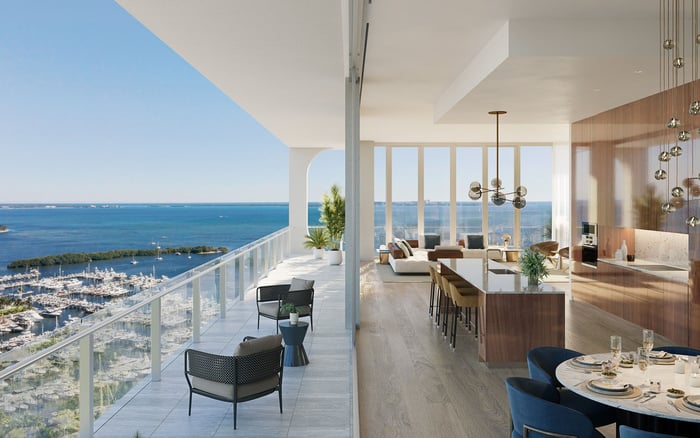
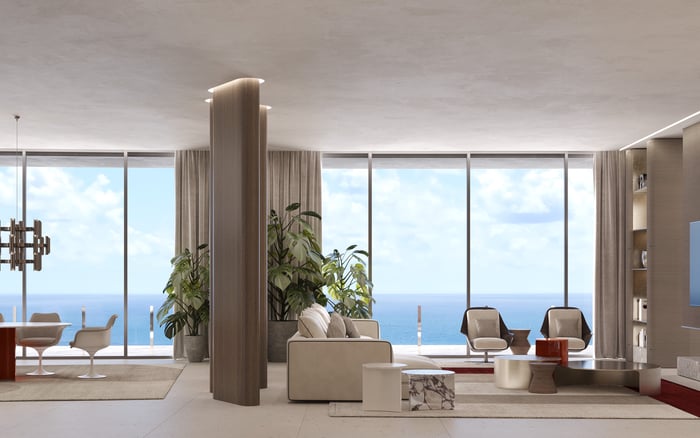
A disciplined framework for evaluating wellness amenities, medical access, operating obligations, resilience, and long-term livability in Coconut Grove.

In Coconut Grove, wellness may be expressed through serene architecture, landscaped arrival sequences, treatment spaces, fitness rooms, pools, and private areas designed for restoration. For a careful buyer, however, the decisive issue is not how an amenity photographs, but whether the building can operate, maintain, staff, and fund it to the standard implied by the residence.
Begin by separating three elements: the physical facility, the service attached to it, and the financial obligation supporting both. A beautiful room may offer limited value if reservations are difficult, operating hours are narrow, outside practitioners are restricted, or future staffing remains discretionary. Ask for the governing language behind every material promise, then distinguish enforceable obligations from marketing descriptions and anticipated programming.
This is where lifestyle and asset stewardship converge. The strongest purchase is not necessarily the one with the longest amenity menu. It is the one whose spaces, rules, staffing model, and projected costs align with how the owner will actually live.
Terms such as holistic, private, restorative, and personalized require translation into practical questions. Who may use each space? Can residents bring trainers, therapists, or caregivers? Are appointments required? Which services carry separate charges? Can access policies change through association action? Who replaces specialized equipment, and where does that expense appear in the budget?
Buyers should inspect circulation as carefully as finishes. Trace the path from the residence to the fitness room, pool, treatment area, parking, and lobby. Privacy, elevator dependence, acoustics, ventilation, storage, and ease of access can determine whether a facility becomes part of a daily routine or remains ornamental.
When comparing The Well Coconut Grove with Four Seasons Residences Coconut Grove, use the same written scorecard. Focus on fit rather than brand vocabulary: services expected, services guaranteed, recurring charges, user restrictions, and the buyer's likely frequency of use.
Medical proximity should never be reduced to a pin on a map. Define the care that matters to the household, then test the entire journey: leaving the residence, retrieving a car, reaching the preferred destination, parking or being dropped off, and returning in realistic traffic. Repeat the exercise for both routine appointments and urgent situations.
A household managing specialized care may prioritize route redundancy, predictable building access, room for a driver, and accommodation for mobility equipment. A family purchasing a second home may instead focus on how easily local physicians can coordinate with providers elsewhere. Buyers expecting visiting caregivers should examine guest registration, service-elevator policies, parking permissions, and after-hours access.
Do not assume a concierge can resolve a building rule or transportation constraint. Request written clarification wherever access is essential, and discuss personal medical requirements directly with qualified care providers before treating proximity as a purchase advantage.
The residence, amenity program, association, and insurance structure form a single operating system. Review the proposed or current budget alongside the declaration, rules, management agreement, reserve information, insurance materials, and recent association records when available. The objective is to identify who controls service levels, who can revise fees, and which expenses may migrate to owners.
For new-construction purchases, determine what is contractual, what remains conceptual, and what may change. For resale, compare stated standards with observable operations and documented spending. In either case, ask how valet, security, pool operations, landscaping, wellness programming, and specialized equipment are funded.
This discipline applies across different residential formats. Park Grove Coconut Grove, Vita at Grove Isle, and The Lincoln Coconut Grove can be considered through one consistent lens without presuming their ownership structures or offerings are interchangeable.
Wellness depends on continuity. Buyers should ask how the property prepares for storms, power interruptions, water intrusion, elevator outages, restricted access, and temporary amenity closures. Review the respective responsibilities of the association and the owner, including protection of terraces, glazing, mechanical systems, interiors, and personal property.
A waterfront outlook may be central to the emotional case for a home, but careful ownership requires a separate review of elevation, drainage, insurance, emergency procedures, and building-specific exposure with appropriate professionals. Do not substitute a neighborhood impression for property-level diligence.
The same principle applies to personal comfort. Determine which systems serve the residence, which serve common areas, whether backup arrangements support essential functions, and how communications reach absent owners. These considerations can be especially important for a household that travels frequently or leaves the home unoccupied for extended periods.
The most useful buyer's guides turn preferences into weighted criteria. Score each candidate across residence quality, privacy, amenity utility, medical routes, operating transparency, resilience, and projected carrying obligations. Then classify every answer as documented, pending, or assumed. An assumption should never receive the same confidence as a provision in signed documents.
Finally, engage independent legal, financial, insurance, inspection, and medical advisers as appropriate. Luxury can make complexity feel seamless, but ownership quality is revealed by what remains dependable after the presentation ends.
What makes a wellness amenity materially useful? Regular access, suitable rules, dependable upkeep, and alignment with the owner's routine make it useful.
Should buyers rely on renderings or sales language? No. Material expectations should be checked against contracts, governing documents, budgets, and written policies.
How should medical proximity be evaluated? Test the complete trip under realistic conditions and against the household's actual care needs.
Why review guest and service-access rules? Those rules may affect visiting physicians, therapists, nurses, trainers, caregivers, and mobility support.
What wellness costs deserve scrutiny? Examine staffing, maintenance, equipment replacement, programming, booking charges, and separately billed services.
Are more amenities always better? No. A smaller program may be preferable when it is usable, well funded, and consistent with owner priorities.
What should an absent owner investigate? Review monitoring, emergency communication, unit access, maintenance permissions, and procedures during disruptions.
How should buyers compare unlike properties? Apply one weighted scorecard while recognizing differences in documents, operations, services, and residential format.
Which resilience questions belong in due diligence? Ask about power, elevators, water management, emergency access, insurance, communications, and owner responsibilities.
Who should review the fine print? Use independent advisers suited to the transaction, including legal, financial, insurance, inspection, and medical professionals.
For a tailored shortlist and next-step guidance, connect with MILLION.
If branded residences are on your mind — as a home or as an allocation — we would be glad to share what we are seeing, privately.
Begin a quiet conversation