A buyer-focused look at why Palazzo del Sol resonates with serious collectors seeking privacy, volume, service, and asset protection on Fisher Island.

The modern art collector does not simply need walls. The collector needs proportion, discretion, continuity of service, and a residence capable of absorbing the practical realities of living with valuable cultural assets. That is why Palazzo del Sol has become relevant beyond the familiar language of trophy condominium ownership. It is best understood as a Fisher Island luxury condominium for households that expect private life and collecting life to operate together.
For this audience, art is not decorative filler. It can shape circulation, lighting preferences, security expectations, and even the way a home is staffed and managed. Palazzo del Sol fits the conversation because it frames residential space as both architectural setting and lifestyle infrastructure. It speaks to buyers who want a home that feels refined, quiet, and personal while supporting the display, care, and safeguarding of significant works.
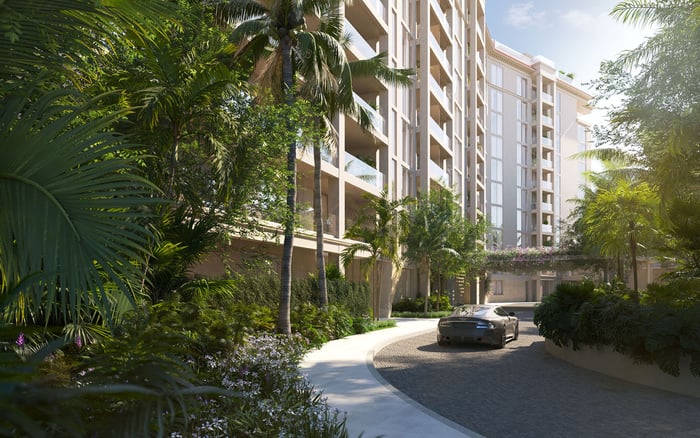
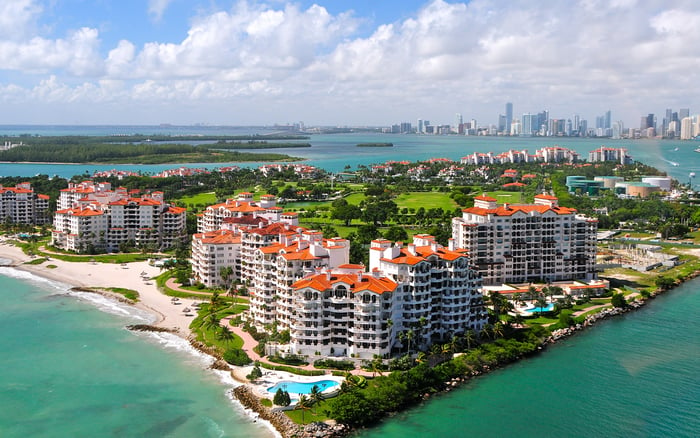
This is where Fisher Island matters. The island is associated with privacy, low density, controlled access, and a service culture built for ultra-prime expectations. For buyers searching the Fisher Island category, the appeal is not only seclusion from the city. It is proximity to Miami’s art world without surrendering the protected atmosphere of a private residential enclave.
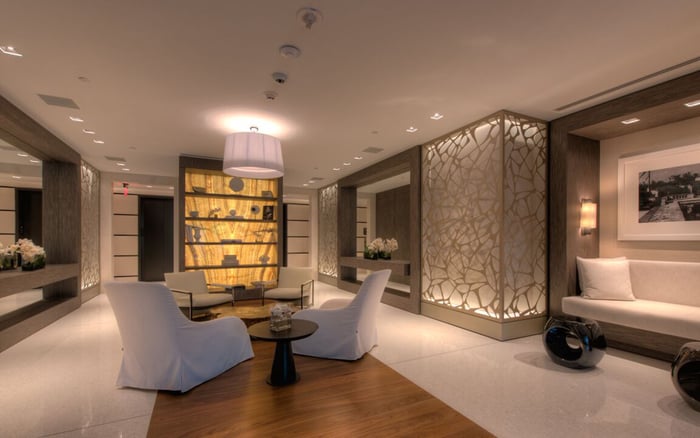
Palazzo del Sol Fisher Island sits within a broader shift in luxury housing: the home is increasingly treated as a private gallery. That does not mean a residence should feel institutional. The most compelling collector homes remain deeply livable. They allow works to be encountered daily, in quiet thresholds, formal rooms, and generous entertaining spaces, while preserving the intimacy of a private household.
The project’s relevance begins with spatial volume. Collectors often need scale for placement, sightlines, and visual breathing room. A painting or sculpture can lose authority in a cramped room; a residence with generous volume can allow art to hold space without overwhelming it. Palazzo del Sol is positioned around that idea of residential scale serving more than luxury spectacle.
Privacy is equally central. A collector may be protecting financial value, cultural value, or both. Controlled access becomes part of the residential equation, not a secondary convenience. The residence is not only where art is displayed, but where it is received, moved, insured, evaluated, and sometimes shown privately to guests. A gated-community mindset, in this context, is less about status and more about operational calm.
The art-collector-living conversation is often romanticized, but the serious buyer tends to be highly pragmatic. A residence must be elegant, yet it also has to manage risk. Palazzo del Sol enters that conversation through a combination of controlled access, climate resilience measures, and highly personalized service. Those attributes help explain why the property can be evaluated as more than another luxury condominium.
For collectors, security is not merely a front-desk concept. It includes the choreography of arrivals, the privacy of visitors, the ability to limit unnecessary exposure, and the assurance that valuable possessions are housed in a setting designed for discretion. On Fisher Island, the wider residential environment reinforces that expectation. The island’s identity as a safe harbor for financial and cultural assets is part of the reason collector-minded buyers pay attention.
Climate resilience is another subtle but important consideration. In South Florida, collectors with high-value possessions often think carefully about preservation. While individual collection needs vary, the presence of resilience measures in the residential narrative gives Palazzo del Sol relevance for buyers who are not only acquiring a beautiful home, but also planning how to live responsibly with important objects.
Service completes the picture. At this level, service is not simply convenience. It is the invisible framework that allows a residence to remain orderly, secure, and private. For the collector, personalized service supports the rhythm of daily life, from managing guests to coordinating household needs with minimal friction.
Miami’s rise as a global art capital has changed how luxury buyers assess residential neighborhoods. The Art Basel calendar may bring the most visible expression of that energy, but the year-round effect is deeper. Buyers increasingly ask whether a home can support their cultural life as naturally as it supports entertaining, wellness, or waterfront living.
In that landscape, Fisher Island occupies a distinct position. It is not trying to replicate the public energy of Miami Beach or the design-forward visibility of the mainland. Instead, it offers distance, control, and composure. A buyer comparing Palazzo della Luna, The Residences at Six Fisher Island, and The Links Estates at Fisher Island is often evaluating different expressions of the same core idea: private island living for households that prize security, service, and space.
Palazzo della Luna Fisher Island may appear in the same buyer conversation, but Palazzo del Sol’s art-collector relevance is specifically tied to how it combines architectural presence with the practical requirements of storing, displaying, and protecting art. That combination matters because collectors rarely think in a single dimension. They are balancing beauty, privacy, logistics, preservation, and legacy.
Beyond the island, collector-minded buyers may also consider Miami Beach residences such as Faena House Miami Beach, especially when proximity to the city’s cultural scene is important. Yet the Fisher Island proposition remains different. It is quieter, more insulated, and more focused on the idea that a home can function as a refined sanctuary for both family life and cultural assets.
For a collector, the right questions are not limited to views, finishes, or prestige. The more revealing questions are operational. Does the residence offer enough spatial volume for the way the collection is displayed? Does access feel controlled and discreet? Does the service environment reduce friction? Does the broader setting support privacy without disconnecting the owner from Miami’s cultural life?
This is why Palazzo del Sol belongs in the art collector living conversation. It reflects a buyer profile that views the residence as a long-term platform for lifestyle and stewardship. An exclusive-area purchase is not only about owning in a scarce location. It is about choosing an environment capable of protecting what the owner values, including objects that may hold personal, financial, and cultural meaning.
The most successful collector residences do not announce their sophistication too loudly. They create calm. They give art room to breathe. They make privacy feel natural. Palazzo del Sol’s appeal lies in that intersection of visible luxury and quiet infrastructure, where the home is designed to be lived in, admired, and trusted.
Why is Palazzo del Sol relevant to art collectors? It combines luxury residential design with privacy, spatial volume, service, and controlled access, all of which matter when a home also functions as a private gallery.
Is Palazzo del Sol only about displaying art? No. Its collector appeal also involves safeguarding, daily livability, privacy, and the practical management of valuable possessions.
Why does Fisher Island matter for collectors? Fisher Island is associated with privacy, low density, controlled access, and service, creating a discreet setting for financial and cultural assets.
Does spatial volume matter for art-focused residences? Yes. Larger volumes can help artworks read properly, give rooms visual balance, and allow collections to become part of daily life.
How does controlled access support collector living? It helps protect privacy, manage visitors, and reduce unnecessary exposure around valuable works and household activity.
Why is climate resilience part of the conversation? Collectors in South Florida often consider preservation conditions, and resilience measures can be relevant when housing high-value possessions.
Is Palazzo del Sol positioned as more than a luxury condominium? Yes. It is framed as both an architectural and lifestyle product for buyers with highly specific residential expectations.
How does Miami’s art scene influence demand? Miami’s global art identity makes collector-friendly residences more relevant, especially for buyers who want cultural proximity with privacy.
Should buyers compare other Fisher Island residences? Yes. Comparing nearby options can clarify priorities around privacy, service, scale, and the overall residential setting.
What is the key takeaway for collectors? Palazzo del Sol fits buyers who want a refined home that supports art as part of everyday living, not as an afterthought.
For a tailored shortlist and next-step guidance, connect with MILLION.
If branded residences are on your mind — as a home or as an allocation — we would be glad to share what we are seeing, privately.
Begin a quiet conversation