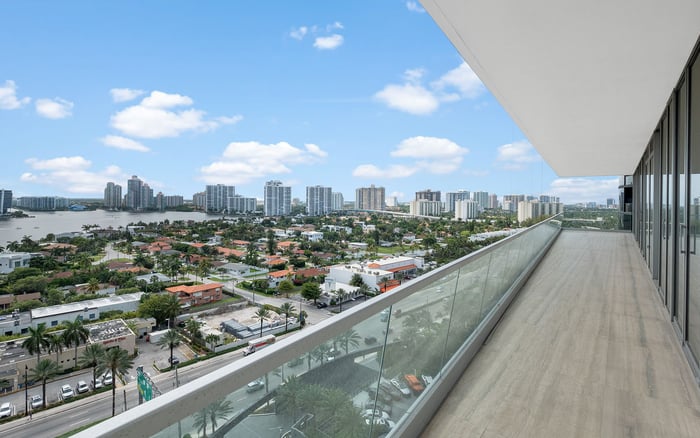
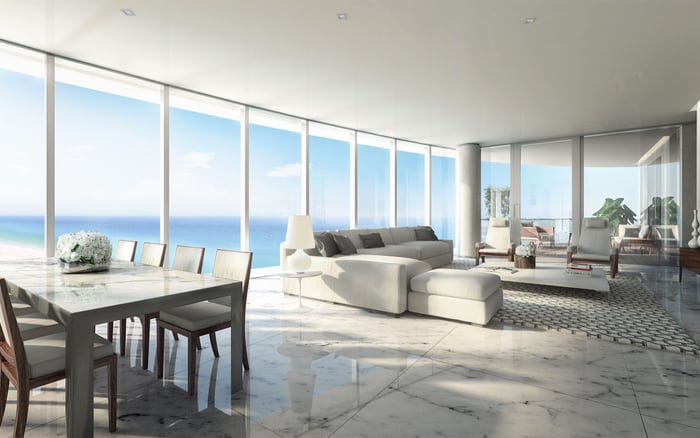
At Residences by Armani/Casa, the design identity, resort services, and extensive amenity program are inseparable from the building’s long-term cost structure. A disciplined purchase review should test current dues, operating performance, reserve depth, and future replacement needs together rather than treating the brand premium as a stand-alone asset.
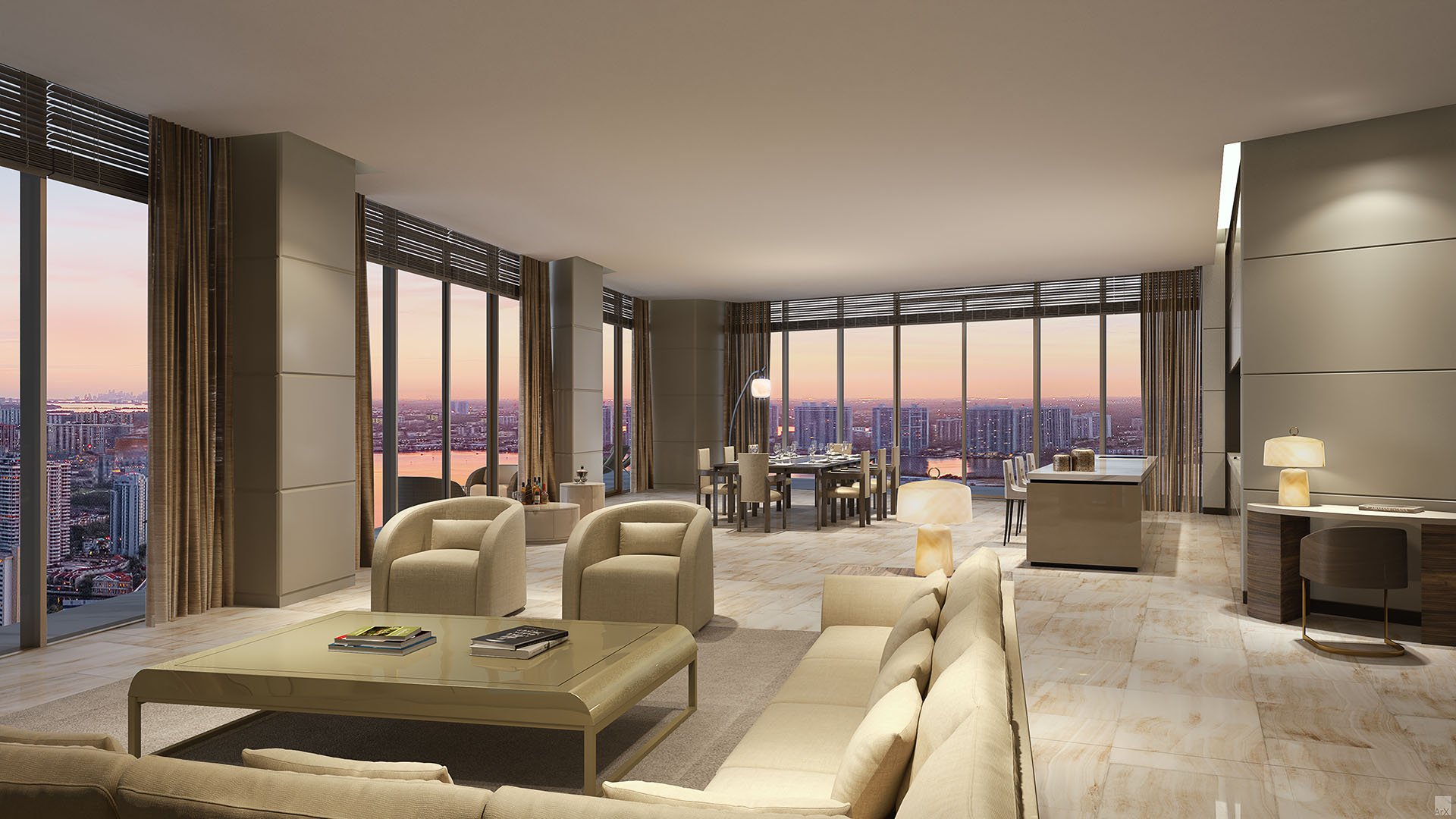
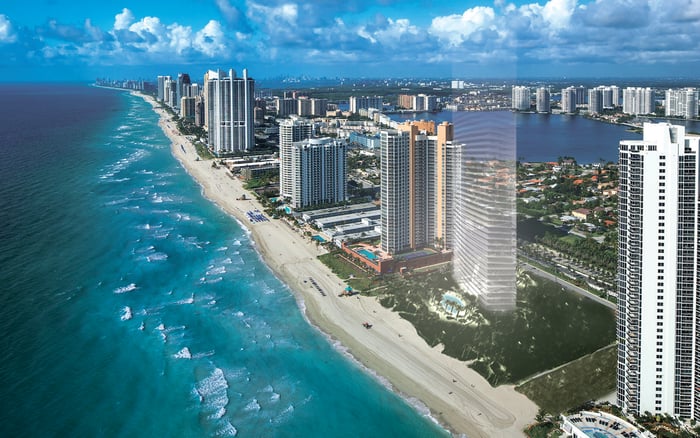
Residences by Armani/Casa is a 56-story oceanfront condominium at 18975 Collins Avenue in Sunny Isles Beach. Developed by Dezer Development and The Related Group, the tower was designed by Pelli Clarke & Partners, with interiors by Armani/Casa Interior Design Studio. With 308 residences, it occupies a different operating category from a low-density boutique building.
The physical proposition is substantial: roughly three landscaped acres, approximately 300 linear feet of private beachfront, and more than 35,000 square feet of amenities across two floors. The program includes an oceanfront pool and terrace, hot tub, spa and treatment rooms, salon, sauna and steam facilities, movie theater, restaurant, lounges, cigar room, wine cellar, and fitness spaces.
Those features define the experience buyers expect from Armani Casa Sunny Isles Beach. They also create recurring expenses and eventual replacement obligations. The proper underwriting question is not whether the amenities are impressive, but whether operating income, reserve contributions, and governance are calibrated to sustain them without compromising the property’s distinction.
In a branded condominium, preservation of the experience is preservation of the asset.
Armani/Casa’s identity is embedded in the common-area finishes, furnishings, and visual continuity of the building. Maintenance therefore extends beyond keeping essential systems functional. Materials must receive appropriate care, worn furnishings must eventually be renewed, and public spaces must remain aligned with the standard that supports the address.
This is the central tension within branded residences. The brand can distinguish a resale from conventional inventory, but that differentiation depends on disciplined execution after completion. Deferred refurbishment may reduce near-term expenditures while gradually weakening the experience buyers believed they were purchasing.
The same principle applies across the local branded market, although every association has a different budget and asset mix. A buyer comparing Bentley Residences Sunny Isles or The Ritz-Carlton Residences® Sunny Isles should not infer equivalent costs from a shared luxury label. Staffing structures, component inventories, residence counts, contracts, insurance, and reserve policies all require project-specific review.
Charges at Residences by Armani/Casa vary widely. Building-level figures have ranged from approximately $400 to $5,600 per month. Individual disclosures have included $2,999 per month for Unit 804 and $5,257 per month in maintenance and HOA charges for Unit 302. Another estimate places dues near $2.11 per square foot per month.
These figures are snapshots, not reliable substitutes for current association records. Differences may reflect residence size, allocation methodology, timing, included charges, or data quality. Buyers should reconcile the exact unit’s stated obligation with the current budget, recent ledger, and unit-specific estoppel before relying on any monthly figure.
Total carrying cost is broader still. The estimate of approximately $2.11 per square foot excludes in-unit electricity, contents insurance, and property taxes. Financing costs and interior maintenance may also matter in an individual owner’s model. For an investment or second-home analysis, separating association expense from the complete annual cash requirement prevents an artificially low ownership projection.
The operating budget funds the building’s current service proposition. Staffing, security, valet, utilities, insurance, and amenity maintenance are material recurring costs in a resort-style tower. Pools, spa equipment, elevators, mechanical systems, food-service infrastructure, and extensive common areas introduce multiple vendor relationships and specialized maintenance cycles.
Replacement reserves address a different question: whether funds are accumulating before significant components reach the end of their useful lives. A serious review should distinguish structural reserve funding from the capital plan for non-structural luxury assets. Spa equipment, restaurant infrastructure, pool systems, furnishings, and designer finishes may be central to market positioning even when they fall outside a narrowly framed structural schedule.
Request the current operating budget, reserve schedule, latest reserve or engineering study, insurance information, and details of approved or contemplated special assessments. Then compare projected replacement timing with the cash already set aside. A large reserve balance can sound reassuring, but its adequacy depends on the obligations it must cover.
Financial statements reveal outcomes; board minutes often reveal the decisions behind them. Review at least 12 to 24 months of records for recurring deficits, major repairs, insurance increases, amenity operating losses, vendor disputes, and proposed service reductions. Repeated postponements can indicate that current dues do not capture the building’s true cost structure.
Operating discipline does not necessarily mean minimizing expenditure. At a design-led property, disciplined governance may require timely spending to protect service quality and common-area presentation. More useful indicators include transparent budgeting, clear procurement, realistic reserve contributions, and a coherent response to rising costs.
Scale can help distribute certain expenses across 308 residences, but it does not eliminate the cost of a broad amenity platform. Buyers considering a smaller Sunny Isles alternative such as Muse Residences Sunny Isles Beach should compare both the number of owners sharing costs and the scope of assets those owners must support.
Do not hold today’s monthly charge flat. Model at least three ten-year paths: a measured dues-growth case, a higher-cost operating case, and a case combining dues increases with one or more capital calls. The exercise is not a forecast of a specific assessment. It is a test of how much variability the purchase can absorb while remaining comfortable.
Run the model by category. Increase recurring operations separately from reserve contributions, insurance, taxes, and unit-level expenses. Add a discretionary interior allowance if the residence itself may need updating during the holding period. This approach makes it easier to identify whether risk comes from the association, the private residence, or both.
Pricing and trends also require context. During development, residences averaged about $3.5 million, while resale inventory has been offered from around $1.07 million. That spread is not a building-wide valuation conclusion. Layout, floor, size, view, condition, and offering timing can materially shape the price of a particular home.
The strongest case for ownership joins three elements. First, the Armani/Casa identity offers a recognizable design proposition. Second, operating discipline keeps service and presentation aligned with that promise. Third, properly planned reserves allow the association to renew both essential systems and the luxury assets that make the property distinctive.
A buyer should therefore negotiate and close with documents, not assumptions. Verify the unit’s exact dues, identify what those dues include, understand the reserve categories, examine meeting records, and stress-test future cash requirements. Prestige may support desirability, but over time, the association’s stewardship determines whether the experience remains persuasive.
For a discreet discussion of South Florida luxury residences and acquisition priorities, connect with MILLION.
If branded residences are on your mind — as a home or as an allocation — we would be glad to share what we are seeing, privately.
Begin a quiet conversationThe tower is at 18975 Collins Avenue in Sunny Isles Beach, Florida, directly on the oceanfront.
It is a 56-story condominium with 308 residences, making it larger than a low-density boutique tower.
More than 35,000 square feet of amenities span two floors, with spaces including pools, spa facilities, fitness areas, lounges, a theater, and a restaurant.
The brand is expressed through high-specification common spaces and furnishings that require appropriate maintenance and eventual renewal.
Material costs include staffing, security, valet, utilities, insurance, and maintenance of the tower’s extensive amenities.
No. Public figures vary substantially and should be checked against the current association budget and a unit-specific estoppel.
Disclosures have included $2,999 per month for Unit 804 and $5,257 per month in maintenance and HOA charges for Unit 302.
Request the operating budget, reserve schedule, latest reserve or engineering study, insurance information, estoppel, board minutes, and assessment details.
Structural obligations and assets such as spa equipment, furnishings, pool systems, and restaurant infrastructure can follow different replacement cycles.
Use multiple scenarios for dues growth, reserve contributions, insurance, taxes, unit expenses, and potential capital calls rather than holding current charges flat.