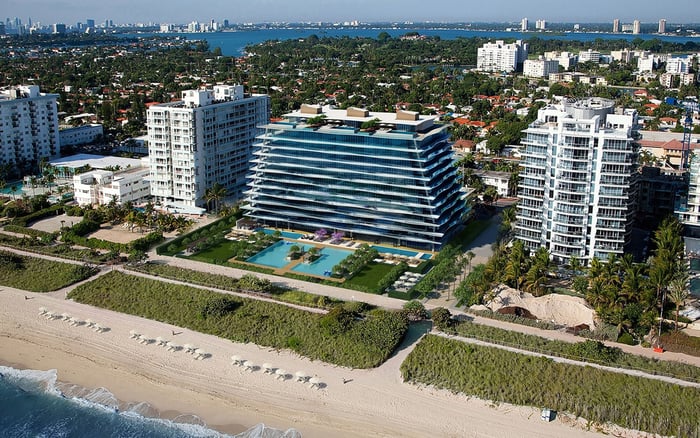
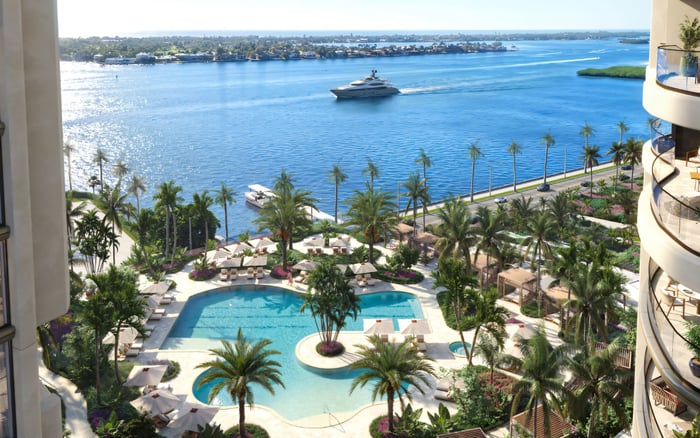
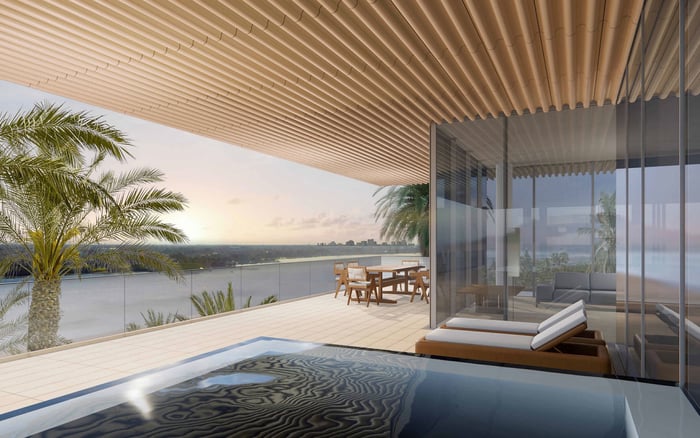
A discreet underwriting guide for comparing Palm Beach Residences and Fendi Château Residences Surfside through the practical lenses of fine art installation, freight access, climate-controlled storage, and coastal ownership routines.
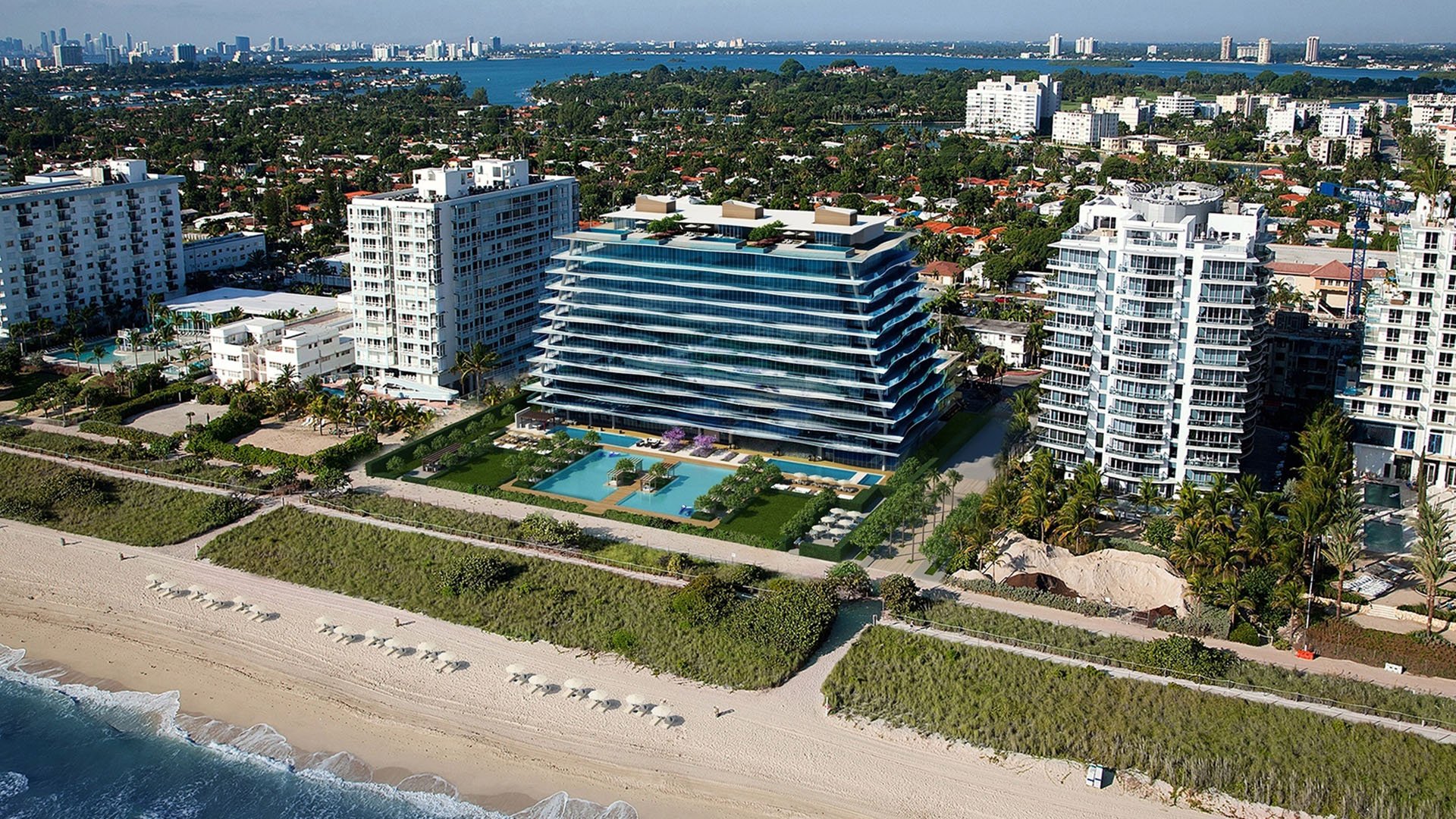
For a collector, choosing between Palm Beach Residences and Fendi Château Residences Surfside is not simply a matter of address, taste, or ocean proximity. It is an operating decision. The most important questions often sit behind the visible finishes: how art enters the property, how it is installed, where it rests between seasons, and whether the residence can protect value without compromising discretion.
In underwriting terms, Palm Beach and Surfside buyers are solving different versions of the same problem. One may prioritize private arrival, horizontal living, and a quieter cadence. The other may prize branded residential service, managed vertical access, and proximity to the cultural and social rhythm of Miami Beach and Bal Harbour. Neither is inherently superior. The better fit is the one whose building systems, rules, and service culture match the owner’s collection, travel patterns, and tolerance for coordination.
That makes the comparison between Palm Beach Residences and Fendi Château Residences Surfside especially practical. The underwriting lens should move beyond the showroom tour and into the logistics file. A residence that photographs beautifully can still prove difficult for a large-format work, a delicate sculpture, or a high-value shipment if access, storage, and installation protocols are not aligned from the beginning.
The first question is not whether a residence has beautiful walls. It is whether those walls can perform. Serious buyers should review wall composition, allowable anchoring, lighting flexibility, ceiling heights, humidity management, and building rules for installers. A painting can be light-sensitive, a sculpture can require specific floor loading, and a mixed-media work can depend on environmental consistency that ordinary residential assumptions do not address.
For Palm Beach Residences, the underwriting conversation should focus on the private-home qualities a buyer expects from the Palm Beach lifestyle. That may include controlled contractor access, flexible installation schedules, and the possibility of more tailored interior interventions, subject to property rules and approvals. Every assumption should still be verified. Elegant privacy does not automatically mean unlimited installation freedom.
At Fendi Château Residences Surfside, the analysis should be equally practical. Vertical living can be exceptionally convenient when the building has the right service choreography, but collectors should examine elevator dimensions, service elevator protocols, loading access, move-in windows, protective padding standards, and approval requirements for specialized vendors. Surfside may offer a refined coastal setting, yet the building’s procedures will determine how easily art moves from crate to wall.
The most successful art installations are planned before closing, not after. Buyers should involve art handlers, designers, insurance advisers, and building management early enough to identify friction. If the desired piece needs rigging, temporary climate control, special crating, or a multi-person installation team, the residence should be tested against that exact scenario.
Freight access is one of the least glamorous topics in luxury real estate, which is precisely why it deserves attention. A residence can deliver beauty in the front of house while creating risk behind the scenes. The path from truck to lobby, elevator, corridor, and unit entry should be walked, measured, and documented.
For a Palm Beach buyer, the relevant questions may include gate clearance, driveway turning radius, staging space, covered access, municipal or association restrictions, and the ability to receive shipments without public exposure. The value is not only convenience. It is privacy, reduced handling, and fewer moments when valuable property is exposed to weather, delay, or unnecessary visibility.
For a Surfside condominium buyer, freight access is more procedural. The buyer should understand who controls delivery scheduling, how many vendors can work at once, whether freight elevators are shared with routine building operations, and what happens during high-demand seasonal periods. At Fendi Château Residences Surfside, the prestige of the address should be paired with a careful reading of operational rules. A seamless lifestyle is usually the result of disciplined building management, not luck.
Insurance also belongs in the conversation. Some policies may focus closely on chain of custody, authorized handlers, environmental conditions, and documented installation procedures. Even when coverage is robust, preventable logistics gaps can create avoidable disputes. Buyers should treat freight planning as part of asset protection.
Climate-controlled storage is often treated as a secondary amenity, but for collectors it can be central to ownership. Not every work belongs on display year-round. Seasonal rotation, incoming acquisitions, outgoing loans, and estate planning can all require storage that is secure, dry, stable, and accessible.
The buyer should distinguish between ordinary storage and collection-grade storage. A general storage room may be useful for luggage, holiday décor, and recreational gear. It may not be appropriate for canvas, works on paper, textiles, design objects, wine, archival material, or delicate furniture. The underwriting checklist should include temperature consistency, humidity control, pest prevention, security, access logs, sprinkler exposure, floor elevation, and proximity to exterior walls or mechanical systems.
Oceanfront ownership adds another layer. Coastal air, storm planning, and seasonal vacancy require a more disciplined view of environmental control. A residence that performs well during a weekend stay should also be evaluated for how it behaves when the owner is abroad for several months. Remote monitoring, building response protocols, and service relationships can become as valuable as the storage space itself.
Second-home ownership magnifies the issue. If the residence will be used seasonally, art and valuables need a plan for the months when no one is in residence. That plan may include on-site storage, off-site storage, rotation schedules, inspections, and emergency contact procedures. Luxury is not merely having space. It is knowing what happens when the owner is away.
The Palm Beach side of the comparison tends to appeal to buyers who associate luxury with privacy, quiet arrival, and a more controlled domestic rhythm. The strongest underwriting questions are therefore about autonomy. Can the owner receive objects on their schedule? Can vendors enter discreetly? Is there space to stage work before installation? Are approvals straightforward, and are there limits that might affect future renovations or art placement?
Surfside, by contrast, often asks the buyer to underwrite service quality and building coordination. The value proposition can be compelling when staff, security, and management create a polished daily experience. The tradeoff is that a collector must understand the system. Elevators, loading zones, service corridors, and building rules are shared infrastructure. When they are excellent, they protect the owner. When they are vague, they create friction.
Neither lifestyle should be judged by stereotype. A Palm Beach residence can have formal restrictions, and a Surfside condominium can be highly accommodating. The buyer’s job is to align expectations with documents, physical conditions, and the actual behavior of the property.
Investment discipline in this category is not only about comparable sales or view premiums. It is about the durability of use. A residence that supports high-value ownership with less friction can be more valuable to the right buyer, even if that advantage is not immediately visible in the marketing materials.
Before contract, buyers should ask for written clarity on installation rules, freight procedures, insurance requirements for vendors, storage rights, access hours, emergency protocols, and any restrictions that affect art, furniture, or large deliveries. They should also determine whether alterations for lighting, blocking, millwork, shades, or environmental controls require approvals.
The most refined purchase is often the one that feels calm after closing. For Palm Beach Residences, that calm may come from privacy and control. For Fendi Château Residences Surfside, it may come from managed service and a polished coastal setting. The right choice is the one that lets the owner live with important objects confidently, not cautiously.
What is the main underwriting difference between Palm Beach Residences and Fendi Château Residences Surfside? The central issue is operational fit: how each option supports art, deliveries, storage, privacy, and coastal ownership routines.
Why should art installation be reviewed before contract? Installation needs can affect walls, lighting, access, approvals, and insurance. Reviewing them early helps avoid expensive surprises after closing.
Is freight access really important for luxury buyers? Yes. Freight access affects privacy, handling risk, delivery timing, and the safe movement of large or delicate objects.
What should collectors ask about climate-controlled storage? They should ask about temperature, humidity, security, access, pest prevention, and whether the space is suitable for valuable objects.
Does oceanfront living change the storage conversation? Yes. Coastal conditions make environmental control, storm planning, and vacancy protocols especially important for collectors.
How does second-home use affect underwriting? Seasonal owners should plan for monitoring, inspections, emergency access, and storage during periods when the residence is unoccupied.
Should buyers rely on a beautiful interior presentation? No. Presentation matters, but the practical test is whether the residence can support the owner’s art, deliveries, and daily routines.
What documents should be reviewed for a condominium purchase? Buyers should review rules on vendors, deliveries, alterations, storage, insurance, elevator use, and building access procedures.
Can a Palm Beach residence and a Surfside condominium serve the same buyer? They can, but they usually serve different priorities. One may emphasize privacy and control, while the other may emphasize managed service.
When should specialists be involved? Art handlers, designers, insurance advisers, and counsel should be involved before contract whenever valuable objects or complex installations are part of the plan.
For a discreet conversation and a curated building-by-building shortlist, connect with MILLION.
If branded residences are on your mind — as a home or as an allocation — we would be glad to share what we are seeing, privately.
Begin a quiet conversation