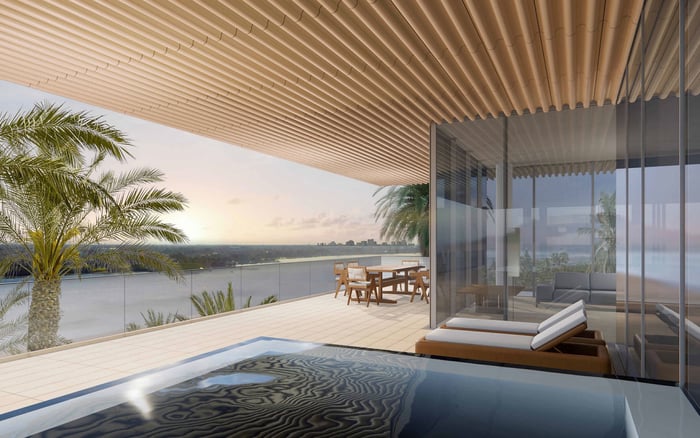
A discreet buyer-focused guide to planning outdoor-room furniture storage in Palm Beach residences, with emphasis on layout discipline, household routines, second-home readiness, and design continuity.
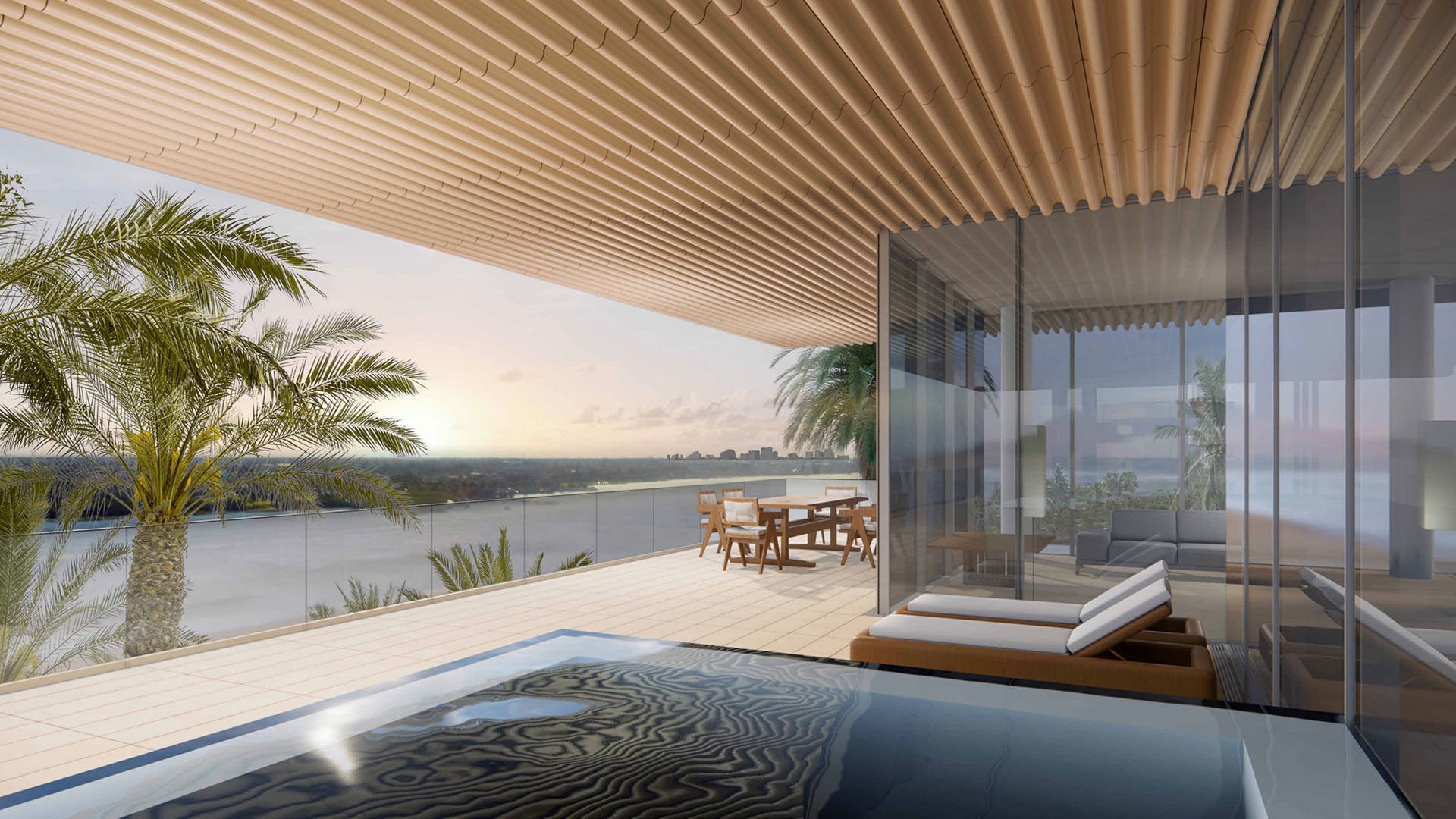
In a Palm Beach residence, the outdoor room is often held to the same visual discipline as the salon, dining room, or primary suite. Furniture is chosen for proportion, comfort, and atmosphere. Yet storage is too often addressed only after the seating has arrived, the cushions have been specified, and the terrace rhythm has already been set.
That sequence is backwards. Outdoor-room furniture storage belongs in the earliest residential conversation, especially for households that expect the space to remain composed when it is not actively in use. The question is not simply where extra pieces go. It is how a household preserves order without compromising beauty.
A refined storage plan answers practical questions with precision. What must move quickly? What can remain in place? Which pieces are used daily, which are reserved for guests, and which require protection between long stays? The strongest answers are quiet. They are integrated into architecture, service circulation, or furnishing logic rather than expressed as visible clutter.
For many owners, the brief is direct: Palm Beach outdoor living, balcony discipline, terrace utility, pool adjacency, second-home readiness, and new-construction-level finish.
Before choosing cabinets, benches, covers, or storage rooms, households should map how the outdoor room is actually used. A couple who uses a terrace for morning coffee has different needs from a family that hosts seated dinners. An owner who occupies the residence seasonally has different priorities from one who lives there continuously.
This is where restraint matters. Storage planning should not become an excuse to overfill the outdoor room with utility pieces. Instead, the household should identify the few categories that truly need a home: cushions, throws, occasional tables, dining accessories, protective covers, and movable decorative objects. Each category should have a defined destination.
The most elegant residences make these movements feel almost automatic. A cushion does not migrate through the living room. A cover is not folded into a guest closet. A small table is not left in a corner because no one knows where it belongs. The outdoor room remains calm because every object has a logical place.
A disciplined storage plan usually separates the outdoor room into three invisible zones. The display zone is the portion guests see and use. It should remain visually resolved, even when the residence is quiet. The transition zone is where items can be handled without interrupting the room, often near doors, service paths, or secondary circulation. The reserve zone is where pieces go when they are not part of the daily composition.
This zoning helps owners avoid the most common mistake: asking one cabinet or one closet to solve every need. A beautiful outdoor cabinet can be useful, but it should not become a catchall. If it must hold cushions, dining pieces, pool items, and protective covers, it may quickly lose its purpose.
For a terrace, the transition zone may be as important as the seating arrangement itself. For a balcony, the calculation becomes more exacting because every inch is visible. Near a pool, the plan should distinguish between furniture storage and other outdoor necessities so the room does not become visually confused.
Luxury storage fails when it is designed around assumptions. Cushions are deeper than expected. Covers become bulkier once folded. Dining chairs may not stack the way a drawing suggests. Occasional tables can be light enough to move, yet too awkward to store gracefully.
The remedy is simple: measure the actual objects, then design around them. If the furniture has not yet been selected, the storage plan should still allow for realistic proportions. A narrow compartment may look elegant in plan, but elegance disappears if the household must force objects into place.
Owners should also think about sequence. The first item placed into storage should not block the one needed most frequently. Frequently used pieces belong at hand height or in the easiest position to reach. Reserve pieces can be placed deeper or higher, provided the movement remains safe and intuitive.
This is a subtle point, but it separates decorative storage from livable storage. The first photographs may look the same. The difference appears six months later, when one residence still feels composed and another has accumulated visible improvisations.
The best outdoor-room storage does not announce itself. It reads as part of the residence: a continuation of millwork thinking, wall alignment, bench geometry, or service planning. When storage is integrated, the outdoor room feels intentional even when furniture is being rearranged.
That does not mean every solution must be built in. Freestanding pieces can work beautifully if their scale, finish, and placement support the architecture. The key is coherence. A storage object should not appear to be a late purchase made under pressure. It should feel selected with the same care as the seating, lighting, and landscape elements.
For new-construction buyers, this conversation belongs early, while layouts, thresholds, and service routes can still be reviewed. For resale buyers, it becomes a matter of editing: identifying where the residence already offers storage potential and where a discreet intervention may improve daily life.
A second home requires a particularly clear storage strategy. When a household is away, the residence should be easy for caretakers, family members, or staff to reset without interpretation. Labels, diagrams, and overly complex systems rarely feel luxurious. Simplicity is the luxury.
Think in terms of repeatable choreography. Cushions move to one destination. Covers have one destination. Dining accessories have one destination. Movable tables have a prescribed position. The goal is not to create a warehouse, but to create a routine that can be followed calmly.
This also supports arrivals. A residence that can be opened without a long series of corrections feels more gracious. The outdoor room should be ready to return to use, not require a household to spend its first hours deciding where stored objects were placed.
A buyer evaluating an outdoor room should ask direct questions. Where will each cushion be stored? Can the storage be reached without passing through formal interiors? Is there enough room for protective covers when folded? Can one person move the most frequently handled items? Does the plan still work when guests are present?
The answers do not need to be elaborate. In fact, the most convincing answers are usually simple. A residence either has a clear storage logic or it does not. If the logic is not evident, it should be designed before the outdoor room is fully furnished.
Households should also resist the temptation to solve everything with more furniture. Additional storage pieces may reduce clutter, but they can also crowd the space. In a finely composed outdoor room, negative space is part of the luxury. Storage should protect that negative space, not consume it.
The highest standard is not perfection. It is readiness. The outdoor room should be able to shift from private morning use to evening guests, and from full composition to stored restraint, without visual stress. That readiness is achieved through planning, not abundance.
For Palm Beach residences, the opportunity is to treat storage as part of the household’s lifestyle architecture. It touches comfort, service, aesthetics, and long-term ease. Done well, it is nearly invisible. Done poorly, it becomes the first compromise an owner notices.
The lesson is straightforward: buy the furniture you love, but plan the life around it. A beautiful chair is only fully successful when the household knows where its cushion belongs, how its cover is handled, and what happens when the room is reset. Outdoor living becomes effortless when storage has been designed with the same discretion as the room itself.
Why should outdoor-room furniture storage be planned early? Early planning allows storage to support the architecture and daily routine rather than appear as an afterthought.
What items should households plan to store? Common categories include cushions, throws, protective covers, occasional tables, dining accessories, and movable decorative objects.
Is built-in storage always the best solution? Not always. Freestanding storage can work well when its scale, finish, and placement feel consistent with the residence.
How should a balcony storage plan differ from a larger terrace plan? A balcony plan usually requires more visual discipline because storage pieces and stored items are more immediately visible.
What is the most common storage mistake? The most common mistake is relying on one catchall location rather than assigning a clear destination to each category of object.
Should pool furniture storage be separate from other outdoor storage? It is often wise to keep furniture storage distinct from other outdoor necessities so the room remains visually ordered.
How can second-home owners simplify storage? They should create a repeatable routine with obvious destinations for each item, making arrivals and departures easier.
What should buyers ask during a residence walkthrough? Buyers should ask where cushions, covers, movable tables, and dining accessories will go when the outdoor room is reset.
Can storage improve the look of an outdoor room? Yes. Well-planned storage preserves negative space, reduces visible clutter, and helps the room feel composed.
What defines a luxury storage solution? A luxury solution is discreet, easy to use, proportional to the space, and integrated into the way the household lives.
For a confidential assessment and a building-by-building shortlist, connect with MILLION.
If branded residences are on your mind — as a home or as an allocation — we would be glad to share what we are seeing, privately.
Begin a quiet conversation