Palm Beach’s condo and co-op market is still commanding record pricing, but buyers are reading budgets, reserves, and rules more closely than ever. Here is what actually changes between a condo deed and co-op shares, where costs hide inside monthly charges, and how to underwrite assessments, insurance deductibles, and rental restrictions with the precision a seven-figure purchase deserves.
Palm Beach has a way of staying expensive even as the tempo shifts. In Q2 2025, the median sale price for Palm Beach condos and co-ops was reported at a record $1.5M, up 37% year over year. During the same period, inventory reportedly rose to 256 units and days on market increased to 124.
Read together, the story is not distress. It is selectivity. More available product and longer marketing windows tend to favor buyers who can separate a beautiful listing from a building with lasting fundamentals.
In Palm Beach, that separation often starts with a deceptively simple question: condo or co-op. The ownership structure is usually the first clue to how the building is run, how transfers work, what financing is realistic, how monthly charges are built, how rentals are treated, and how capital work is funded.
A condo purchase typically conveys a deed to a specific unit plus an undivided interest in the common elements. For many luxury buyers, it feels familiar because it resembles single-family ownership, with shared systems and governance layered on.
A co-op purchase is different. The buyer typically purchases shares in a corporation, paired with a proprietary lease or occupancy right for a specific apartment. The residence is real, but the ownership is held through a corporate framework.
Why this matters in Palm Beach: structure affects transfer mechanics and board discretion, and it often signals the culture of the building. Neither format is inherently better. Condos often lean toward liquidity and flexibility. Co-ops often emphasize stability, privacy, and a more controlled ownership base.
Many Palm Beach co-op boards are known for intensive buyer screening, including detailed applications, financial review, and interviews, and can be more selective than condo associations. That can be a feature or a friction point, depending on your priorities.
On the upside, rigorous screening can help protect a building’s social and financial profile. In a period defined by higher insurance costs and major capital planning, the ability to confirm that owners can meet obligations is meaningful.
On the other hand, discretion can introduce execution risk. If your timeline is tight, or your purchase involves a more complex ownership structure, you want clarity early. Ask for the full application package before you get deep into negotiations. That lets you evaluate expectations, typical approval timing, and any non-negotiables that could affect closing.
Palm Beach has been a cash-forward market. Condo and co-op closings were reported as roughly 84% cash in Q2 2025. In practice, that can soften the impact of a product type that is harder to finance, because fewer deals depend on a lender.
Still, financing differences are real. Condos are generally financed with standard residential mortgages. Co-ops are often financed with share loans, and lending availability and requirements can be tighter.
For many luxury buyers, the question is not capability. It is optionality. If you may want leverage, confirm up front which co-ops your lender will lend on and at what leverage, and verify whether the building itself imposes restrictions that affect financing. If you are buying as a second home, align the financing plan with how often you will use the residence and whether your hold period is truly long-term.
Comparing a condo’s HOA dues to a co-op’s maintenance is rarely an apples-to-apples exercise. Co-op monthly maintenance commonly bundles operating costs plus items a condo owner often pays separately, often including building property taxes and, where applicable, underlying building debt.
That bundling can look high at first glance, yet it can also make the monthly picture more consolidated. The correct approach is a line-item review: request the most recent budget, reserve information, and any schedule of planned projects.
Even within the same neighborhood, monthly charges can diverge materially. Community profiles illustrate the range: Meridian is associated with monthly HOA fees roughly around $2,069 to $2,965, while Sloans Curve is associated with monthly HOA fees roughly around $2,952 to $3,770, varying by unit and building. Royal Saxon, profiled as a co-op, shows maintenance or HOA around $1,450 per month in listing data, varying by unit.
Those figures are not a substitute for current documents. They simply reinforce the point that the monthly number reflects building scope, staffing, amenities, and capital planning, not just square footage.
A special assessment is an extra charge levied by an association beyond regular dues to fund major or underfunded items. Across Palm Beach, post-Surfside commentary has emphasized widespread capital projects and assessments, framing the market as recalibrating rather than collapsing.
For a buyer, the goal is to treat assessment risk as a real underwriting variable, the same way you would underwrite a renovation: scope, timing, amounts, and who pays. Some buildings have publicly discussed major repair programs, including reports of a “due on sale” assessment example around $122,000 tied to significant capital work.
Your practical move is straightforward: request the assessment history, any current assessment schedule, meeting minutes that address upcoming projects, and reserve studies or reserve summaries if available. If a building has recently completed major work, ask what is next. If it has not, ask why, and ask what the plan is.
Rental flexibility depends on building documents, but co-ops are commonly more restrictive on subletting than condos in Palm Beach. For some buyers, that is precisely the appeal: quiet hallways and long-term neighbors. For others, it is a mismatch if seasonal leasing is part of the plan.
Treat rental rules as part of your lifestyle underwriting, not a footnote. If your use case includes corporate occupancy, extended family use, or occasional longer-term rentals, confirm what is permitted, what approvals are required, and how the rules are enforced.
Amenity sets and service levels also vary. Profiles describe La Palma as a condo community with 91 residences and amenities including doorman and management, plus pool and fitness features. The Cove is presented with doorman service and updated common-area features. Bellaria is profiled as a newer luxury oceanfront building with extensive resort-style amenities, including pools, tennis, and fitness and spa facilities.
For buyers planning to make Palm Beach County their primary residence, Florida’s homestead framework can be a meaningful line item. The Palm Beach County Property Appraiser outlines eligibility and filing, and timing can affect when benefits begin.
On the risk side, hurricane deductibles in Florida are often structured as a percentage of insured value, such as 2%, 5%, or 10%, and the deductible can apply across hurricane losses within a calendar year under policy terms described in state consumer guidance. This is less about anxiety and more about arithmetic. Know where the association’s master policy ends, where the unit owner’s responsibility begins, and what the practical out-of-pocket exposure could be.
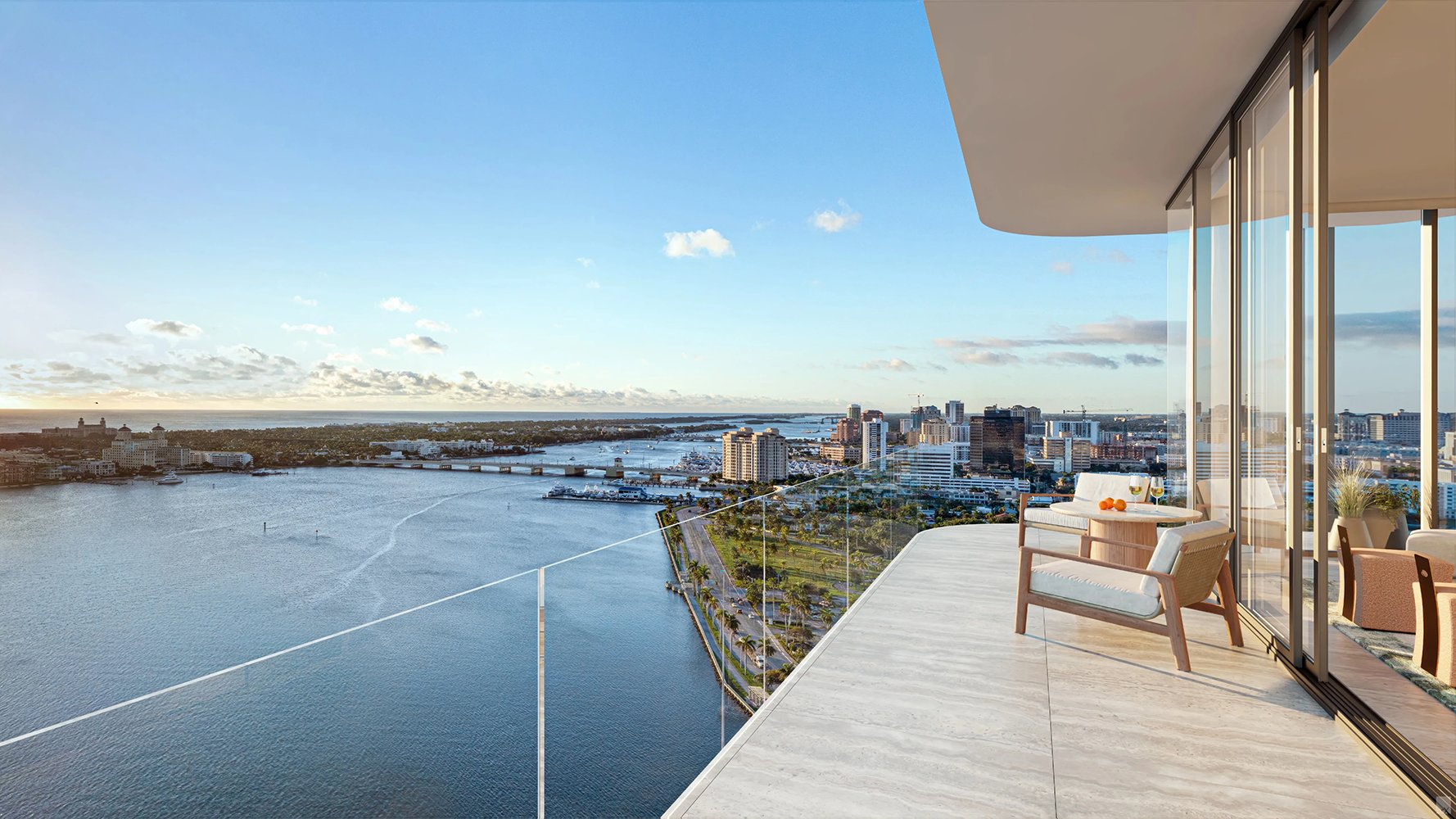
Some buyers evaluating island inventory also look across the water to newer, service-oriented residential options in West Palm Beach. For buyers splitting time between Palm Beach and West Palm Beach, it can be a smart way to balance building age, governance style, and lifestyle priorities while staying in the same South Florida orbit.
Newer towers can offer a more legible ownership framework and, often, a simpler narrative on near-term capital projects, though every building still requires document review. If your priority is a contemporary lifestyle with a predictable operational structure, it is worth considering Alba West Palm Beach for a waterfront-oriented residential experience, or Forté on Flagler West Palm Beach if you want a Flagler Drive address with a distinctly polished, boutique feel.
For buyers who prize hospitality DNA and branded service cues, The Ritz-Carlton Residences® West Palm Beach often enters the conversation. For a more Italianate, design-forward approach to in-town luxury, Mr. C Residences West Palm Beach is another point of reference.
If your goal is to stay close to the water while remaining connected to downtown walkability and future growth, Shorecrest Flagler Drive West Palm Beach adds another lens on how West Palm Beach continues to mature as a luxury residential market in its own right.
When choosing between a condo and a co-op, most luxury buyers are optimizing for one primary outcome.
First, control and community. If you value discretion and a more curated ownership base, a co-op may fit, provided you are comfortable with board screening, interviews, and potentially tighter rental rules.
Second, flexibility and transferability. If you anticipate refinancing, renting, or eventually selling with less friction, a condo often offers a more familiar path for lenders and future buyers.
Third, total cost clarity. In a co-op, maintenance may include items you would otherwise pay separately, which can be a benefit if you prefer a consolidated monthly number. In a condo, you may see lower dues but more separate line items, plus the possibility of assessments depending on reserves and capital needs.
In every case, the same discipline applies in Palm Beach: underwrite the building as the investment, and choose the unit as the lifestyle expression.
Are co-ops always cheaper than condos in Palm Beach? Not necessarily. Monthly maintenance can look higher in co-ops because it may bundle building taxes and, where applicable, underlying debt. Value depends on what is included and on the building’s capital planning.
Do co-ops in Palm Beach take longer to buy? Often, yes. Many co-ops are known for more intensive screening and interviews. Ask for the approval timeline early, and match it to your closing requirements.
How should I evaluate assessment risk? Request budgets, reserve information, recent minutes, and any current or planned assessment schedule. Underwrite it as a defined cost with dates and scope, not as a rumor.
Why do days on market matter to a luxury buyer? Longer marketing times can increase negotiating leverage, but only if you are ready to evaluate building documents quickly and make decisions with discipline.
Explore South Florida’s most compelling residences with MILLION Luxury.
If branded residences are on your mind — as a home or as an allocation — we would be glad to share what we are seeing, privately.
Begin a quiet conversation