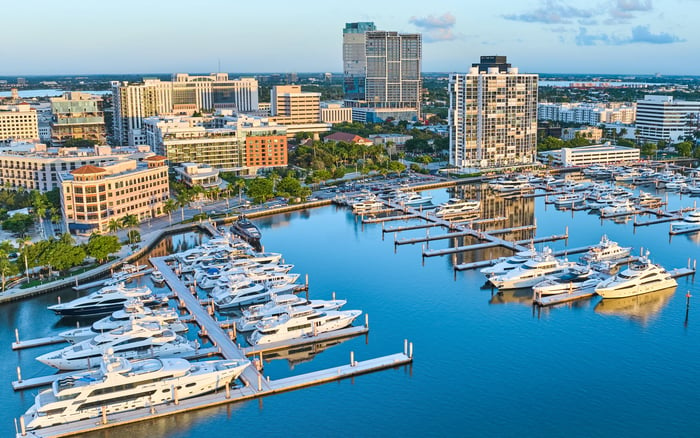
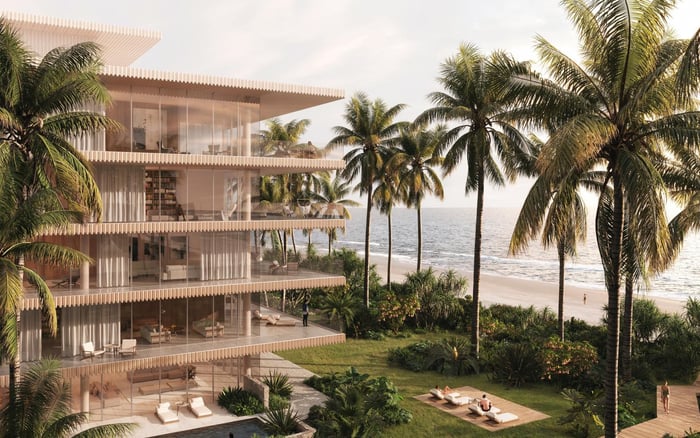
Rosewood Residences Hillsboro Beach and Mr. C Residences West Palm Beach present two distinct geographic expressions of branded residential hospitality. For privacy-minded buyers in 2026, the meaningful comparison begins with setting, service expectations, and the practical boundaries between private ownership and hospitality-led living.
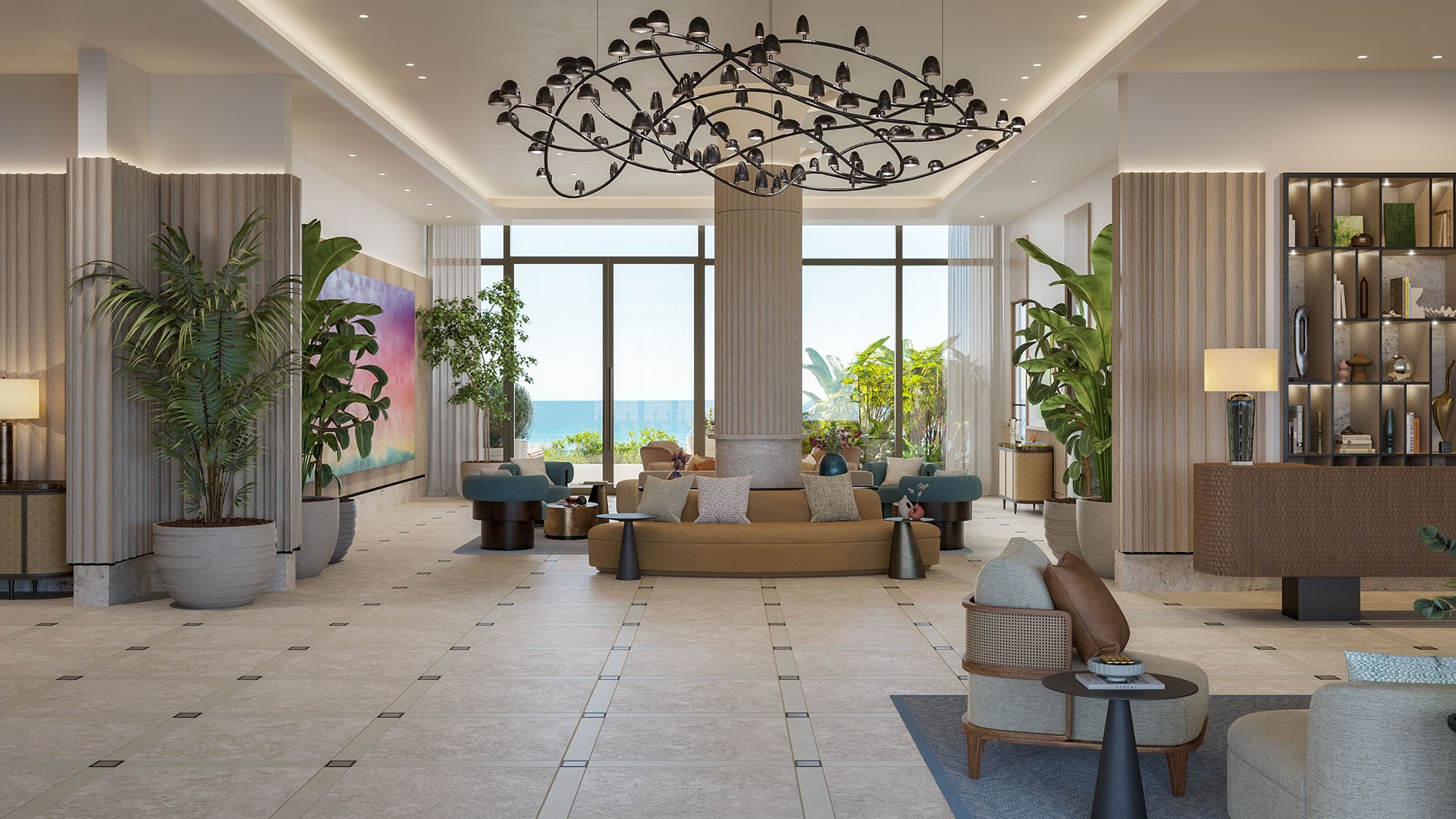
For South Florida buyers in 2026, privacy is no longer defined solely by gates, setbacks, or a discreet arrival. It also extends to how a residence operates: who manages daily interactions, how services enter the home, where guests move, and whether ownership feels insulated from the surrounding activity.
That makes residential hospitality particularly relevant. The model combines private ownership with a recognizable service and lifestyle identity, giving buyers a framework distinct from that of a conventional unbranded condominium. Yet a hospitality name alone does not resolve the question of privacy. Buyers must determine whether the setting, management culture, and intended rhythm of ownership align with their definition of discretion.
Within that conversation, Rosewood Residences Hillsboro Beach and Mr. C Residences West Palm Beach offer a useful contrast. Both pair private residences with branded hospitality, but their locations create distinctly different contexts.
Branded hospitality can give ownership a coherent operating identity. For buyers with multiple homes, demanding schedules, or a preference for carefully managed interactions, that identity may be as consequential as the architecture. The value proposition is not simply service on request; it is the expectation that an established hospitality perspective will shape the residential experience.
Privacy, however, should not be confused with isolation. Many buyers want responsive service and lifestyle programming while retaining control over access, attention, and social exposure. The most useful question, therefore, is not which property sounds more exclusive, but which environment creates the right relationship between private space and managed engagement.
Rosewood’s proposition is anchored by its hospitality brand and a private-residence format in Hillsboro Beach. The location distinguishes the project from branded residences in South Florida’s larger urban centers. For buyers weighing seclusion alongside professionally managed residential service, geography becomes central to the decision rather than a secondary consideration.
Hillsboro Beach also places the project within Broward while preserving a residential context apart from the cadence of a major downtown. This does not make Rosewood categorically more private than another development. It does, however, clarify the setting through which its hospitality-led identity will be experienced.
Buyers considering Rosewood may also place it within a broader Broward branded-residence conversation that includes Four Seasons Hotel & Private Residences Fort Lauderdale. The comparison should remain centered on personal use patterns, geographic preference, and the desired relationship to surrounding activity.
Mr. C positions its name as the primary hospitality and lifestyle identity for a private-ownership offering in West Palm Beach. For privacy-minded purchasers, its relevance lies in the potential to retain branded service and programming within a residence conceived as more than a standard condominium.
The setting shifts the lens. West Palm Beach gives Mr. C an urban context distinct from Rosewood’s Hillsboro Beach location. A buyer may therefore view Mr. C not as the opposite of seclusion, but as a different expression of it: privacy considered within a city environment and supported by a hospitality-oriented residential concept.
The city’s branded-residential field also allows buyers to consider projects such as Mandarin Oriental Residences, West Palm Beach when defining their preferred brand language. Such comparisons are most productive when they move beyond name recognition to examine how ownership is intended to feel from day to day.
The strongest distinction between Rosewood and Mr. C is geographic. Rosewood is framed by Hillsboro Beach; Mr. C, by West Palm Beach. Neither location automatically guarantees greater privacy, service, or exclusivity. Each provides a different backdrop for hospitality-led ownership.
For buyers, this makes lifestyle mapping essential. Consider the places visited most often, the preferred pace beyond the residence, and whether the home will serve as a primary base or an occasional retreat. A quieter geographic frame may appeal to one owner, while another may prefer privacy connected to a more urban routine.
The brand should then be assessed as an operating promise. Buyers should seek clarity on resident access, guest handling, staff interactions, service delivery, lifestyle programming, and the boundaries between shared and private environments. Before drawing conclusions, they should also review governing documents, fees, use restrictions, and management provisions with appropriate advisers.
A privacy-first review should test the lived experience rather than rely on labels. Ask how a typical arrival unfolds, how visitors are received, how staff access is controlled, and which services require advance coordination. Determine whether programming is easy to join without becoming socially obligatory.
Finally, distinguish verified operating terms from assumptions associated with a hospitality brand. Rosewood Residences Hillsboro Beach and Mr. C Residences West Palm Beach both frame ownership through hospitality, yet the right choice depends on setting, management expectations, and personal habits. For a 2026 buyer, discretion is best understood as a system that supports the way one intends to live.
What is residential hospitality? It is a private-ownership model shaped by a hospitality brand and a service-oriented residential experience.
Is Rosewood Residences Hillsboro Beach a branded residence? Yes. Its residential identity is anchored by the Rosewood hospitality brand.
Is Mr. C Residences West Palm Beach a standard condominium? It is better understood as a branded-hospitality residence that combines private ownership with a hospitality-oriented experience.
Which project is more private? The available facts do not establish either project as categorically more private. Buyers should examine the setting and operating practices.
What is the clearest difference between the two projects? Their geographic contexts differ: Rosewood is in Hillsboro Beach, while Mr. C is in West Palm Beach.
Why does location matter to privacy? Location shapes the activity surrounding a home and how an owner moves between private space and the wider community.
Can branded service coexist with seclusion? Yes. Both concepts are relevant to buyers who want privacy alongside managed service or lifestyle programming.
What should buyers ask about guest access? Buyers should seek clear explanations of arrival procedures, visitor reception, access control, and staff coordination.
Should buyers compare amenities before location? Location and intended use should come first, followed by verified details on service, operations, and shared spaces.
What matters most for a 2026 purchase decision? The fit among geography, service expectations, privacy protocols, ownership terms, and the buyer’s daily habits matters most.
When you're ready to tour or underwrite the options, connect with MILLION.
If branded residences are on your mind — as a home or as an allocation — we would be glad to share what we are seeing, privately.
Begin a quiet conversation