A discreet buyer’s guide to evaluating glass-wall privacy at Palazzo del Sol on Fisher Island, from sightlines and terrace exposure to nighttime visibility, glazing questions, and window-treatment rules.
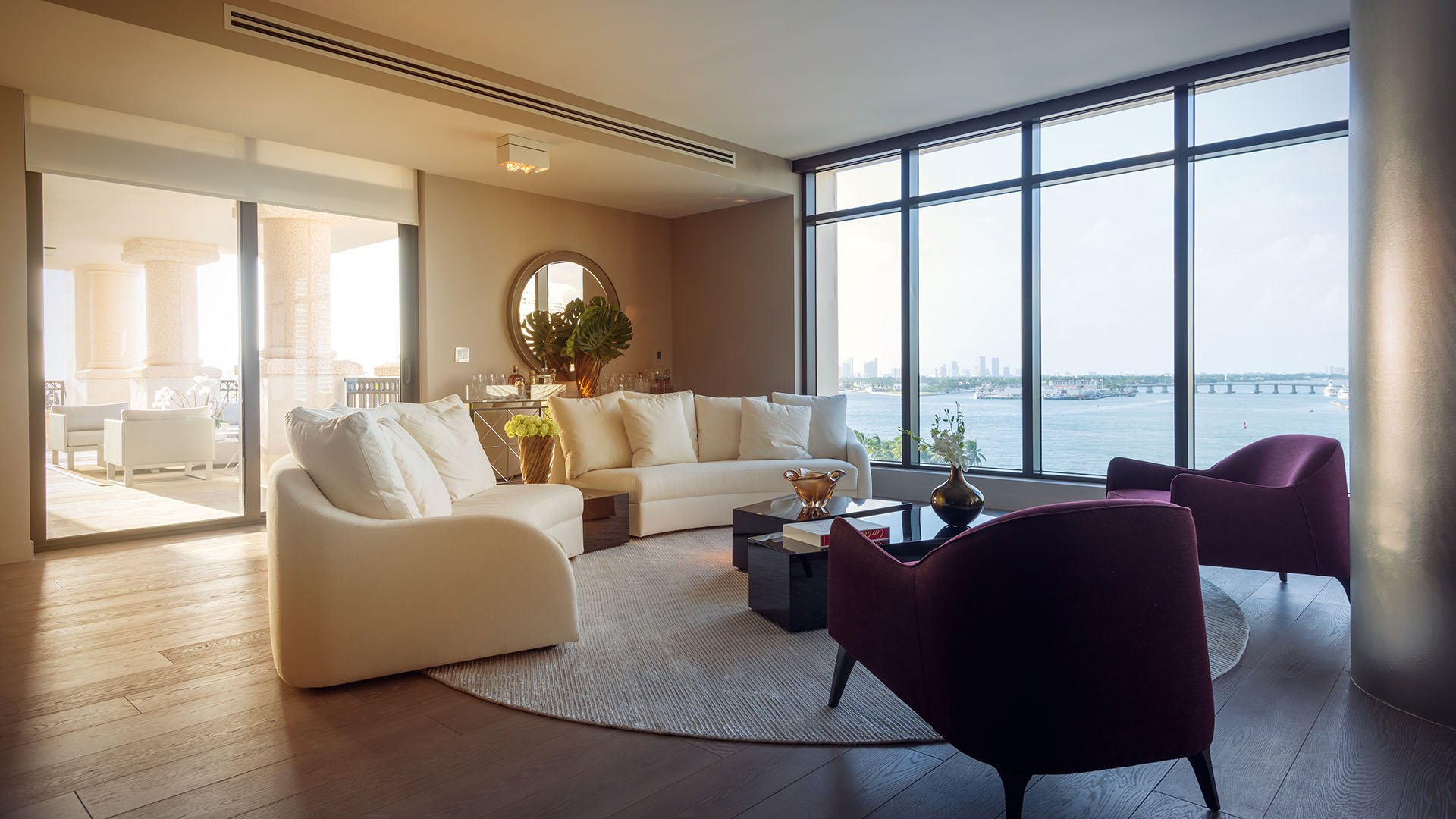
Palazzo del Sol Fisher Island presents the kind of South Florida residence that makes glass feel almost inevitable: water, sky, and a private-island setting in the Miami area. The appeal is immediate. Floor-to-ceiling transparency can turn a living room into a viewing gallery and make daily life feel visually connected to the bay, the horizon, and the quieter rhythms of Fisher Island.
But in glass-forward luxury condominium living, privacy is not a mood board. It is geometry. A rendering may emphasize openness, reflection, and uninterrupted views, yet the buyer’s real question is more forensic: who can see into the home, from where, at what time of day, and under which lighting conditions?
That inquiry is especially important at Palazzo del Sol because the private-island setting can create a sense of remove from the density of mainland high-rise corridors. Fisher Island may reduce certain urban sightline pressures, but it does not eliminate them. Neighboring residences, waterfront movement, terrace angles, boats, and interior lighting all belong in the privacy analysis.
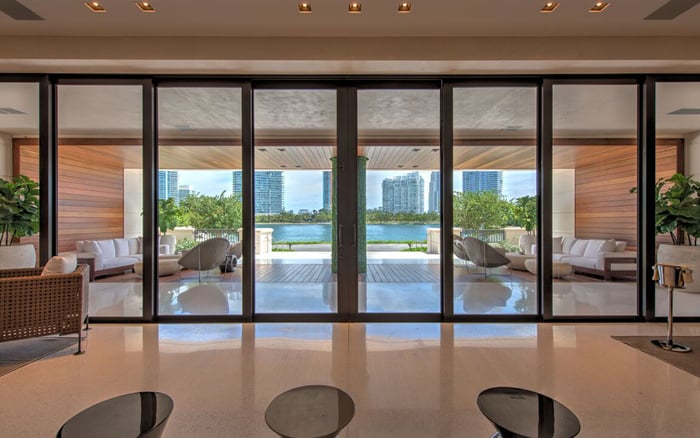
A serious preview should begin at the glass, not the kitchen island. Stand in the living room, primary bedroom, and any glass-wrapped entertaining spaces, then look outward with a buyer’s discipline. Which windows face neighboring buildings? Which terraces align across open air? Which portions of the residence become visible from the waterfront, paths, or other residences?
This is where the distinction between view and exposure matters. A water view can be spectacular and still require privacy calibration. A wide expanse of glass may frame the water beautifully, but if the angle also frames nearby activity, the owner’s comfort depends on how the residence is positioned relative to its surroundings.
The most useful question is not simply whether the home feels private during a scheduled showing. It is whether it will feel private during dinner, after sunset, with guests present, and with the interior illuminated. That is the version of the residence the owner will actually inhabit.
The Fisher Island context is part of Palazzo del Sol’s appeal. It suggests a more controlled residential atmosphere than many mainland districts, where glass towers often face other glass towers at close range. That difference can be meaningful for a buyer who values discretion.
Still, island privacy should be verified rather than assumed. A private-island address does not automatically resolve terrace exposure, neighboring building relationships, or visibility from waterfront activity. The correct standard is not whether the setting feels exclusive in the abstract. It is whether a specific residence, from a specific floor and orientation, protects the owner’s desired level of discretion.
This is also where high floors require nuance. Elevation can reduce some direct visibility, but it may also expand the number of vantage points from which a residence can be observed. The higher the home, the more carefully a buyer should test reflection, glare, and nighttime presence from the outside looking in.
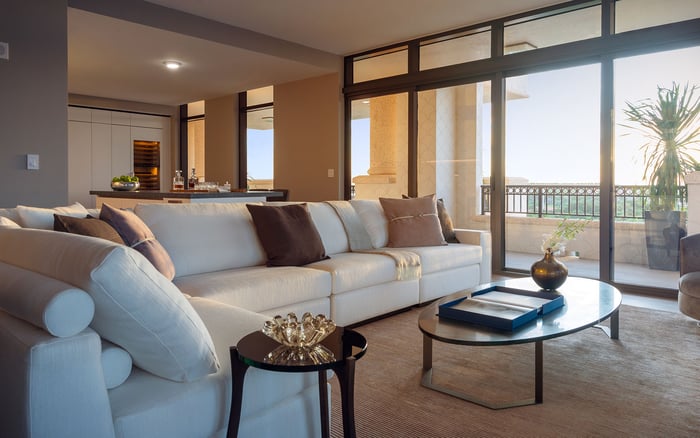
Terrace design is central to glass-wall privacy. A deep terrace can act as a buffer, pulling outdoor living forward and setting the interior farther back from public or semi-public sightlines. A shallower terrace may make the glass line feel more immediate, especially when furniture placement draws activity close to the facade.
Orientation matters as much as depth. A terrace facing open water may feel more protected than one angled toward neighboring residences, yet waterfront activity can still introduce visibility. Buyers should study whether the outdoor space shields the interior, reflects light back into the room, or encourages furniture layouts that place daily life directly behind the glass.
The best review is physical. Sit where the dining table would be. Stand where art would hang. Walk from the primary suite to the terrace doors. Privacy is not measured only from the edge of the balcony. It is measured from the lived positions inside the home.
When a residence relies on expansive glazing, buyers should request technical detail rather than relying on visual impressions. Important questions include the tint of the glass, its reflectivity, any coatings, and whether the glass is laminated or impact-rated. These are not decorative details. They affect comfort, glare, heat, resilience, and the way a residence reads from outside.
The point is not to assume a particular specification. It is to obtain the relevant documents and understand what the building actually provides. In South Florida, sun and water reflections can change the experience of a glass-walled room over the course of a day. A room that feels serene in the morning may become bright, reflective, or warm later, depending on orientation and glazing performance.
Glare is also a privacy issue. If an owner must constantly lower shades to make a room comfortable, the practical value of the view changes. Conversely, if glass performs well during the day but becomes visually transparent at night, privacy planning must focus on evening use.
Daytime tours can be misleading because exterior brightness often works in favor of privacy. Once the sun falls and interior lights come on, the relationship can reverse. Glass that feels reflective or subdued during the day may make interiors more visible after dark.
For that reason, a buyer should preview at different times if access permits. A morning visit can reveal sun direction and water reflection. An afternoon visit can show heat, glare, and brightness. An evening visit can reveal the more personal issue: how much of the home is visible when it is being lived in.
This matters most in rooms where privacy is nonnegotiable, including bedrooms, baths, dressing areas, media spaces, and dining rooms used for entertaining. A glass-forward residence can still be deeply livable, but only when the owner understands how light transforms visibility.
Shades, drapes, and films may seem like post-closing decisions, but in a condominium setting they belong in pre-contract review. Building standards or condominium rules may affect what owners can install, how treatments must appear from the exterior, and whether films or visible changes to the glass are permitted.
A buyer should review these rules early, especially if the desired lifestyle depends on blackout shades, sheer layers, motorized systems, or privacy films. The question is not only what can be installed. It is whether the permitted solution matches the architecture, protects the interior, and preserves the polished character expected in a luxury residence.
The most elegant privacy strategy is often layered: considered furniture placement, calibrated lighting, automated shades, and a clear understanding of the glass itself. At Palazzo del Sol, that strategy should be tailored to the specific residence rather than applied generically across the building.
For Palazzo del Sol, the strongest privacy review combines architectural observation with technical verification. Confirm actual sightlines from each principal room. Observe the relationship among the residence, nearby buildings, terraces, waterfront movement, and any visible paths or common areas. Test the home during the day and at night. Ask for glazing details, window-treatment rules, and any documentation that clarifies what owners can and cannot modify.
The goal is not to diminish the allure of glass. It is to make the purchase more precise. The best glass residences offer openness without surrendering discretion, and the most confident buyers understand that privacy is designed, documented, and verified.
That is the correct posture for an exclusive-area residence: admiration first, then scrutiny. Renderings may introduce the dream, but the lived quality of a glass-walled home is determined by sightlines, light, orientation, and rules that only become clear when the buyer looks beyond the image.
Is Palazzo del Sol on Fisher Island? Yes. Palazzo del Sol is associated with Fisher Island, a private-island luxury residential setting in the Miami area.
Does a private-island setting guarantee glass-wall privacy? No. Fisher Island may reduce some dense urban sightlines, but each residence still needs its own privacy review.
What should buyers check first in a glass-walled residence? Start with actual sightlines from the living room, bedrooms, terrace, and other daily-use spaces.
Why is nighttime privacy different from daytime privacy? Interior lighting can make glass-walled rooms more visible from outside after sunset.
Should buyers ask about the glass itself? Yes. Request details on tint, reflectivity, coatings, and whether the glass is laminated or impact-rated.
Can terrace depth affect privacy? Yes. A deeper terrace can create a buffer, while certain orientations may expose interiors more directly.
Are window treatments a due-diligence issue? Yes. Condominium or building standards may affect shades, drapes, films, and exterior appearance.
Why do water reflections matter in South Florida? Sun and water reflections can change glare, heat, comfort, and visibility throughout the day.
How many visits should a serious buyer try to make? Ideally, visit at different times of day to test glare, reflections, exterior visibility, and evening exposure.
What is the main takeaway for Palazzo del Sol buyers? Treat privacy as a specific, residence-level investigation rather than a promise implied by elegant renderings.
For a discreet conversation and a curated building-by-building shortlist, connect with MILLION.
If branded residences are on your mind — as a home or as an allocation — we would be glad to share what we are seeing, privately.
Begin a quiet conversation