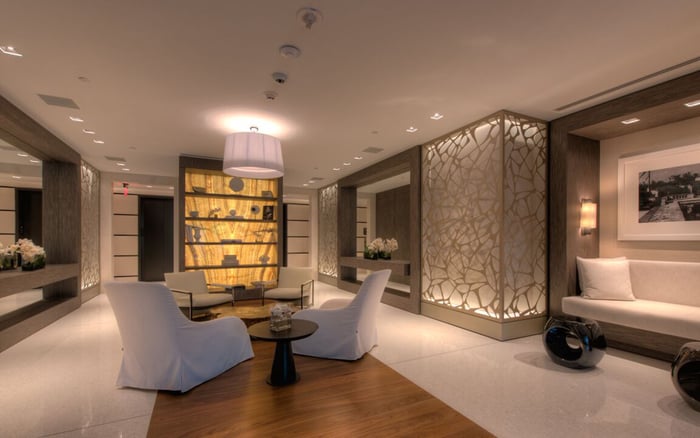
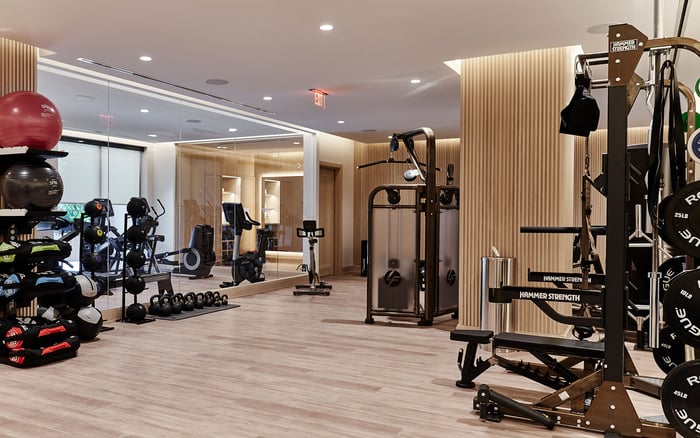
A discreet look at Palazzo del Sol on Fisher Island as a case study in operationally intelligent luxury, where staff-room practicality, service circulation and privacy shape the owner experience.
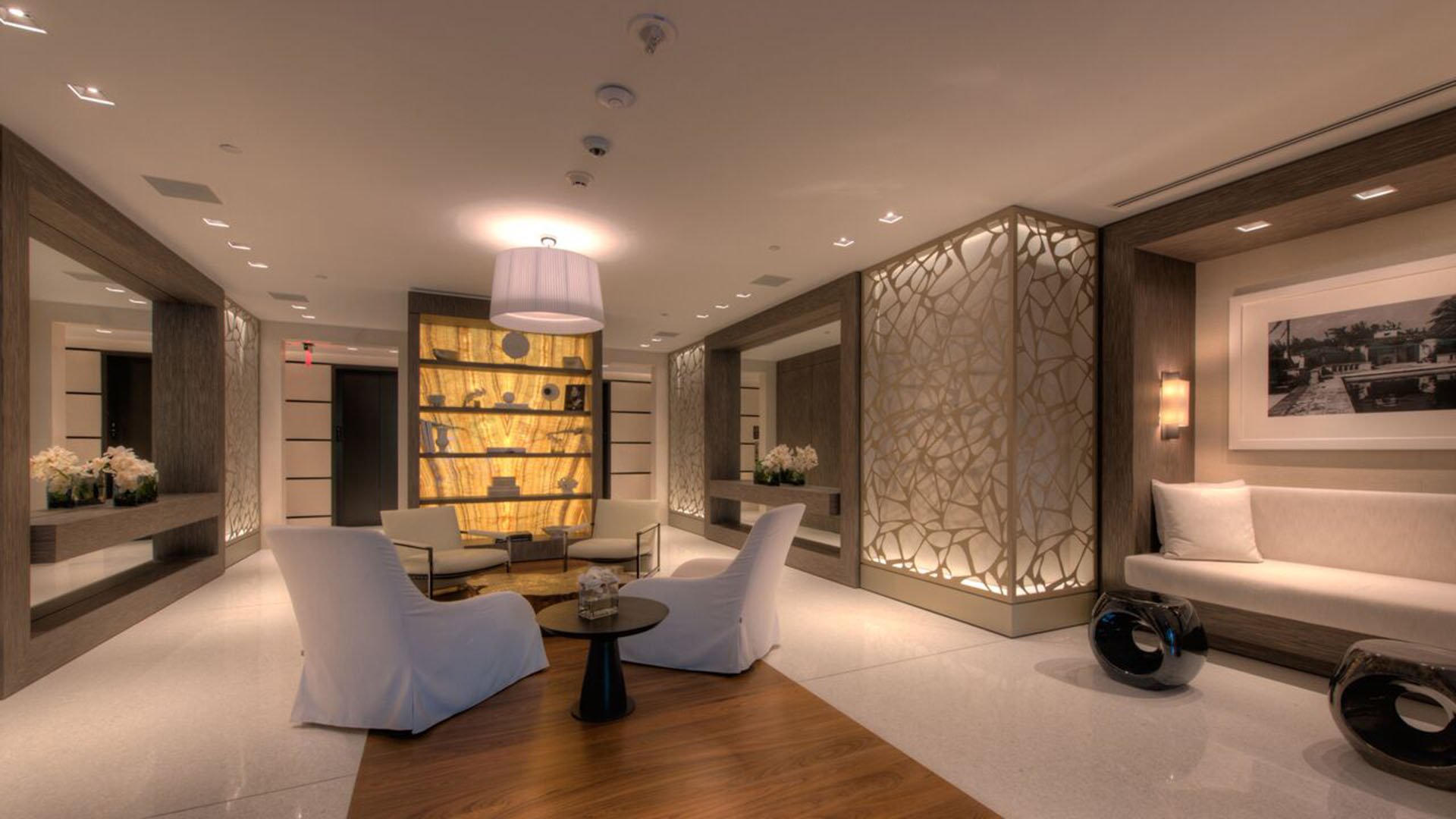
At the highest level of South Florida residential life, luxury is no longer defined only by rooms that photograph beautifully. The more sophisticated measure is how effortlessly a home supports the private routines that make daily life feel composed. At Palazzo del Sol on Fisher Island, that idea becomes especially relevant: quiet luxury is not merely a visual language, but an operational one.
For buyers accustomed to complex households, the staff room is not an afterthought. It is part of the residence’s core infrastructure, as consequential as the primary suite, kitchen or terrace. A home may offer refined materials and generous views, yet still feel compromised if housekeepers, nannies, chefs, assistants, security, drivers or a house manager cannot work with discretion and dignity.
That is the quiet luxury case for staff-room practicality. The best service design is rarely the most visible element of a residence, but it is often among the most deeply felt. When logistics disappear, the living experience becomes calmer.
Staff-ready floor plans matter because ultra-high-net-worth households are not static. A residence may need to support morning childcare, a visiting chef, wardrobe management, private entertaining, security coordination and recurring maintenance in a single day. Without thoughtful planning, these activities can collide with owner privacy.
At Palazzo del Sol, the appeal rests in part on the recognition that service spaces deserve intention. Staff rooms, direct-service circulation and back-of-house storage help reduce friction between the private and operational sides of the home. That distinction is subtle, but for a buyer who lives with staff support, it is fundamental.
This is where the meaning of luxury changes. A beautifully finished room creates immediate attraction. A well-planned service sequence creates long-term ease. The latter may not dominate a sales photograph, but it can shape every hour of residential life.
Fisher Island strengthens the argument because its appeal is rooted in privacy and separation from the ordinary urban rhythm. The island setting supports a private residential narrative, where daily life is shaped by controlled access, discretion and a quieter sense of arrival.
Within that environment, buyers are not simply comparing amenity checklists. They are evaluating the refinement of the owner experience. Palazzo del Sol belongs in that conversation because it speaks to a more mature luxury buyer, one who understands that privacy is achieved through planning as much as location.
The Fisher Island lifestyle is, at its best, serene. Yet serenity requires systems. Deliveries, wardrobe care, food preparation, childcare transitions and guest arrivals all need places to happen without interrupting the home’s emotional atmosphere. In this sense, Palazzo del Sol stands out because it understands how quiet a properly supported residence should feel.
The most compelling luxury residences do not treat staff areas as lesser spaces. They acknowledge that service teams are part of the daily ecosystem of the home. When a residence allows those teams to work efficiently, store properly, circulate discreetly and rest appropriately, the entire household benefits.
That dignity matters. Owners gain privacy. Guests experience fewer interruptions. Staff members can perform at a higher level because the home gives them the practical framework to do so. The result is not formality for its own sake, but comfort organized with intelligence.
For families with children, the difference can be especially pronounced. Nannies and household assistants often need proximity without intrusion. For owners who entertain, chefs and service teams need functionality without spectacle. For security-minded households, circulation and coordination become part of the residence’s protective layer. Staff-room practicality is therefore not a niche feature. It is an index of how well a home understands real life at the very top of the market.
Generous back-of-house storage is another under-discussed marker of high-level residential design. Luxury homes accumulate more than art, clothing and tableware. They hold seasonal wardrobes, entertaining equipment, children’s belongings, travel items, sports gear, floral materials, pantry reserves and the operational tools required to maintain an immaculate environment.
When storage is inadequate, the residence begins to work against its owners. Closets become overburdened, service zones grow congested and private spaces absorb tasks they were not meant to hold. When storage is thoughtfully integrated, the home retains its composure.
This is why back-of-house planning is central to the Palazzo del Sol argument. It is not glamour in the obvious sense. It is glamour protected from disorder. The owner experiences a refined surface because the residence has made room for everything that supports it.
South Florida’s ultra-premium market has evolved beyond the spectacle of conspicuous luxury. At this level, buyers expect beauty, materials, views and amenities as a baseline. The differentiator is intelligence: how the residence works, how it protects time, how it preserves privacy and how it supports complex household needs without exposing the machinery behind them.
Palazzo del Sol reflects that shift. Its value proposition can be understood through the idea of service operations disappearing behind a calm residential experience. The less an owner has to manage the mechanics of the home, the more luxurious the home becomes.
This is why staff rooms are so consequential despite being rarely photographed. They represent an ethic of design that privileges lived excellence over surface performance. For an ultra-high-net-worth buyer, that may be the most persuasive luxury of all.
A buyer evaluating staff-room practicality should think beyond whether a residence simply contains a staff area. The better question is whether the plan supports privacy, comfort and discretion in everyday motion. Can staff move without crossing the most intimate owner zones? Is there enough storage for household operations? Can a chef, nanny, assistant or house manager function without improvising around the architecture?
The best answers are not always dramatic. They appear in circulation, adjacency, separation and the amount of pressure removed from the owner’s day. In a residence like Palazzo del Sol, those details contribute to the sense that life has been anticipated rather than merely decorated.
This is quiet luxury in its most credible form. It does not ask to be noticed. It makes the household feel naturally composed.
Why is staff-room practicality important at Palazzo del Sol? It supports the way a complex private household actually functions, helping staff work discreetly while preserving owner privacy and comfort.
Is a staff room considered a luxury feature? In ultra-premium residences, yes. It is part of the operational infrastructure that keeps daily life calm and well managed.
How does Fisher Island affect the appeal of Palazzo del Sol? Fisher Island reinforces privacy, discretion and a secluded residential setting, which aligns naturally with service-oriented planning.
What does quiet luxury mean in this context? It means luxury expressed through ease, privacy and intelligent operations rather than only visible finishes or dramatic design gestures.
Who benefits most from staff-ready floor plans? Households that rely on housekeepers, nannies, chefs, assistants, security, drivers or house managers benefit most from this planning.
Why is service circulation important? It allows household operations to occur with less interruption, helping private and service zones remain appropriately separated.
Does back-of-house storage affect daily living? Yes. Proper storage keeps household logistics organized and prevents operational items from intruding into owner spaces.
Are staff areas only for very large households? Not necessarily. Even part-time support can benefit from dedicated areas that make work more efficient and discreet.
How should buyers evaluate staff-support features? Buyers should consider circulation, storage, privacy, comfort and whether the residence allows staff to operate without improvisation.
What is the best way to shortlist comparable options for touring? Start with location fit, delivery status, and daily lifestyle priorities, then compare stacks and elevations to validate views and privacy.
For a confidential assessment and a building-by-building shortlist, connect with MILLION.
If branded residences are on your mind — as a home or as an allocation — we would be glad to share what we are seeing, privately.
Begin a quiet conversation