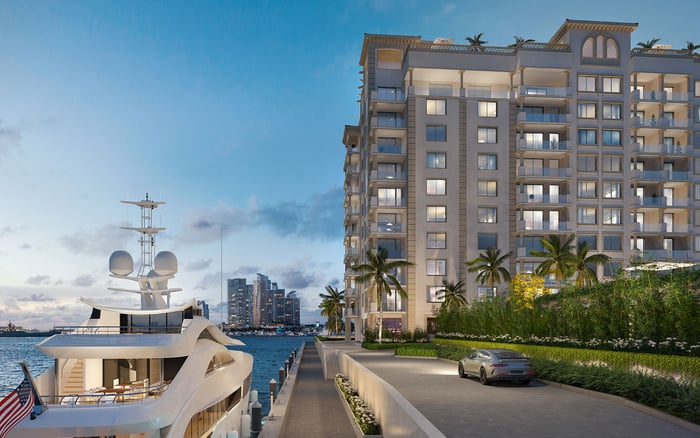
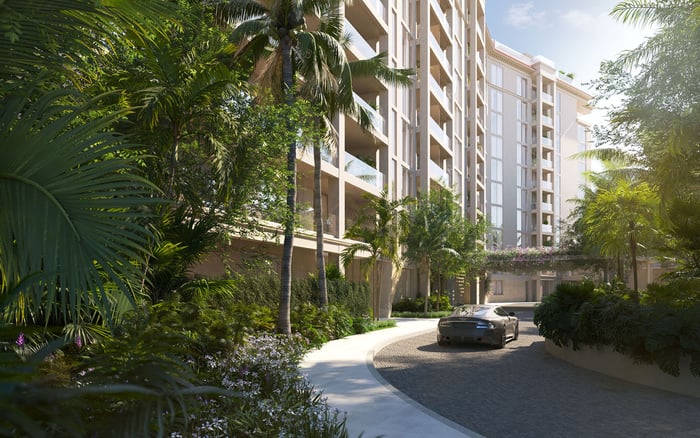
A discreet look at how Fisher Island can support philanthropic couples when privacy, staffing, guest movement, event cadence, and building governance are aligned before purchase.

For many affluent buyers, a residence is judged first by architecture, views, finishes, and the emotional pull of arrival. For philanthropic couples, the evaluation is more layered. Home is not only private shelter. It is also a coordination point for board commitments, foundation work, visiting family, advisors, art handlers, wellness providers, security teams, and, at times, guests connected to causes they support.
That is why Fisher Island can be so compelling when the building operations are right. The appeal is not exclusivity alone. It is the possibility of living generously without turning the household into a public stage. A philanthropic couple may need to host an intimate dinner one week, retreat completely the next, and accommodate visiting trustees or family members without disrupting daily life. The building’s systems, not only its surfaces, determine whether that rhythm feels elegant or exhausting.
For ultra-premium buyers, the most sophisticated questions often arrive after the obvious ones. How are guests announced? How are vendors managed? Can staff move discreetly? Is the lobby calm during peak arrival periods? Does the residence support a home office that can handle confidential calls? These questions are not secondary. For couples whose calendars mix civic visibility with private family life, they are central.
Fisher Island is useful shorthand for a particular kind of South Florida privacy expectation: quiet access, a controlled residential environment, and a buyer culture that values understatement. Yet discretion does not happen automatically. It depends on building protocol, resident culture, and the consistency of front-of-house and back-of-house execution.
A philanthropic couple should look beyond whether a property feels private during a showing. They should ask whether privacy holds during a busy weekend, during a catered gathering, when multiple family members arrive separately, or when a visiting advisor needs access without ceremony. The right operation makes these movements feel routine. The wrong one turns every arrival into a production.
This is where buildings such as Palazzo del Sol and Palazzo della Luna enter the conversation for buyers studying the Fisher Island lifestyle. Palazzo del Sol Fisher Island and Palazzo della Luna Fisher Island should be considered not only as residences, but as operating environments. The question is how naturally the building supports a couple’s preferred balance of welcome and withdrawal.
Philanthropy often brings people into the orbit of the home. Not every meeting belongs in an office, hotel, or club setting. Some of the most productive conversations happen at a dining table, in a study, or during an unhurried evening with a small group. That makes guest flow a serious residential criterion.
A couple should understand how invitees move from arrival to residence, how names are handled, how last-minute changes are accommodated, and whether the experience feels gracious rather than procedural. Tone matters. Philanthropic guests may include close friends, institutional leaders, artists, medical advisors, educators, or family office professionals. Each arrival should feel considered, but never conspicuous.
The same standard applies to service providers. Caterers, florists, drivers, assistants, household staff, and personal security should be able to work without crossing too visibly into the life of the building. For a couple that hosts selectively, the best operation is almost invisible. It anticipates friction before it reaches the residence.
Couples with philanthropic commitments often live with complex calendars. One spouse may be deeply involved with a foundation board while the other leads family office decisions or cultural patronage. The residence must reduce coordination, not add to it.
The building’s role is to create dependable boundaries. Deliveries should be predictable. Staff access should be clear. Maintenance should be scheduled with respect for privacy. Front desk communication should be precise, never chatty. When these systems work, the couple can be generous with the world without feeling that the world has entered the home.
This is especially important for second-home users and seasonal residents. If the residence is occupied intermittently, operational trust becomes even more valuable. The couple needs confidence that the home can be prepared, protected, and restored without constant personal intervention. A beautiful apartment with weak execution becomes a management project. A well-run building becomes an asset in the fullest sense.
For philanthropic couples, amenities are most valuable when they support continuity: a quiet fitness routine before a board call, a private dining environment for a small donor conversation, a marina culture that accommodates boating without spectacle, or golf access that allows relationship-building in a relaxed setting. The point is not accumulation. It is alignment.
The same lens applies when reviewing The Residences at Six Fisher Island or The Links Estates at Fisher Island. The Residences at Six Fisher Island may appeal to a buyer thinking about contemporary ease, while The Links Estates at Fisher Island may enter the discussion for those considering a different residential posture. In each case, the operational question remains constant: does the property support the couple’s actual life, or merely a glossy version of it?
A philanthropic lifestyle is rarely loud. It is scheduled, relational, and often confidential. The best amenity program respects that. It gives a couple places to be well, to host selectively, to move easily, and to withdraw completely when needed.
In ultra-premium buildings, governance is not an abstract concern. It shapes daily life. Rules around events, vendors, renovations, staff presence, pets, deliveries, and guest access can either protect residential calm or create recurring tension. Philanthropic couples should review these matters before falling in love with a floor plan.
The goal is not to find a building with no rules. Quite the opposite. The right rules can preserve the very discretion that makes the address desirable. What matters is clarity, consistency, and cultural fit. A couple that occasionally hosts board-level dinners needs to know whether the building can accommodate that graciously. A couple that values near-total quiet needs to know whether the resident culture supports restraint.
Operational luxury is the absence of unpleasant surprises. It is the confidence that a residence can handle both solitude and significance.
Before purchasing on Fisher Island, philanthropic couples should walk through a realistic week in the life of the household. Include early-morning wellness, remote calls, visiting adult children, staff arrivals, charity-related meetings, a private dinner, vendor deliveries, and a fully quiet day with no interruptions. Then ask how the building performs at each step.
Pay attention to the soft signals. Does the team communicate with discretion? Are common areas calm? Do protocols feel polished or improvised? Is there a clear distinction between resident privacy and guest hospitality? Does the building seem comfortable serving people who do not need to be recognized?
The best Fisher Island purchase is not necessarily the most theatrical. For philanthropic couples, it is the one that allows public purpose and private life to coexist. When building operations are right, the residence becomes a sanctuary, a planning room, a family base, and, when appropriate, a setting for meaningful generosity.
Why can Fisher Island appeal to philanthropic couples? It can offer a discreet residential setting where privacy, controlled access, and refined service are central to the ownership experience.
What should philanthropic buyers evaluate first? They should evaluate guest flow, staff access, privacy protocols, building communication, and the ease of hosting small gatherings.
Are amenities the main reason to buy? Amenities matter, but only when they support the couple’s real lifestyle rather than creating unnecessary visibility or complexity.
How important is building governance? Governance is essential because rules around vendors, events, deliveries, and access shape daily privacy and long-term comfort.
Should couples test a normal week before choosing? Yes. Mapping a realistic week reveals whether the building can support work, family, philanthropy, wellness, and quiet time.
Does privacy mean avoiding guests entirely? No. The ideal operation allows couples to welcome selected guests while keeping the household protected and composed.
Why does staff movement matter? Clear staff protocols reduce friction, preserve discretion, and keep the residence from becoming a daily management burden.
Can a residence support both retreat and hosting? Yes, if the building’s operations make arrivals, service, preparation, and departures feel seamless and unobtrusive.
What is the biggest operational mistake buyers make? Many buyers focus on the residence first and only later discover whether the building’s service culture fits their lifestyle.
How should couples compare Fisher Island properties? They should compare not only design and views, but also privacy, service consistency, governance, guest handling, and daily rhythm.
For a discreet conversation and a curated building-by-building shortlist, connect with MILLION.
If branded residences are on your mind — as a home or as an allocation — we would be glad to share what we are seeing, privately.
Begin a quiet conversation