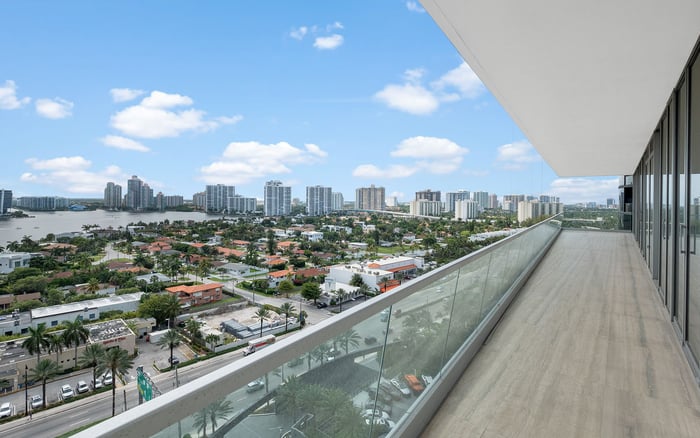
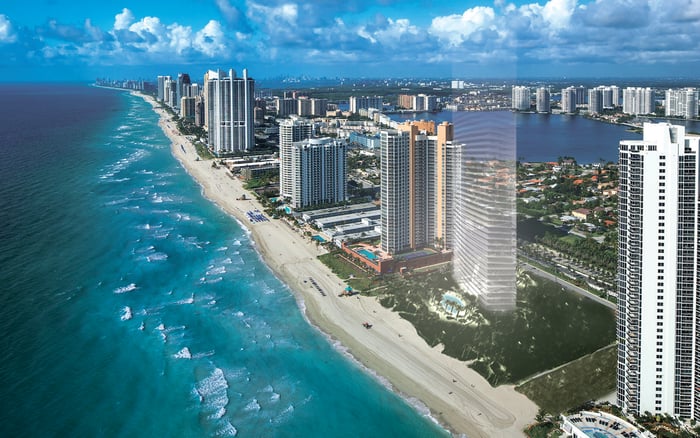
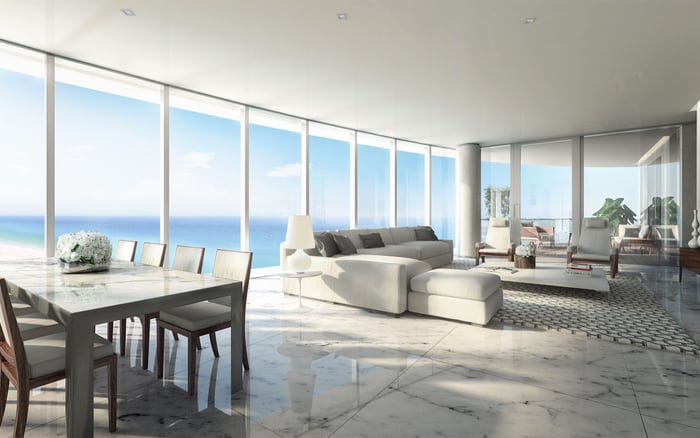
At Regalia, deeded beach access and a city-listed public access point can coexist. The decisive questions concern the recorded corridor, the condominium documents, and the practical allocation of maintenance, security, liability, and beach-service responsibilities.
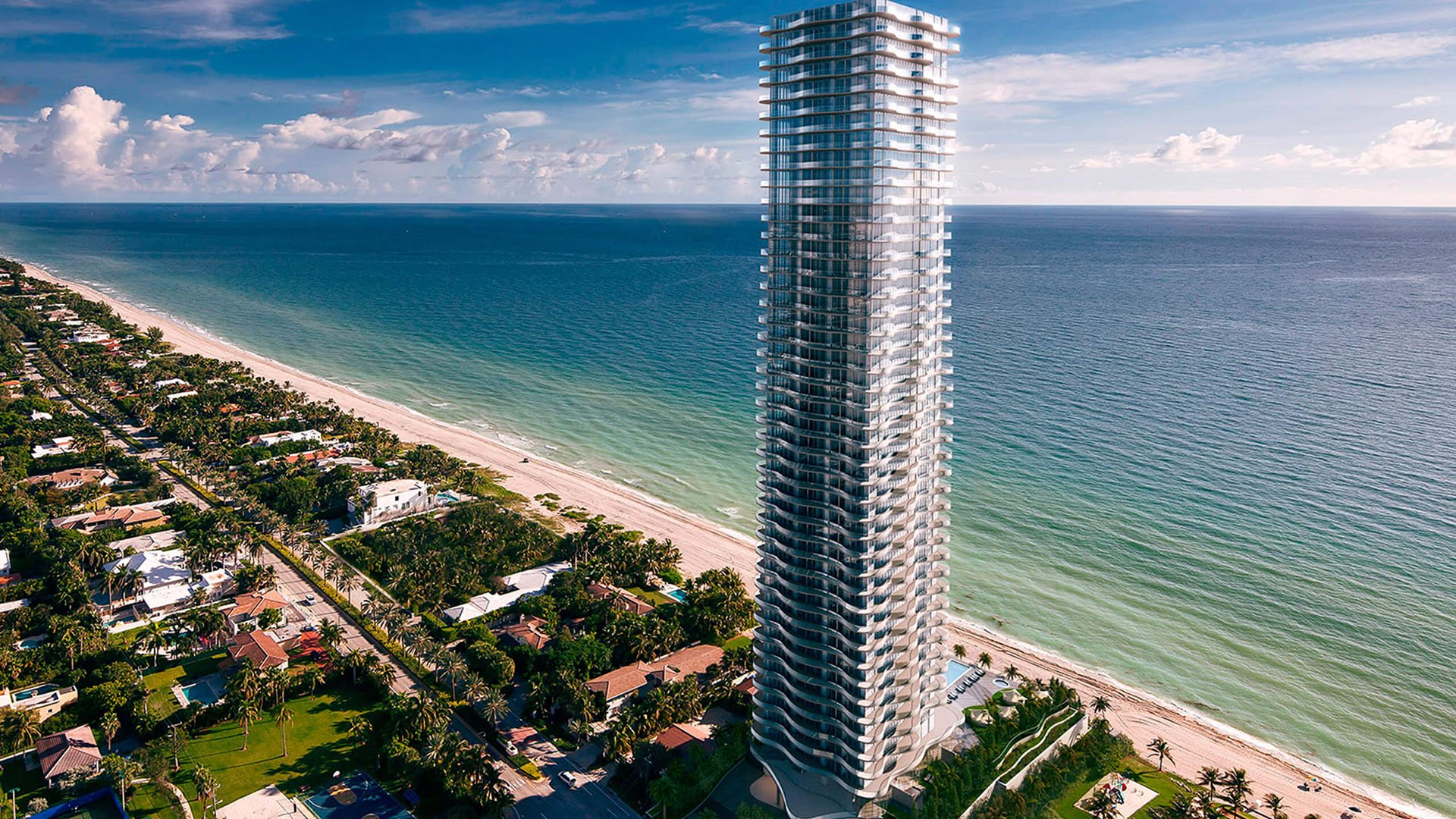
Oceanfront ownership can feel self-explanatory: the condominium fronts the Atlantic, residents reach the sand, and beach service completes the experience. At Regalia Sunny Isles Beach, however, a careful buyer should distinguish lifestyle language from the recorded rights governing the land.
Regalia is a 46-story oceanfront condominium at 19575 Collins Avenue with ocean access and deeded beach access. A public access point identified as “Regalia Beach Access” shares that address. The route is paved and handicap accessible, includes a shower, and is associated with public parking at Heritage Park Garage and Lehman Causeway Lot.
These facts do not establish the corridor’s surveyed alignment, width, ownership, or complete easement terms. They do establish a reason to investigate. The appropriate question is not whether the property is private in a general sense, but which specific areas are private, which rights belong to unit owners, and whether the public may lawfully use a defined route.
At the water’s edge, exclusivity is a matter of legal boundaries, not atmosphere.
A deeded beach-access right associated with a condominium unit does not necessarily empower the owner to exclude everyone else from every nearby path or stretch of shoreline. It can coexist with a separately established public corridor, just as private upland property can coexist with public rights in navigable waters and the foreshore between the mean high- and low-water marks.
Public shoreline rights do not authorize people to cross private upland property at will. A lawful crossing requires an authorized route, such as an easement or designated access corridor. Conversely, an easement may permit passage across a defined portion of privately titled land without transferring ownership to the public.
That distinction makes the recorded legal description more consequential than any broad characterization of a “private beach.” Florida beach easements are site-specific. Their location and scope depend on the deeds, plats, dedications, declarations, agreements, and other instruments governing the parcel.
The public-access listing should prompt documentary review, not substitute for it. Counsel and the title team should reconcile the identified access point with the current boundary survey, recorded plat, title commitment, exceptions to coverage, condominium declaration, amendments, and development approvals.
The survey should make the physical relationship legible. Where does the corridor begin on Collins Avenue? How does it proceed toward the beach? Does it touch a driveway, service zone, landscaped area, or other common element? Where are gates, showers, signs, and resident beach-service areas relative to the legal boundaries? A buyer should not assume that a route visible on-site precisely matches its recorded description.
The title review should then identify the nature of the right. Chapter 718 recognizes nonexclusive ingress-and-egress easements over streets, walks, and other rights-of-way serving condominium units while allowing routes to be dedicated to the public. Florida law also distinguishes deeded or contractual easements from easements by necessity, which require absolute need rather than convenience.
Florida treats each condominium parcel created by a declaration as a separate parcel of real property. Rights conveyed with a unit may include exclusive use of designated portions of the common elements, but those rights depend on the governing declaration.
For a Regalia purchaser, the declaration and its exhibits should therefore be read alongside the survey and title materials. The review should identify the unit’s access rights, the association’s control over relevant common elements, and any limitations created by recorded public rights. It should also determine whether amendments, maintenance agreements, municipal approvals, or other instruments alter the original arrangement.
This is particularly important in a resale transaction. The buyer is acquiring an existing package of recorded rights and obligations, not an abstract promise of seclusion. Any discrepancy among marketing language, the physical site, association practice, and title documentation should be resolved before closing.
Even a narrow right of passage can affect day-to-day management. Buyers should ask who cleans and repairs the accessway, shower, gates, lighting, landscaping, and signage. They should determine which party carries liability coverage, responds to incidents, and bears costs arising from the corridor.
Security warrants equally precise scrutiny. Relevant questions include whether the route has operating hours, how public movement is separated from resident amenities, who controls the gates, and what procedures apply when visitors leave the defined path. The answers should come from governing documents, written agreements, insurance materials, and established association protocols-not assumptions formed during a property tour.
Beach service adds a municipal layer. Beachfront properties in Sunny Isles Beach that pre-set chairs for residents or guests must hold a Beach Chair Pre-Setting permit. Resident-only chairs and related services may remain private amenities, yet their placement and operation remain subject to city rules. A buyer should examine chair-placement zones, guest registration, staffing, storage, and the interface between service areas and any public route.
The diligence file should include the declaration and all amendments, the latest survey, plat, title commitment, recorded easements, development approvals, association rules, insurance materials, and any agreements concerning the municipality or beach access. Minutes and budgets may reveal how maintenance, security, repairs, or claims have been handled in practice, but they should not replace the controlling instruments.
The buyer’s advisers should produce a clear overlay showing the unit parcel, common elements, limited common elements, public-access corridor, and relevant beach-service areas. They should also explain maintenance responsibility, indemnity, insurance, signage, hours, parking arrangements, and enforcement authority in direct terms.
Florida’s customary-use doctrine is a separate, fact-intensive issue. It may protect historical public use of dry sand only when demanding criteria are met, including use that is ancient, reasonable, uninterrupted, and free from dispute. Publicly funded beach renourishment alone does not create a new public easement over privately owned dry sand. These doctrines should not become shortcuts around property-specific analysis.
Access diligence matters beyond one address. Buyers considering Armani Casa Sunny Isles Beach, Muse Residences Sunny Isles Beach, Turnberry Ocean Club Sunny Isles, or The Ritz-Carlton Residences® Sunny Isles should apply the same discipline without assuming that one property’s arrangement predicts another’s.
For every oceanfront condominium, privacy should be assessed parcel by parcel and document by document. Architecture, staffing, gates, and beach service shape the experience, but they do not independently define the legal boundary between resident rights and public passage.
A public-access easement is not inherently adverse, nor does deeded access guarantee absolute exclusion. The material issue is whether the relevant rights are precisely documented, operationally managed, adequately insured, and consistent with the buyer’s expectations.
At Regalia, the same-address public-access listing makes that reconciliation especially important. Sophisticated diligence should convert a potentially ambiguous phrase into a surveyed route, a title conclusion, a responsibility matrix, and a realistic understanding of the resident experience.
For discreet guidance on South Florida luxury property due diligence, connect with MILLION.
If branded residences are on your mind — as a home or as an allocation — we would be glad to share what we are seeing, privately.
Begin a quiet conversationRegalia is marketed with ocean access and deeded beach access. The exact rights conveyed to a unit should be confirmed in the declaration, title materials, and recorded instruments.
Yes. The city lists Regalia Beach Access at 19575 Collins Avenue, the condominium’s address.
The access point is described as paved and handicap accessible, with a shower.
Identified public parking includes Heritage Park Garage and Lehman Causeway Lot.
No. The listing does not provide the corridor’s surveyed alignment, width, ownership, or complete easement terms.
Yes. A condominium’s deeded access rights can coexist with a separately established public right to use a defined corridor.
No. Public shoreline rights do not authorize trespass across private upland property; crossing requires a lawful access route.
The core file includes the declaration, amendments, survey, plat, title commitment, recorded easements, development approvals, association rules, and relevant agreements.
Beachfront properties that pre-set chairs for residents or guests require a city permit, so private beach service still operates within municipal rules.
No. Publicly funded beach renourishment does not by itself establish a new public easement over privately owned dry sand.