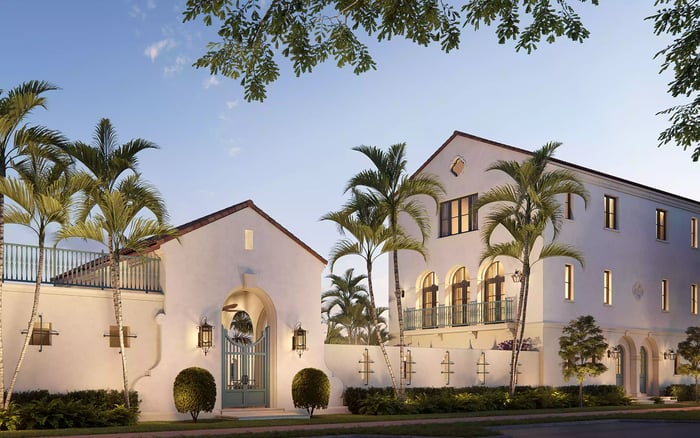
A disciplined inspection of windows, doors, balconies, drainage, warranties, and association records can reveal the less visible obligations of owning a salt-exposed Coral Gables residence.

In Coral Gables, compelling homes often pair gracious architecture with broad terraces, lush gardens, and proximity to Biscayne Bay. Those qualities merit an equally refined standard of technical due diligence. Salt carried through humid air can settle on frames, tracks, seals, railings, fasteners, and mechanical equipment. When moisture lingers on these surfaces, oxidation, pitting, and coating deterioration may follow.
Exposure is highly site-specific. Distance from Biscayne Bay, canals, and other salt-exposed settings should shape the inspection plan, along with wind exposure, elevation, building orientation, materials, and maintenance history.
A polished finish is not a substitute for a documented envelope and maintenance history.
This buyer’s guide approaches Coral Gables ownership with both aesthetic judgment and practical discipline. It applies to waterfront estates, boutique condominiums, and residences under consideration at Cora Merrick Park or elsewhere in the city.
Begin before entering the residence. Examine aluminum frames, balcony railings, exterior fasteners, air-conditioning components, metal roof elements, and exposed hardware. Oxidation, pitting, rusted screws, blistered coatings, chalking, or mismatched touch-up paint may signal salt exposure or deferred care. Salty moisture can affect multiple exterior systems, not only windows.
Operate every accessible opening. Locks should engage smoothly, handles should feel secure, and sliders should move without dragging. Inspect tracks for salt deposits and debris. Check sill weep holes for blockages, then examine window and door perimeters for staining, swollen finishes, repaired plaster, or freshly painted patches. Intact impact glass does not by itself confirm that the surrounding seal, threshold, or assembly is watertight.
For a single-family home, ask who maintained the exterior and at what intervals. In a condominium, request the association’s maintenance protocols and available records. Buyers evaluating Ponce Park Coral Gables should apply the same document-first discipline expected of any premium residence rather than assuming that age, presentation, or price resolves technical questions.
A balcony is not merely an outdoor room. It is part of the building envelope, with drainage slopes, waterproof membranes, penetrations, door thresholds, rail attachments, and structural elements that must perform together. A terrace can appear immaculate while concealing waterproofing beneath tile or pavers.
A general home inspection may not answer every envelope question. Consider whether a structural engineer or building-envelope specialist should assess cracking, spalling, hollow or debonded finishes, ponding, drains, perimeter transitions, thresholds, and visible structural components. Water should move toward drains rather than collect against sliding doors or walls. Rust staining, efflorescence, underside discoloration, patched cracks, and repeated coating repairs warrant explanation.
Where outdoor living is central to the purchase, as it may be when comparing Coral Gables with nearby Four Seasons Residences Coconut Grove, the inspection scope should follow the architecture. More exterior area and more openings create additional interfaces to evaluate.
Water does not always reveal its full path. A ceiling mark may originate at a roof penetration, an upper terrace, a wall transition, or a door assembly some distance away. Request the available history of leaks, repairs, insurance claims, moisture testing, and post-repair monitoring. If an area was repaired, obtain the scope, contractor information, date, warranty, and available evidence that the source was addressed.
Inside, examine window corners, baseboards, closets along exterior walls, flooring beside sliders, and ceilings below balconies. Look for bubbling paint, staining, musty conditions, warped wood, failing sealant, or recently replaced finishes. Moisture meters and infrared imaging may help identify areas requiring further investigation, but findings should be interpreted by a qualified professional.
Condominium buyers should consider reviewing engineering reports, reserve studies, board minutes, insurance claims, pending litigation, and contracts for roof or waterproofing work when those materials are available. For design and architecture enthusiasts considering The Village at Coral Gables, the lesson is straightforward: evaluate the concealed water-management strategy with the same care devoted to visible materials.
Impact windows do not carry one universal promise. Manufacturer warranties may cover product defects while limiting or excluding certain environmental conditions, corrosion, or inadequate maintenance. Request the applicable warranty documents and determine whether location or exposure affects the stated terms.
Obtain both the manufacturer’s warranty and any installer labor warranty. Product and installation coverage are separate and should be reviewed independently. Confirm the window and door models, installation dates, permit or approval documentation available to the seller, transfer requirements, claim procedures, remaining term, and treatment of cosmetic versus functional issues.
Finish and hardware specifications also matter. Verify the documented finish, identify which components are stainless steel, and determine whether locks, hinges, rollers, handles, fasteners, finishes, glazing seals, and insulated glass receive different warranty treatment. Written certificates and product schedules carry more value than a broad assurance that the openings are impact-rated.
Request the written maintenance instructions for the installed windows, doors, railings, exterior mechanical equipment, and metal roofing. Confirm the recommended cleaning methods, rinsing intervals, drainage care, approved products, and any actions required to preserve warranty coverage.
Ask for invoices, logs, photographs, and service records demonstrating completed care. If records do not exist, account for that uncertainty in inspections and future maintenance rather than treating the omission as trivial. The condition of exposed hardware, finishes, tracks, seals, and drainage paths may help frame follow-up questions.
Before the inspection period ends, assemble the available engineering findings, leak history, repair documents, association records, reserve information, insurance claims, litigation disclosures, window schedules, and warranty materials. Document areas of oxidation, pitting, coating failure, rust, stiffness, blocked drainage, and staining with dated photographs. Obtain written answers to unresolved questions when possible.
For a waterfront residence, this file is integral to understanding stewardship, replacement planning, warranty rights, and the integrity of the envelope. The goal is not to eliminate every sign of exposure, but to distinguish a well-maintained coastal asset from one whose obligations require further investigation.
For discreet guidance on evaluating exceptional South Florida residences, connect with MILLION.
If branded residences are on your mind — as a home or as an allocation — we would be glad to share what we are seeing, privately.
Begin a quiet conversationIt should prompt closer review of exposed metals, windows, doors, drainage, coatings, and maintenance records. Actual exposure remains specific to the property.
Look for oxidation, pitting, blistered coatings, rusted fasteners, stiff locks, dragging sliders, and deterioration around frames, railings, and hardware.
No. The surrounding seals, thresholds, tracks, and installation assembly also need to be evaluated.
Not always. A structural engineer or building-envelope specialist may be appropriate when drainage, waterproofing, cracking, spalling, thresholds, or structural components require closer review.
Consider requesting available engineering reports, reserve studies, board minutes, leak history, insurance claims, litigation disclosures, and records for roof or waterproofing work.
Coverage should not be assumed. Review the written warranty for environmental exclusions, maintenance requirements, transfer terms, and distinctions between cosmetic and functional issues.
The manufacturer’s warranty and any installer labor warranty address different forms of coverage. Each document should be reviewed independently.
Confirm the documented materials and finishes used for locks, hinges, rollers, handles, and fasteners. Also check how each component is treated under the applicable warranty.
Follow the written instructions for the installed products, including approved cleaning methods, drainage care, and service intervals. Keep records of completed maintenance.
Photograph corrosion, pitting, coating failure, rust, blocked drainage, stiff hardware, dragging sliders, staining, and visible evidence of prior repairs.