A buyer-focused framework for testing wellness claims at Opus Coconut Grove, from HVAC documentation and water certifications to lighting controls and contract exhibits.

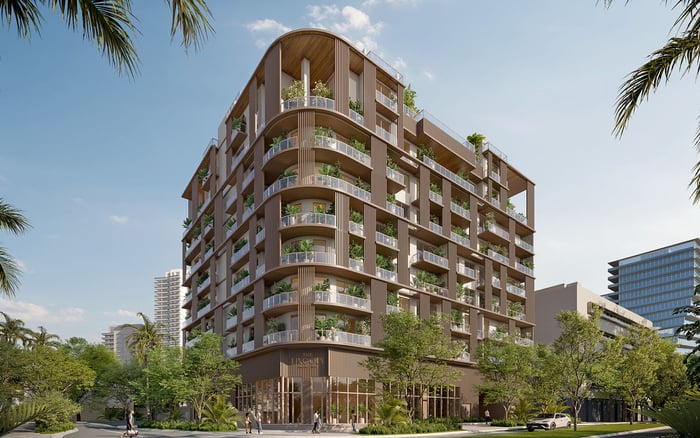
At Opus Coconut Grove, the architectural proposition is intimate: a six-story boutique condominium by META Development at 3137 SW 27th Avenue in Coconut Grove. Its planned three- and four-bedroom residences range from approximately 1,905 to 3,946 square feet, with expansive layouts, private balconies, floor-to-ceiling glazing, and an emphasis on indoor-outdoor living.
The amenity program includes a rooftop pool, bar, lounge, outdoor kitchen, fitness facilities, business spaces, children's playroom, sauna, steam room, and massage rooms. Together, these features establish a polished lifestyle framework. On their own, however, they do not verify the performance of air treatment, domestic-water filtration, or engineered circadian lighting.
For an owner, the distinction is consequential. Terms such as “light-filled,” “wellness,” and “air purifier” remain descriptive until supported by specifications, certifications, commissioning records, and test results. In buyer-search terms, Opus sits at the intersection of Boutique, Pre-Construction, and Design & Architecture. The appropriate standard is therefore documentary, not rhetorical.
A wellness promise becomes meaningful when its performance can be specified, tested, and enforced.
Project materials do not specify HVAC equipment models, outdoor-air delivery rates, filter locations, MERV ratings, HEPA classifications, or commissioning results. Nor do the spa and fitness descriptions provide measured figures for PM2.5, carbon dioxide, volatile organic compounds, or humidity. This absence does not prove that appropriate systems will not be installed. It means a buyer should not infer technical performance from the amenity narrative.
Begin by requesting a dedicated HVAC and ventilation file. It should identify the equipment serving the residence, the filtration media and rating, filter locations and access, and the components maintained by the owner versus the condominium. Ask whether outdoor air is delivered directly to residences, how airflow is balanced, and which records will demonstrate that the completed installation conforms to the approved design.
An “air purifier” reference demands the same discipline. Residence 3A is described as including one, yet no manufacturer, model, filtration rating, installation scope, or test data is identified. A portable device, an in-duct component, and a building-wide strategy are materially different propositions. The purchase file should clearly establish what is included, where it operates, and whether replacement filters or recurring service will be required.
Before closing, a buyer can request commissioning records and arrange permitted independent measurements once systems are operational. The useful outcome is not a generic pass or fail, but a residence-specific baseline for particulates, carbon dioxide, volatile organic compounds, and humidity, interpreted alongside occupancy conditions and the installed mechanical design.
The project overview does not identify a whole-building or in-residence water-filtration system, applicable NSF/ANSI certifications, or contaminant-reduction data. A spa, steam room, or wellness-oriented identity should not be treated as evidence that drinking water receives specialized treatment.
Request a separate domestic-water package showing where any filtration occurs. Buyers should establish whether treatment, if present, applies at the building entry, within each residence, at selected fixtures, or through a dedicated drinking-water tap. The equipment schedule should include the manufacturer, model, replacement intervals, flow limitations, warranty, and certifications tied to specific contaminant-reduction claims.
If no developer-provided system is documented, an aftermarket reverse-osmosis installation may be considered to reduce contaminants including lead, fluoride, and nitrates. Installation feasibility, however, should be confirmed rather than assumed. Cabinet space, drainage, power, shutoff access, association rules, leak protection, and maintenance responsibility all warrant review before a buyer selects equipment.
Water testing should also be carefully scoped. Sampling at the residence can establish a baseline, while interpretation should account for the building plumbing and any treatment device actually installed. The objective is a clear chain from incoming water to the fixture used for drinking, supported by equipment documentation and testable performance.
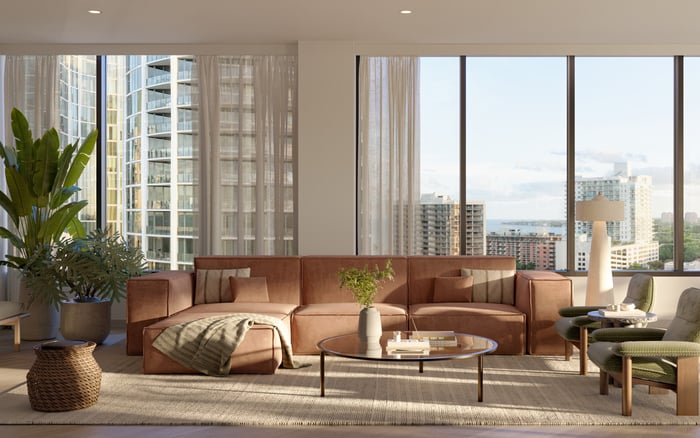
Floor-to-ceiling glazing can provide valuable daylight access and strengthen the connection to private balconies. It does not, by itself, establish measurable circadian performance. Residence documentation does not explicitly identify tunable-white fixtures, programmed color-temperature changes, spectral targets, or another engineered circadian-lighting system.
A buyer seeking more than abundant daylight should request the lighting fixture schedule, controls narrative, dimming specifications, and programming sequence. These documents should distinguish architectural lighting included with the residence from owner-selected decorative fixtures. They should also state whether color temperature can change, whether adjustments are automatic or manual, which rooms participate, and which controls remain available after turnover.
Orientation, glazing, shades, interior finishes, room depth, and furniture placement can all shape the lived experience of daylight. Renderings and broad glazing descriptions should therefore be evaluated alongside the actual residence plan. Buyers can ask their lighting designer to review fixture locations and controls before permitted customization deadlines, then verify operation after installation.
The same discipline applies when considering nearby luxury choices such as The Well Coconut Grove or Four Seasons Residences Coconut Grove. The purpose is not to assume equivalence among projects, but to apply one consistent evidentiary standard to every wellness or lighting claim.
Because Opus Coconut Grove is in development, timing and deliverables should be reconciled with the purchase agreement and current developer disclosures. Closing is estimated for summer 2026, with 60% of the purchase price due at closing. These terms should be confirmed in the buyer's operative documents rather than treated as fixed.
Organize requests into three files: HVAC and ventilation, domestic water and filtration, and lighting fixtures and controls. For each, identify the promised equipment, responsible party, applicable certification, inspection right, completion milestone, warranty, and remedy if the delivered condition differs. Material representations are strongest when reflected in contractual exhibits or written disclosures reviewed by the buyer's counsel.
The calendar matters. Technical review should begin early enough to accommodate questions and permitted changes, while final inspection should occur when systems can be operated. If commissioning or testing will take place after installation, establish who receives the results and how deficiencies will be corrected. Buyers comparing another boutique Grove option, such as The Lincoln Coconut Grove, can use the same framework to make the differences legible.
This Buyer's Guides approach is intentionally practical: separate atmosphere from performance, then connect every important claim to a document, installed component, test result, and contractual obligation. Opus Coconut Grove presents generous residences and a considered amenity collection, but sophisticated ownership diligence extends beyond the visual promise.
Air quality should resolve into ventilation specifications and measured conditions. Water filtration should resolve into equipment scope, certification, and maintainability. Circadian lighting should resolve into fixtures, controls, programming, and demonstrated operation. That is how wellness becomes an ownership asset rather than an evocative phrase.
For discreet guidance on South Florida luxury residences, connect with MILLION.
If branded residences are on your mind — as a home or as an allocation — we would be glad to share what we are seeing, privately.
Begin a quiet conversationThe reviewed project materials do not publish MERV ratings, HEPA classifications, filter locations, or HVAC equipment models.
No project-wide installation is established in the available materials. Residence 3A is described as including an air purifier, but no model, rating, scope, or test data is provided.
Request equipment schedules, outdoor-air and filtration details, balancing information, commissioning records, maintenance responsibilities, and any available test results.
The reviewed project overview does not identify a whole-building or in-residence filtration system, NSF/ANSI certifications, or contaminant-reduction data.
It may be an aftermarket option, subject to space, drainage, power, leak protection, association rules, and installation approval.
No. Glazing supports daylight access, but measurable circadian performance requires defined targets, fixtures, controls, programming, or testing.
Ask for fixture schedules, dimming specifications, the controls narrative, programming sequences, and a clear distinction between included and owner-selected fixtures.
Review specifications early enough to address design questions, then inspect and test after the installed systems are operational.
Material promises should be reflected in written disclosures or contract exhibits that identify scope, timing, inspection rights, warranties, and remedies.
Summer 2026 is presented as an estimate, so buyers should confirm timing and payment obligations in the purchase agreement and current developer disclosures.