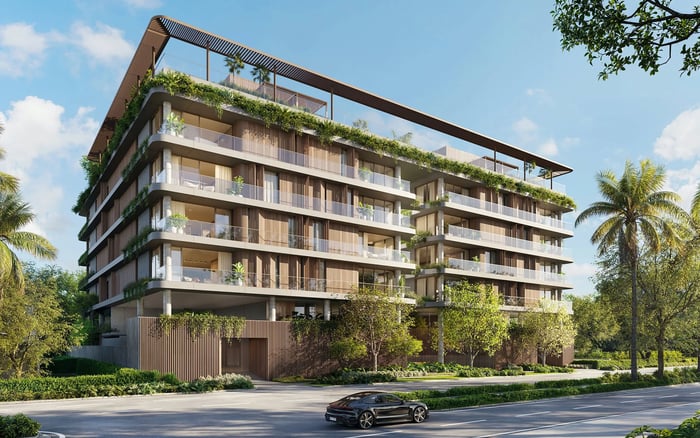
Colette's four advertised elevators suggest privacy and low shared demand, but buyers still need technical documents to assess true redundancy and outage performance.
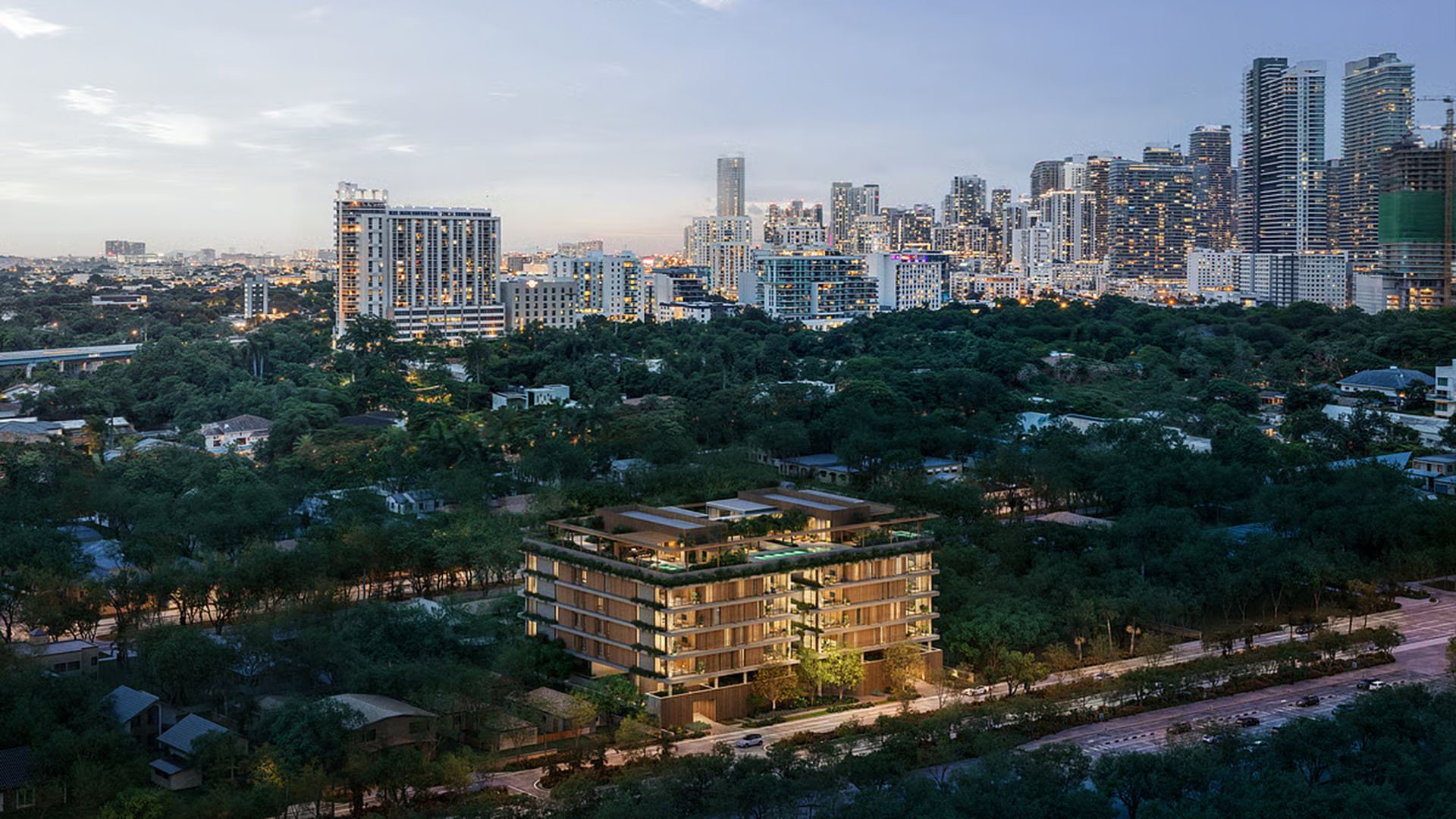
At Colette Residences Brickell, the ownership proposition is intentionally intimate: a planned five-story condominium at 1880 Brickell Avenue, with 38 residences currently contemplated. Some project information has referenced approximately 34 homes, making the final contractual count one of the first details a buyer should confirm. Residences are marketed with two to four bedrooms, expansive great rooms and direct, password-protected elevator entry.
The plans advertise four private, password-protected elevators. Across five floors and 38 planned homes, that figure suggests limited shared demand and an arrival experience calibrated for discretion. Yet elevator quantity is not the same as elevator resilience. The meaningful questions are which homes each cab serves, whether passenger and service functions are separated, and what happens when a controller, electrical feed or utility supply is unavailable.
Elevator quantity is only the opening line of a resilience review.
This distinction matters in Brickell, where buyers often compare boutique scale with larger residential programs such as 2200 Brickell or consider other vertical-living options, including Una Residences Brickell. The correct comparison is not simply elevators per home. It is the practical route from garage or lobby to residence during normal operations, maintenance and an outage.
Four advertised elevators can support short waits, privacy and operational flexibility. They do not, by themselves, establish that all four cabs are interchangeable. Passenger-versus-service assignments, the floors served by each cab, controller relationships, machine-room dependencies and independent electrical feeds have not been identified.
A genuine redundancy review therefore begins with the elevator schedule. It should state each cab's type, rated capacity, stops, residential collection, controller arrangement and passenger or service designation. Buyers should also determine whether garden, terrace, upper-floor and penthouse homes retain a practical elevator path when one cab is offline.
Shared infrastructure deserves equal attention. Multiple cabs can still be vulnerable to a single common controller, panel or equipment space. Conversely, selective operation may preserve access even when the entire system is not available. Neither conclusion can be drawn from the count alone. The engineering documents, purchase disclosures and written developer responses should align.
For a buyer considering design and architecture as part of the ownership decision, this is where an elegant arrival sequence becomes an operating-system question. Direct, credentialed entry is valuable only when credentials, doors, controls and the serving elevator remain coordinated in both ordinary and exceptional conditions.
Generator capacity, fuel autonomy, automatic-transfer-switch design and the emergency connected-load schedule have not been specified. Nor has it been established which elevators, if any, would run continuously, selectively or in rotation during a utility outage.
The correct request is not simply, “Does the building have a generator?” Buyers should ask for its kW or kVA rating, fuel type, runtime at design load, refueling plan and automatic-transfer sequence. More importantly, they should obtain the connected-load schedule showing precisely what the system is intended to support.
That schedule should address elevators, domestic-water and drainage pumps, fire systems, access control, surveillance, communications, garage gates, minimum garage lighting and any selected common-area cooling. Colette markets 24/7 concierge service, controlled access and advanced surveillance, but emergency power for the concierge desk, communications or security stations has not been specified. These are interconnected functions, not isolated amenities.
Buyers comparing another South Brickell proposition such as St. Regis® Residences Brickell should apply the same documentary standard rather than infer performance from positioning, height or service language. This is a core lesson for buyer due diligence: backup power should be evaluated by named loads and operating duration, not by a broad promise of emergency coverage.
Colette plans more than 15,000 square feet of amenities, including fitness, spa, screening, children's, lounge, entertaining and rooftop-pool spaces. During an outage, those areas may carry very different priorities. Pool equipment, ventilation, lighting, access devices and selected HVAC systems can compete for limited emergency capacity, making load sequencing material to the ownership experience.
Covered self-parking and EV charging are also advertised. Whether garage gates, minimum lighting or any chargers will receive emergency power has not been stated. A buyer should distinguish safe garage access from full garage convenience and should not assume that an EV charger will remain active merely because emergency power serves another garage component.
Inside the home, confirmation should be equally precise. Buyers can ask whether any refrigerator circuit, emergency receptacle, lighting circuit or internet-equipment connection is generator-backed. Coverage for any in-unit circuit has not been verified. Written clarity is particularly important for owners who travel frequently, maintain temperature-sensitive items or expect residential connectivity during disruptions.
As a boutique pre-construction offering, Colette has an opportunity to resolve these details before completion. That same timing means specifications may evolve. New-construction purchasers should ensure that the resilience features on which they rely appear in controlling documents rather than remain conversational expectations.
The five-story form materially shortens emergency stair travel compared with a conventional Brickell high-rise. That is a practical advantage, particularly when elevators are unavailable for maintenance or emergency reasons. It is not a substitute for accessible vertical transportation.
Owners with mobility considerations should test the route in detail: residence to stair or elevator, elevator to lobby or garage, and passage through credentialed doors. They should also ask which staffing and communications functions remain active during a transfer to generator power. A short staircase may help some residents while remaining impractical for others.
The building's marketed impact-resistant, floor-to-ceiling glass and ceilings of approximately 10 feet 6 inches-with some premium layouts potentially reaching 11 feet-shape the residential atmosphere. Operational diligence protects that architectural appeal by examining whether water, access, communications and essential circulation remain workable when normal service is interrupted.
A disciplined review should produce four items: the elevator schedule, a written emergency-operation narrative, the generator data sheet and the emergency connected-load schedule. The elevator narrative should identify continuous, selective or rotational operation and explain what occurs after a utility failure. The generator package should address rating, fuel, expected runtime, transfer sequence and refueling.
Buyers should then reconcile those documents with the selected residence. Confirm the assigned elevator path, any alternate cab, garage and lobby access, and any backed in-unit circuits. Ask whether shared controls, machine rooms or electrical panels create a single point of failure across multiple cabs. Also confirm the final contractual residence count, because operating assumptions may differ between 34 and 38 homes.
Delivery has been marketed for approximately 2028, leaving time for assignments and emergency-power specifications to change. The prudent approach is to track revisions through contract, construction and closing. At Colette, resilience should ultimately be measured not by the elegance of four elevator doors, but by the documented continuity of access and essential building functions.
For discreet guidance on evaluating South Florida luxury residences, connect with MILLION.
If branded residences are on your mind — as a home or as an allocation — we would be glad to share what we are seeing, privately.
Begin a quiet conversationProject specifications advertise four private, password-protected elevators.
No. Redundancy depends on cab assignments, controllers, electrical feeds and other shared dependencies that are not established by the elevator count.
The current plan calls for 38 residences, although some project information has cited approximately 34. Buyers should confirm the contractual count.
It should identify each cab's type, capacity, floors served, controller arrangement and passenger or service designation.
Generator capacity, fuel autonomy, transfer-switch design and the emergency connected-load schedule have not been specified.
Key loads include elevators, water and drainage pumps, fire systems, access control, communications, garage systems, lighting and selected HVAC.
No in-unit coverage is currently verified. Buyers should request written confirmation for refrigerator, lighting, outlet or internet-equipment circuits.
It has not been stated whether any EV chargers, garage gates or minimum garage lighting will receive emergency power.
It shortens emergency stair travel compared with a conventional high-rise, but it does not replace documented elevator backup for accessible circulation.
Delivery has been marketed for approximately 2028, and technical specifications may change before completion.