For collectors evaluating Miami residences, private elevators and high ceilings are only the beginning. The decisive questions concern the complete delivery route, structural support, glazing, humidity management, installation permissions, and the documents governing collection-specific accommodations.

For an art collector, a residence is both a home and an environment for objects that may be large, fragile, light-sensitive, or difficult to move. When evaluating Miami Tropic Residences, buyers should look beyond visual presentation and determine whether the building and residence can support the practical needs of their collection.
The same discipline applies at The Residences at Mandarin Oriental, Miami. A refined arrival experience may be attractive, but collectors still need documented answers about freight access, installation permissions, environmental performance, security procedures, and ongoing building operations.
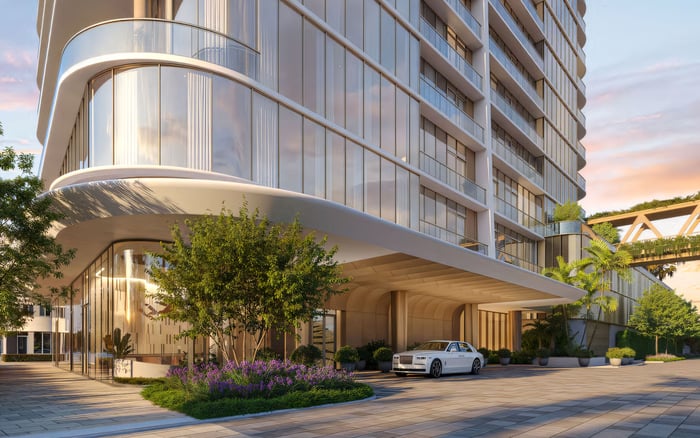
A private arrival is not necessarily a workable freight route.
Marketing materials can help a buyer understand a project’s design intent, but they should not replace current plans, contract exhibits, engineering responses, finish schedules, or building procedures. Collection-related decisions should be based on documents that identify what will be delivered, what may be modified, and who has authority to approve the work.
This document-led approach is equally useful when comparing other Miami options, including The Residences at 1428 Brickell. Buyers should separate general design impressions from written commitments concerning dimensions, materials, systems, access, and permissible alterations.
A collector can begin by preparing an inventory of priority works. For each piece, record its dimensions, weight, crate size, handling restrictions, light sensitivity, preferred location, mounting method, and environmental requirements. That inventory gives the project team a defined set of questions rather than a general request for an art-friendly residence.
An elevator serving a residence does not by itself establish that a crated work can travel safely from a vehicle to the intended wall. Request a dimensioned route beginning at the designated receiving point and continuing through every door, corridor, service area, elevator threshold, vestibule, residence entry, and final installation position.
The review should identify clear elevator-cab dimensions, door openings, rated capacity, sill conditions, turning clearances, protective-padding requirements, and any obstacles created by hardware or finishes. Measurements should reflect usable clearances rather than nominal plan dimensions.
Operational rules matter as much as physical dimensions. Ask about receiving hours, reservations, insurance requirements, handler credentials, protective materials, crate restrictions, temporary holding, and approval procedures. Confirm whether specialist art handlers can work during the required window and whether rigging equipment is permitted in relevant areas.
Buyers should also ask who coordinates a delivery, who can stop it, and what documentation must be submitted beforehand. A clear approval chain can reduce uncertainty when a work requires multiple handlers, specialized equipment, or an extended installation period.
Open interiors and prominent walls can create compelling display opportunities, but collectors need drawings that distinguish structural elements from partitions. Request information about wall construction, available backing, ceiling support, concealed services, permissible anchors, and attachment limits.
Heavy paintings, suspended works, or dense groupings may require reinforcement before finishes are installed. Proposed backing, blocking, specialty power, lighting, shades, monitoring equipment, or other collection-specific work should be reviewed by the appropriate project representatives and documented through the applicable approval process.
Collectors comparing properties near Miami’s design-focused districts can apply the same review at Kempinski Residences Miami Design District. Generous proportions or art-oriented presentation should not be treated as proof that a particular wall, ceiling, or electrical location can support a planned installation.
Common-area display opportunities require a separate inquiry. If a buyer is considering lending work for display, questions should cover curation, installation authority, insurance, security, condition documentation, environmental management, loan duration, and responsibility for removal. The existence of an art-oriented space does not define its operating standards.
Residential cooling and collection-focused environmental management are related but not identical. Buyers should request information about HVAC zoning, dehumidification, monitoring capability, sensor locations, alert functions, condensation safeguards, leak detection, and system behavior when a residence is partly occupied or vacant.
Humidity performance should be addressed directly rather than inferred from temperature controls. A collector’s adviser can compare the proposed system and operating approach with the requirements of specific works, frames, papers, textiles, wood objects, or mixed-media pieces.
Glazing and shade specifications also deserve careful review. Buyers can map intended artwork locations against exterior glass, direct and reflected light, air diffusers, plumbing walls, balcony doors, and other nearby conditions. This exercise may show that the most dramatic display wall is not the most suitable one.
Ask how the residence and relevant building systems respond to leaks, power interruptions, mechanical alarms, or restricted access. The goal is not to assume a particular level of protection, but to understand the available systems, responsible parties, notification procedures, and options for temporary protection or relocation.
A collector’s due-diligence file should bring together approved plans, route measurements, written responses, mechanical information, finish schedules, alteration procedures, delivery rules, and insurance obligations. Any accepted reinforcement, lighting, power, shading, monitoring, or access arrangement should be documented in the appropriate signed or approved record, with responsibility and timing clearly assigned.
The buyer should also clarify which requests must be made before construction milestones or finish installation. If a proposal cannot be approved, that decision may affect unit selection, artwork placement, lighting design, or the feasibility of moving a priority piece into the residence.
Before closing or scheduling a major delivery, repeat the route survey using final built conditions and the actual dimensions of the relevant works and crates. Confirm clearances, elevator access, hardware, protective procedures, and installation approvals rather than relying solely on earlier drawings.
For consequential installations, the buyer’s art handler, designer, engineer, insurer, and environmental adviser should review the same information. Coordinated review helps connect aesthetic intent with access, structural, mechanical, and operational realities before a work arrives.
For discreet guidance on selecting a South Florida residence around the needs of a significant collection, connect with MILLION.
If branded residences are on your mind — as a home or as an allocation — we would be glad to share what we are seeing, privately.
Begin a quiet conversationA private elevator does not establish that every crate can clear the full route or comply with building procedures. Buyers should verify access from the receiving point to the final display location.
Request usable cab dimensions, door clearance, rated capacity, sill conditions, padding requirements, and reservation procedures in writing.
Measure every door, corridor, turn, threshold, service area, elevator, vestibule, and residence entry along the proposed path.
Ask for drawings identifying wall construction, available backing, ceiling support, concealed services, attachment limits, and permissible anchors.
Submit proposed reinforcement, lighting, power, shading, and monitoring work through the applicable approval process. Record accepted work and responsibility in the appropriate signed or approved document.
Not necessarily. Buyers should verify dehumidification, operating performance, sensors, alerts, condensation safeguards, and conditions during vacancy.
Request relevant glazing and shade specifications, then assess proposed artwork locations for light exposure and proximity to exterior glass.
Clarify curation, installation authority, insurance, security, condition reporting, environmental management, loan duration, and removal responsibility.
Receiving hours, reservations, insurance, handler credentials, equipment restrictions, and approval procedures can determine whether an installation is feasible.
Review plans during due diligence and survey the completed route before closing or scheduling delivery. Use the actual dimensions of priority works and crates.