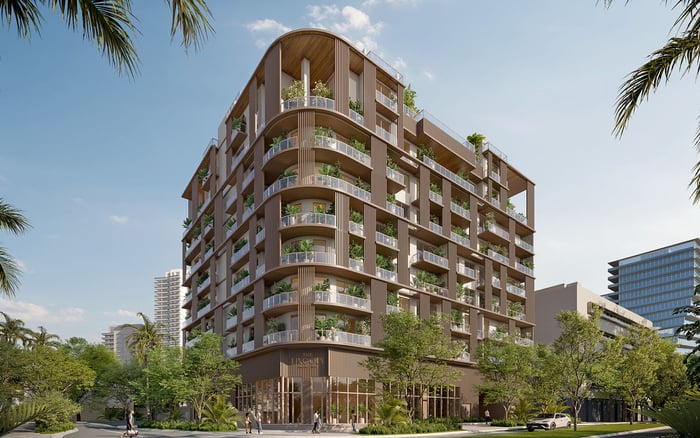
Pending concrete, waterproofing, or façade work should influence an Arbor Coconut Grove offer only after the buyer verifies the scope, funding, responsibility, disruption, warranty position, and potential effect on financing and resale.

At Arbor Coconut Grove, a buyer evaluating possible concrete, waterproofing, or façade work should begin by confirming whether any work is actually pending. The existence, scope, cost, and responsibility for a project should not be inferred from informal comments, visible activity, or a general concern about condominium maintenance.
The first task is classification. A scheduled inspection, preventive sealant work, or cosmetic touch-up is different from a recurring condition that requires investigation and corrective construction. The distinction affects pricing, timing, professional review, financing, and the protections that belong in the purchase contract.
The available information does not establish a current assessment or confirmed repair program at Arbor. The analysis should therefore remain conditional unless association records, technical reports, meeting minutes, bids, notices, or other current documents identify a defined project.
An unresolved building item should be priced for cost, uncertainty, disruption, and enforceable recovery rights.
A buyer should identify the location of the reported condition, its suspected source, the proposed repair method, and whether prior work addressed the same area. Concrete, waterproofing, and façade concerns can involve different specialists and may require different access, testing, permitting, and sequencing.
The terminology used in a summary or meeting discussion is not enough. The useful materials are the underlying evaluations, repair specifications, drawings, proposals, photographs, testing results, and written recommendations. These documents can help distinguish a narrow maintenance item from a condition that remains under investigation.
The review should also establish whether the proposed work is temporary, preventive, or intended as a durable correction. If the cause remains uncertain, the buyer should not rely solely on the lowest preliminary estimate. An incomplete diagnosis can make both cost and schedule less predictable.
Comparison with another Coconut Grove property, such as Opus Coconut Grove, should not rest on appearance or broad assumptions about a building. The relevant comparison is the quality of the available documentation, the clarity of the repair plan, the credibility of funding, and the allocation of responsibility.
The buyer should request the latest available engineering or building-envelope materials, contractor proposals, repair scopes, budgets, financial statements, reserve information, assessment notices, insurance documents, and association meeting minutes. If several alternatives are under consideration, the file should show which option has been approved and which remain preliminary.
Meeting minutes and owner communications may provide context about the duration of an issue, prior investigations, competing proposals, warranty notices, insurance discussions, and possible funding decisions. They should be read alongside formal technical and financial records rather than used as a substitute for them.
The diligence file should also identify relevant permits, open items disclosed by the association, contracts for the proposed work, and any documented dispute involving responsibility for the condition. If a developer, contractor, manufacturer, insurer, or another party may be responsible, the buyer should request the notices, correspondence, agreements, and claim materials that support that position.
A qualified structural or building-envelope professional can interpret technical findings when the source, severity, or proposed correction is unclear. Legal counsel can separately evaluate the contract, association disclosures, assessment responsibility, document rights, and any stated warranty or recovery position. Each professional should remain within the appropriate area of expertise.
When documents establish a unit’s allocated share of approved work, that amount can become one component of the negotiation. A buyer might seek a price adjustment, closing credit, escrow arrangement, or another clearly drafted allocation. The appropriate structure depends on the available records and the purchase contract.
The documented cost should not be confused with the entire economic exposure. The buyer may also need to consider uncertainty in the scope, professional fees, possible changes to the proposed work, financing implications, access restrictions, and disruption. These items should be evaluated separately so that a known figure does not create false precision.
If the scope or funding remains unsettled, conservative underwriting is more disciplined than relying on an informal prediction that the matter will be inexpensive or resolved quickly. The offer can reflect uncertainty, while the contract can provide a process for reviewing later documents or responding to a material change before closing.
This approach is also useful when comparing Arbor with The Lincoln Coconut Grove or another South Florida condominium. A known and funded obligation may be easier to evaluate than an undefined issue, even if the eventual cost of the latter could be lower. Clarity has value because it affects both present negotiations and future marketability.
Assessment responsibility requires precise language because discussion, approval, levy, payment, and construction may occur at different times. The contract should address the relevant event and should not rely on a vague statement about whether an assessment is “current.” Counsel can help align the provision with the specific documents and transaction.
The buyer should also consider appropriate review periods and contingencies for association records, technical materials, insurance, financing, and any pending update to the scope or budget. The contract can specify what happens if requested information is unavailable, a proposal changes, funding is not approved, or a lender will not accept the condominium.
Access to updated information matters through closing. A file that was accurate when the offer was made may change if the board receives a new report, approves a contract, revises a budget, or changes its funding approach. The buyer’s rights should not depend on receiving material information only after the transaction is complete.
A possible warranty, insurance payment, or third-party recovery should be treated as conditional until the underlying documents establish the basis of the claim and the practical path to collection. The buyer should ask who has responsibility for providing notice, controlling the claim, authorizing a settlement, and applying any proceeds.
The records should also show whether the proposed repair must proceed before a claim is resolved and how the association intends to fund work in the meantime. A potential recovery does not necessarily eliminate near-term cash requirements or construction disruption.
Any seller representation about coverage or reimbursement should be checked against written association, insurer, contractor, or warranty materials. Where the position remains disputed or undocumented, the offer should not value the recovery as though it were already available.
Building-envelope and concrete work can affect more than the assessment balance. Depending on the documented plan, construction may influence access, noise, views, balconies, parking, amenities, move-in timing, or planned interior work. A buyer should verify the expected impact rather than assume that all work will remain outside daily life.
Financing should be reviewed early. A lender may request association records and information about unresolved conditions, repairs, funding, insurance, or assessments. A buyer using cash should still consider financeability because a future purchaser may depend on condominium financing.
Resale analysis should focus on what a later buyer will see in the file. Clear technical findings, an approved solution, credible funding, and documented responsibility can be easier to explain than an issue that remains undefined. Conversely, ambiguity can affect marketability even when no final cost has been established.
The purpose of diligence is not to treat every maintenance discussion as a reason to abandon a residence. It is to determine whether the available information supports the proposed price and whether the contract assigns unresolved risk deliberately.
A disciplined Arbor offer should reflect the confirmed scope, documented financial exposure, uncertainty, disruption, financing considerations, and realistic prospects for recovery. If essential information remains unavailable, the buyer can respond through price, conditions, timing, or a decision not to proceed.
For discreet guidance on South Florida luxury real estate, connect with MILLION.
If branded residences are on your mind — as a home or as an allocation — we would be glad to share what we are seeing, privately.
Begin a quiet conversationNo. Buyers should verify current association records before treating any repair project or assessment as confirmed.
The buyer should confirm whether the work exists and classify it as routine, preventive, corrective, or still under investigation.
Request available evaluations, repair specifications, drawings, testing results, proposals, photographs, and written recommendations.
Review budgets, financial statements, reserve information, assessment notices, contracts, and the proposed funding plan.
Minutes may provide context about investigations, proposals, warranty notices, funding discussions, and prior decisions.
A buyer can account for documented cost, uncertainty, disruption, financing effects, and potential recovery when negotiating price and terms.
Use conservative assumptions and consider contract protections for later documents, revised proposals, or material changes before closing.
No. The basis, responsibility, claim process, timing, and practical collectability should be verified in writing.
Future purchasers may require condominium financing, so unresolved building issues can still affect resale and marketability.
A qualified structural or building-envelope professional can address technical materials, while legal counsel can evaluate contract and liability issues.