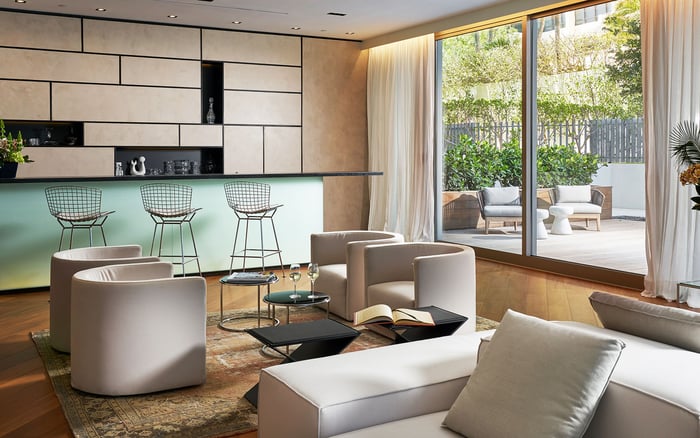
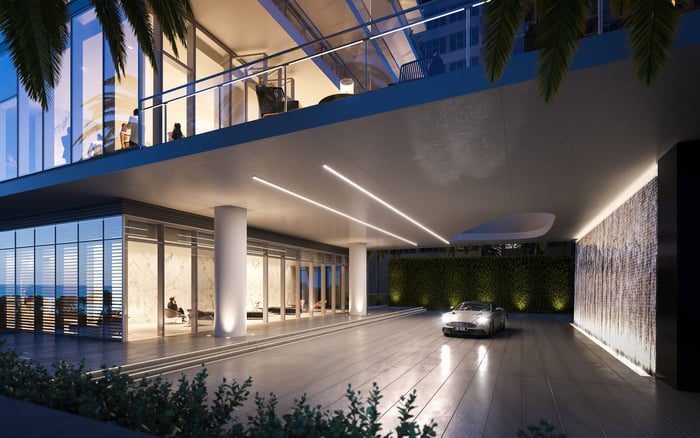
A buyer-oriented look at ownership considerations for three ultra-luxury oceanfront condominium addresses in Hallandale Beach, Sunny Isles Beach, and Key Biscayne, with emphasis on governance, reserves, insurance, climate exposure, brand positioning, and micro-market fit.

In South Florida’s ultra-luxury **ocean**front condominium market, the most sophisticated buyers rarely stop at price, view, and finish level. The sharper question is ownership quality: how a building is governed, how reserves are handled, how insurance exposure is managed, and how a specific micro-market may perform within a broader coastal corridor.
That lens is especially useful when comparing 2000 Ocean Hallandale Beach, Armani Casa Sunny Isles Beach, and Oceana Key Biscayne. Each belongs in the South Florida oceanfront conversation, yet each asks a different kind of owner to weigh legal, financial, and lifestyle factors with discipline.
2000 Ocean is the Hallandale Beach property in this comparison, and that location matters. Ownership here should be understood within South Florida’s premium coastal corridor, not as an isolated luxury acquisition. For many buyers, Hallandale Beach occupies a strategic position between established luxury nodes to the south and expanding high-end activity to the north.
The ownership angle is therefore not only about the private residence. It is about how a Hallandale Beach address fits the buyer’s broader map of access, privacy, seasonal use, and long-term portfolio logic. A family office may read the residence differently from a primary-home buyer, while a cross-border investor may focus on ease of ownership, liquidity assumptions, and ongoing carrying obligations.
Residences by Armani/Casa is the Sunny Isles Beach branded condominium property in this set. That makes brand association a central ownership consideration. Branded residences can carry a distinct emotional and design proposition, but diligence should still focus on the underlying condominium framework, not only the name above the door.
For Armani Casa Sunny Isles Beach, buyers should separate brand affinity from ownership mechanics. The brand may shape perception, lifestyle, and buyer pool, yet the essential questions remain familiar: governance, reserves, insurance, rules, and the owner experience over time. Sunny Isles Beach also has its own market narrative, with a recognizable concentration of high-rise oceanfront condominiums and a buyer base that often includes international and second-home purchasers.
This does not diminish the power of brand. It simply places it where it belongs: as one layer of value, not the entire investment thesis.
Oceana Key Biscayne introduces a different ownership conversation. Key Biscayne is not simply another oceanfront location in the same sequence as Hallandale Beach and Sunny Isles Beach. It is a distinct micro-market with its own rhythm, buyer expectations, and lifestyle narrative.
For some owners, the appeal is the sense of separation from denser urban coastal corridors. For others, the island context shapes how they think about family use, privacy, daily routines, and long-term hold periods. The key point is that Oceana Key Biscayne should be evaluated within Key Biscayne itself, not only against broader South Florida oceanfront benchmarks.
That micro-market lens is particularly important for buyers who compare properties across jurisdictions and assume oceanfront ownership is interchangeable. In practice, ownership character can shift meaningfully from one community to another.
Florida condominium law is a necessary ownership framework for all three properties. In the post-Surfside regulatory environment, ultra-luxury buyers are increasingly aware that building quality and ownership quality are inseparable. The conversation now extends beyond lobby impression and private amenities into board governance, reserve planning, maintenance culture, and transparency.
Association governance deserves early attention. Buyers should understand how decisions are made, how budgets are communicated, and how future obligations may be shared among owners. Reserve requirements are equally important, because reserves influence both financial predictability and confidence in long-term building stewardship.
For high-net-worth and ultra-high-net-worth buyers, these issues are not merely administrative. They can affect estate planning, family office reporting, financing strategy, and the comfort of holding a coastal asset through multiple market cycles. A beautifully positioned residence can still become an inefficient ownership experience if governance expectations and buyer expectations are misaligned.
Insurance exposure and climate risk are unavoidable parts of South Florida oceanfront ownership. Buyers do not need to approach those subjects with alarm, but they do need to approach them with precision. The most resilient acquisition process examines the building, the association, the insurance structure, and the owner’s own tolerance for future variability.
This is where the comparison among Hallandale Beach, Sunny Isles Beach, and Key Biscayne becomes more than geographic. Each location may attract a different buyer pool and ownership narrative. Those differences can influence expectations around seasonal occupancy, rental philosophy where permitted, long-term holding periods, and sensitivity to carrying costs.
A disciplined buyer should therefore model ownership beyond the closing. That means reviewing association documents, understanding reserve posture, assessing insurance exposure, and asking how the property fits within a broader lifestyle and wealth strategy. The right answer may differ for a family seeking a generational coastal base, a seasonal owner prioritizing convenience, or an investor balancing personal use with long-range asset preservation.
The most useful comparison is not a simple ranking. 2000 Ocean speaks to a Hallandale Beach corridor thesis. Armani Casa Sunny Isles Beach adds the clearest branded-residence lens among the three. Oceana Key Biscayne places the island micro-market at the center of the decision.
For the right buyer, any one of the three can make sense. The more refined question is fit. Does the ownership structure align with the buyer’s risk tolerance? Does the location support the intended lifestyle? Does the association framework feel transparent and durable? Does the property’s narrative match the way the owner expects to use, hold, and eventually transition the asset?
In South Florida’s highest tier, ownership is not only about acquiring a view. It is about acquiring a position within a building, a community, and a regulatory environment that will continue to matter long after closing.
What is the main ownership difference among these three properties? The difference begins with location and ownership narrative: Hallandale Beach, Sunny Isles Beach, and Key Biscayne each carry a distinct buyer profile and market context.
Why is 2000 Ocean Hallandale Beach viewed through a corridor lens? It belongs to South Florida’s premium coastal corridor, so buyers should consider how Hallandale Beach fits their broader lifestyle and portfolio strategy.
What makes Armani Casa Sunny Isles Beach a distinct ownership case? Its Armani/Casa association creates a clear branded-residence angle, which can influence perception, lifestyle appeal, and buyer expectations.
Why does Key Biscayne matter so much for Oceana owners? Key Biscayne is a distinct micro-market, so ownership should be evaluated through the island’s own lifestyle and buyer dynamics.
Should buyers focus only on purchase price? No. Legal structure, association governance, reserves, insurance, climate exposure, and lifestyle fit all belong in the ownership analysis.
Why is Florida condominium law relevant here? These are condominium assets, so buyers need to understand the legal framework that shapes governance, owner obligations, and association authority.
How does the post-Surfside environment affect diligence? It has made building stewardship, reserves, inspections, and governance more central to the way serious buyers evaluate oceanfront condominiums.
Are reserves only a financial detail? No. Reserve posture can signal how a building plans for long-term maintenance and how predictable future ownership costs may feel.
How should cross-border investors approach these properties? They should look beyond the residence itself and assess governance, carrying costs, insurance exposure, and the practicalities of remote ownership.
Is there one best choice among the three? Not universally. The strongest choice depends on whether the buyer prioritizes corridor positioning, brand association, or the Key Biscayne island setting.
For a discreet conversation and a curated building-by-building shortlist, connect with MILLION.
If branded residences are on your mind — as a home or as an allocation — we would be glad to share what we are seeing, privately.
Begin a quiet conversation