A discreet look at Ocean House Surfside and the building choices that support privacy, calm, beach access, soft service, and a less performative version of oceanfront luxury.
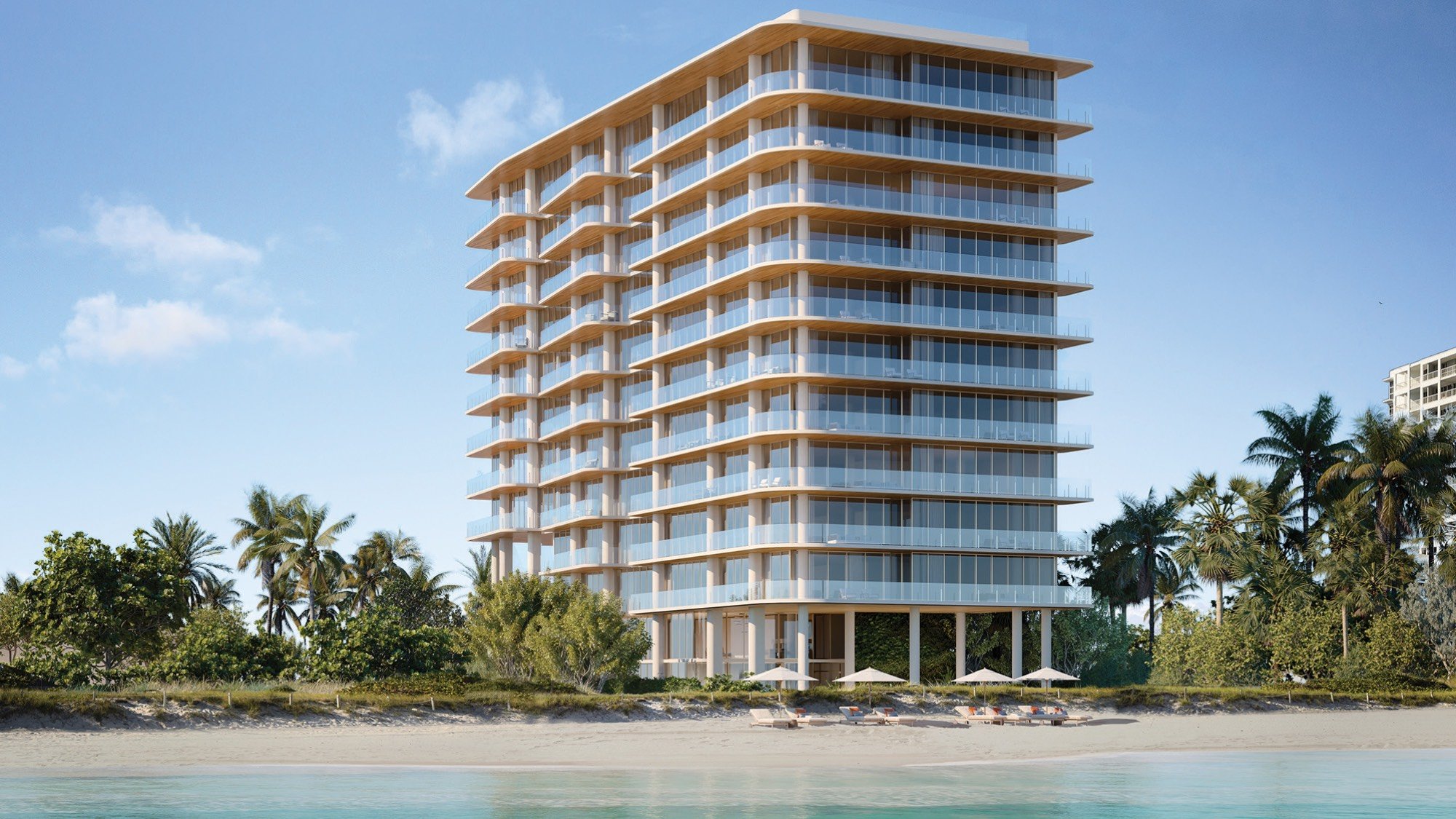
In South Florida, luxury often announces itself before a resident reaches the front door. It can appear as a dramatic skyline gesture, a highly visible arrival court, a lounge designed for display, or an amenity deck calibrated to feel like a private club at peak hour. Ocean House Surfside takes a different position. Its appeal is less about spectacle than about how a building can make daily life feel composed.
That is the quiet-luxury proposition at Ocean House Surfside. The building sits within Surfside’s oceanfront rhythm, where the beach, residential scale, and neighborhood calm can support a more private routine than busier Miami districts associated with nightlife, tourism, and constant motion. For the right buyer, the value is not simply proximity to the ocean. It is the ability to fold the ocean into an everyday pattern without feeling absorbed into a scene.
Quiet luxury, in this context, is not minimalism for its own sake. It is subtlety, discretion, comfort, tactile restraint, sound control, and protected personal time. It is the difference between a residence that performs luxury and one that lets luxury recede into the background so life can come forward.
Boutique scale matters because friction compounds in residential life. Larger towers can offer breadth, but they can also bring more elevator encounters, more circulation, more social visibility, and more operational choreography. A quieter building experience depends on how residents move through the property, how often they cross paths, and whether daily transitions feel efficient rather than staged.
Ocean House Surfside can be understood as a boutique oceanfront alternative to larger, more performative South Florida luxury towers. The point is not that every larger building is loud, or that every smaller building is serene. The point is that scale shapes behavior. With fewer layers between the residence, the lobby, the beach, and the neighborhood, a home can feel less like a destination and more like a private base.
For buyers comparing Surfside options, that distinction matters. Nearby names such as The Delmore Surfside, Arte Surfside, and Fendi Château Residences Surfside all sit within a market where design language, privacy, and oceanfront presence are closely scrutinized. Ocean House Surfside’s editorial position is especially compelling for those who want calm to be the organizing principle, not merely a secondary benefit.
A quieter luxury routine is built through a sequence of choices: architecture, operations, privacy, circulation, and neighborhood positioning. None works alone. Together, they determine whether a resident can move from morning coffee to a beach walk, private work time, family use, and evening air without feeling interrupted.
The most successful luxury buildings understand that convenience is not the same as intensity. A private resident may want support, but not constant attention. They may value amenities, but not spaces that feel socially demanding. They may want an impressive residence, but not a home that requires a public performance every time they arrive.
This is where soft service becomes central. In a quieter building, service should feel competent and discreet, not theatrical. The best operations are noticed through what they prevent: delays, confusion, overexposure, and unnecessary conversation. For owners who split time between homes, work privately, travel often, or host family selectively, that ease can matter as much as any visual statement.
Surfside has a particular advantage on Miami’s luxury map. It offers an oceanfront setting with access to restaurants, retail, services, and beach life, yet it does not need to borrow energy from nightlife to justify its value. The neighborhood’s quieter profile supports a residential mood that feels more protected than performative.
That does not mean isolated. Surfside’s appeal is precisely the balance between calm and proximity. A resident can lean into the beach in the morning, handle errands or appointments without crossing into a more frenetic district, and return to an environment that still feels residential. The routine has a beginning, middle, and end that does not depend on constant stimulation.
For buyers who use lifestyle filters such as Boutique, Oceanfront, Beach-access, and Lifestyle, this is where Surfside becomes especially persuasive. Those terms are not just marketing shorthand. They describe a practical preference for fewer interruptions, easier transitions, and a home environment that supports recovery as much as entertainment.
The next generation of luxury buyers is increasingly fluent in sensory details. They notice acoustics. They notice the emotional temperature of a lobby. They notice whether interiors feel restrained or visually aggressive. They notice how light, texture, and circulation affect the body over time.
Ocean House Surfside’s quiet-luxury narrative is strongest when viewed through that sensory lens. The ideal is not a building that overwhelms the guest in the first thirty seconds. It is a building that continues to feel good after the hundredth arrival. Restrained interiors, tactile materials, acoustic calm, and a less insistent luxury language can create a form of comfort that is difficult to capture in a single photograph but easy to understand in daily use.
This is also why comparisons with showier Miami condominium markers are useful. Dramatic silhouettes, hyper-visible amenities, and scene-making common spaces can be exciting, but they are not always restful. For some buyers, the most valuable amenity is a building that does not constantly ask to be consumed as an experience.
Surfside’s oceanfront market includes several distinct expressions of high-end residential life. The Surf Club Four Seasons Surfside carries its own established sense of place, while other nearby properties speak to different design and service expectations. Ocean House Surfside enters that conversation through the lens of privacy, calm, and routine.
For a primary resident, that might mean a more predictable weekday: waking early, reaching the beach without ceremony, working privately, hosting selectively, walking in the evening, and returning without navigating a social gauntlet. For a second-home owner, it might mean the residence feels immediately usable after arrival, with fewer decisions and less public exposure. For a family, it may mean the building functions as a calm framework around school breaks, visits, meals, and time outside.
The central question is not whether Ocean House Surfside is the loudest statement on the coast. It is whether the building supports the kind of life its buyers are trying to protect. In the ultra-premium segment, that question is becoming more important.
A buyer considering Ocean House Surfside should look beyond surface cues and examine the lived sequence. How does arrival feel? How direct is the path to the residence? Does the building’s public space encourage calm or visibility? Does the service model feel polished without becoming intrusive? Does the neighborhood support the routine the buyer actually wants?
The strongest quiet-luxury buildings do not rely on one grand feature. They create consistency. Morning beach access feels natural. Private work time feels protected. Family use feels simple. Evening walks feel like part of the property’s extended atmosphere. The residence becomes less of a showcase and more of a well-calibrated instrument for living.
That is the deeper appeal of Ocean House Surfside. Its luxury is not framed as withdrawal from South Florida, but as a more selective way of inhabiting it. The ocean is present. The neighborhood is accessible. The building is positioned for discretion. For buyers who have already experienced the louder versions of Miami luxury, that restraint may be the point.
What is the quiet luxury idea at Ocean House Surfside? It is a lifestyle centered on privacy, calm, discretion, comfort, and low-friction daily living rather than highly visible amenity culture.
Is Ocean House Surfside positioned as an oceanfront building? Yes. Its appeal is framed around Surfside’s oceanfront environment and the routines that come with proximity to the beach.
Why does boutique scale matter for buyers? Boutique scale can reduce social and logistical friction by making movement through the building feel more private, direct, and composed.
How does Surfside differ from busier Miami luxury districts? Surfside offers a calmer beachfront setting while still keeping residents close to restaurants, retail, services, and the oceanfront.
What is soft service in this context? Soft service means building operations that feel competent, discreet, and supportive without becoming intrusive or theatrical.
Who is the likely buyer for this quieter routine? The profile includes primary residents, second-home owners, private professionals, and families who value protected time and daily ease.
Does quiet luxury mean fewer comforts? No. It means comfort is expressed through restraint, sensory calm, privacy, and thoughtful operations rather than conspicuous display.
What should buyers pay attention to during a visit? They should study arrival, circulation, acoustic comfort, common-area mood, service style, and how naturally the beach fits daily life.
How does Ocean House Surfside relate to other Surfside properties? It sits within a strong Surfside luxury context but is best understood through its emphasis on calmer routines and discretion.
Is this approach suited to full-time living? Yes. The quiet-luxury premise is especially relevant to everyday patterns such as work time, family use, beach walks, and evenings at home.
For a tailored shortlist and next-step guidance, connect with MILLION.
If branded residences are on your mind — as a home or as an allocation — we would be glad to share what we are seeing, privately.
Begin a quiet conversation