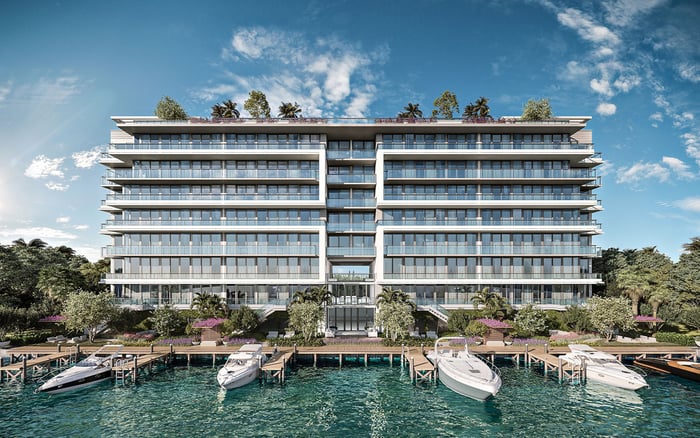
For many Bay Harbor Islands buyers, the dog is not an accessory, it is a family member with a routine. When you are comparing boutique waterfront living at Origin and La Baia, the most important pet details are rarely the glossy ones. They are the operational rules that shape daily life: approvals, elevator etiquette, relief areas, grooming, and whether the building’s culture truly supports pet ownership. Because pet policies can change and are often enforced differently over time, the smart approach is to evaluate each condominium the way you would evaluate a private club: read the current rules, understand how they are applied, and confirm where your dog will comfortably fit into the building’s rhythm. This guide frames the comparison through what matters most to owners who travel, entertain, and expect discretion.

Bay Harbor Islands attracts a specific buyer: someone who values privacy, proximity to Bal Harbour, and a calmer residential cadence than many larger waterfront neighborhoods. In that context, “pet-friendly” is not a checkbox-it is a series of small, repeatable moments that either run smoothly or become quietly inconvenient.
When you compare Origin and La Baia, treat pet policies and dog amenities as operating rules, not marketing language. The difference between an easy morning walk and a tense elevator ride often comes down to circulation patterns, staff behavior, and how consistently rules are applied.
If you are also considering other boutique options nearby, it can help to triangulate expectations by touring Origin Bay Harbor Islands alongside La Baia North Bay Harbor Islands and one additional Bay Harbor Islands property to calibrate what “pet-forward” actually looks like in this market.
Even luxury buildings that welcome dogs typically manage three variables: who qualifies, how pets move through common areas, and where pets can relieve themselves. You want answers in writing-and you also want to understand how the building functions on a busy weekend.
Key policy items to review in both Origin and La Baia:
Pet limits and approvals. Confirm the allowed number of pets per residence, any registration requirements, and whether board or management approval is required.
Size, weight, and breed restrictions. These are common in condo rules. If your dog is near typical thresholds, clarify exactly how compliance is defined and measured.
Elevator and lobby etiquette. Some buildings informally establish “pet-friendly routes,” while others require pets to be carried in certain areas or restrict peak times.
Leash, muzzle, and behavior standards. The most consequential clause is often the one that empowers management to respond to nuisance behavior.
Guest pets and pet sitting. If you travel, confirm whether pet sitters can access amenities, how keys are handled, and whether short-term visitors’ pets are treated differently.
Because this sits at the intersection of Pets and boutique condo living, weigh the building’s tolerance for the realities of dog ownership: wet paws after rain, shedding in corridors, and the occasional vocal moment when an owner steps out.
Luxury buyers often ask about a “dog wash” and “pet spa.” Those are appealing, but they are not always the difference-maker. The amenities that improve daily life are the ones that reduce friction and protect discretion.
In tours, prioritize these elements:
A true relief area that is close, covered, and easy to clean. If the relief area is too far, too exposed, or poorly maintained, residents stop using it-and the building pays the price.
A rinse and dry zone with good ventilation. A functional wash station has drainage, counter space, and enough room to maneuver with a medium or large dog.
A service-friendly package and delivery setup. If you rely on scheduled food delivery or groomers, you want systems that work without constant calls and delays.
A realistic path to the outdoors. Count doors, corners, and choke points from your unit to the street. Every tight turn is an opportunity for an awkward encounter.
If your lifestyle leans toward wellness and quiet, it is worth visiting a property like The Well Bay Harbor Islands to see how a health-oriented building approaches cleanliness, airflow, and shared spaces. Even if you do not choose it, it can refine your standards for what you want from Origin or La Baia.
Without leaning on brochure language, the clearest way to compare Origin and La Baia is to map your real routine to the building’s operational reality.
Ask yourself: where does your dog go within five minutes of leaving your front door? The best scenario is a predictable, low-stress loop with minimal elevator time and a discreet outdoor option. The worst scenario is a long internal walk, a crowded lobby, and limited relief options that create urgency.
During a showing, do one full loop as if you are taking your dog out. Notice:
How long you wait for elevators.
Whether corridors feel narrow or echoing.
Where you might pause if another dog approaches.
In luxury buildings, staff culture often sets the tone. A pet policy that is rarely enforced becomes a problem for conscientious owners. A policy enforced harshly and inconsistently becomes a different kind of problem.
Look for balanced professionalism: clear expectations, consistent reminders, and a discreet way to resolve issues without public conflict.
For dog owners, one of the most luxurious features can be acoustic comfort. Ask about construction, corridor sound, and whether the building has a history of noise complaints related to pets. If your dog is reactive or anxious, unit layout matters as well. A long entry hall can buffer sound. A direct view to the corridor can trigger barking.
Bay Harbor Islands is boutique by nature. That makes pet culture highly visible. In a smaller resident community, one poorly behaved dog can shape the mood-and one responsible owner can set the standard.
If you want a clearer read on how different buildings handle that social dynamic, compare the experience to another nearby boutique property such as Alana Bay Harbor Islands. The goal is not to find “the most permissive rules.” It is to find the best fit for your dog and for your neighbors.
This is also where a dog-park mindset can mislead. A dog park is social and energetic. A luxury condo is shared and quiet. You want amenities that support cleanliness and routine more than stimulation.
A sophisticated buyer does not stop at “Yes, pets are allowed.” You want the living rules, the enforcement tools, and the cost structure.
Ask for:
The current pet policy language in the condo rules.
Any registration requirements and annual updates.
Fines or remedies for violations.
Requirements for common-area cleanliness and who pays for damage.
Rules for pet-related vendors entering the building.
Then ask the practical follow-ups:
Where do residents actually take dogs for quick relief?
Which entrance is most commonly used by dog owners?
How does the building handle repeated nuisance complaints?
You are not trying to be difficult. You are signaling that you will be a clean, responsible owner who values the building’s standard.
Most Origin vs La Baia decisions become clearer once you identify your profile.
If you travel often, prioritize streamlined access for pet sitters, predictable building procedures, and a culture that tolerates quiet comings and goings. In these cases, clarity beats flexibility.
If you have a larger dog, you need more than permission. You need room to maneuver, a comfortable elevator experience, and relief logistics that do not require long indoor walks. Ask specifically about turning radii in corridors and the practicality of the wash area.
If Bay Harbor Islands is a second home, your dog may need re-acclimation each visit. Look for a calm lobby experience and a predictable route outside. Buildings with quieter circulation often feel more forgiving for dogs who are adjusting.
In ultra-premium condos, pet policies can influence resale desirability in subtle ways. A building that supports responsible pet ownership tends to preserve common-area condition, reduce neighbor friction, and feel easier to live in. That livability is part of value, even when it does not show up in a listing headline.
If you approach Origin and La Baia with a pet-owner’s eye, you will quickly see which one aligns with your standards for discretion, cleanliness, and daily ease.
Do Origin and La Baia allow dogs? Many Bay Harbor Islands luxury condos allow pets, but you should confirm the current written rules for each building before contracting.
Are there weight or breed limits in Bay Harbor Islands condos? Restrictions are common in condo rules; verify any size, weight, or breed language and how it is enforced in practice.
Is a dog wash station important, or is it just a nice extra? It matters most if you walk daily and want to keep elevators and corridors clean after rain or beach outings.
How can I tell if a building is truly pet-friendly during a tour? Walk the full route from unit to outdoors, note choke points, and ask where residents actually take dogs for relief.
Can I use a pet sitter or dog walker in a luxury condo? Usually yes, but access procedures vary; confirm vendor policies, key handling, and front desk protocols.
What questions should I ask about pet-related fines? Ask for the fine schedule, the complaint process, and what remedies management can require for repeat issues.
Are emotional support animals treated differently from pets? Many buildings distinguish between pets and assistance animals; ask management how documentation and access are handled.
Will pets affect elevator etiquette and privacy? They can, especially in boutique buildings; consistent rules and good circulation reduce uncomfortable encounters.
Do condos ever change pet policies after purchase? Yes, rules can be amended; review the condo documents to understand how changes are approved and communicated.
What is the simplest way to compare Origin vs La Baia for dog owners? Compare the written rules, then pressure-test them against your daily loop, staff culture, and relief logistics.
To compare the best-fit options with clarity, connect with MILLION Luxury.
If branded residences are on your mind — as a home or as an allocation — we would be glad to share what we are seeing, privately.
Begin a quiet conversation