A buyer-oriented comparison of how Bay Harbor Islands’ most-discussed waterfront options differ in floor plan character, unit mix, and everyday livability, with a practical checklist for choosing the right layout.
In Bay Harbor Islands, the most meaningful differences between luxury residences are often invisible from the curb. Two buildings can share a polished lobby, a water-view pool, and a clean, modern gym-yet live entirely differently once you’re inside the residence. Here, floor plan logic is the luxury: how the entry sequence lands, whether the living room can stay quiet while the kitchen works, whether bedrooms are buffered from entertaining, and whether your view corridor is protected by geometry rather than marketing.
That’s why a comparison of Bay Harbor Towers, La Baia North Bay Harbor Islands, and Onda Bay Harbor is best approached through unit mix and plan typologies-not a simple new-versus-old debate. In a boutique inventory environment with discerning neighbors, small layout decisions compound into privacy, resale liquidity, and day-to-day ease.
Instead of chasing rumored square footage or unverified unit counts, evaluate these buildings through three durable questions that hold up across cycles.
First: what is the dominant plan typology? In Bay Harbor and Bay Harbor-adjacent micro-markets, you typically see three: single-aspect plans (one primary exposure), corner plans (two exposures with a stronger natural light profile), and true flow-through layouts (opposing exposures with cross-breeze potential and a cleaner separation between public and private zones). Flow-through units matter because they often read “more expensive” in daily use even when nominal interior area is similar.
Second: what is the unit mix-and what does it imply? A building weighted toward smaller residences can feel more active, with more comings and goings, while a heavier mix of larger homes tends to skew toward longer holds and quieter common areas. Unit mix is also a practical proxy for elevator rhythm, parking demand, and whether the building’s social energy matches yours.
Third: what is the exposure and view security? On a tight island, the difference between a “water view” and a “waterfront orientation” is not semantic-it’s livability. Map not only the current view, but the likelihood it stays legible from principal rooms, especially if you care about morning light, sunset glare, or keeping blinds open without feeling on display.
tends to resonate with buyers who want established building rhythms and straightforward room geometry. In many classic Bay Harbor condominium footprints, you’ll find efficient corridors, clearly defined rooms, and functional storage zones-features that can be harder to reproduce in ultra-minimalist contemporary plans.
In floor plans here, look for proportion. A well-composed older plan often delivers a more usable living-room wall, cleaner furniture placement, and an entry that doesn’t immediately spill into the kitchen. For owners who entertain, that can create a calmer arrival moment and better acoustics-especially when the main seating area isn’t forced to share space with the home’s busiest circulation path.
Unit mix in an established building can also translate to a steadier residential cadence. The day-to-day experience often hinges on whether neighbors treat the building as a primary home or a rotational residence. When you tour, look for telltale livability details: coat storage near the entry, pantry depth, and whether bedrooms have meaningful separation from the main living zone.
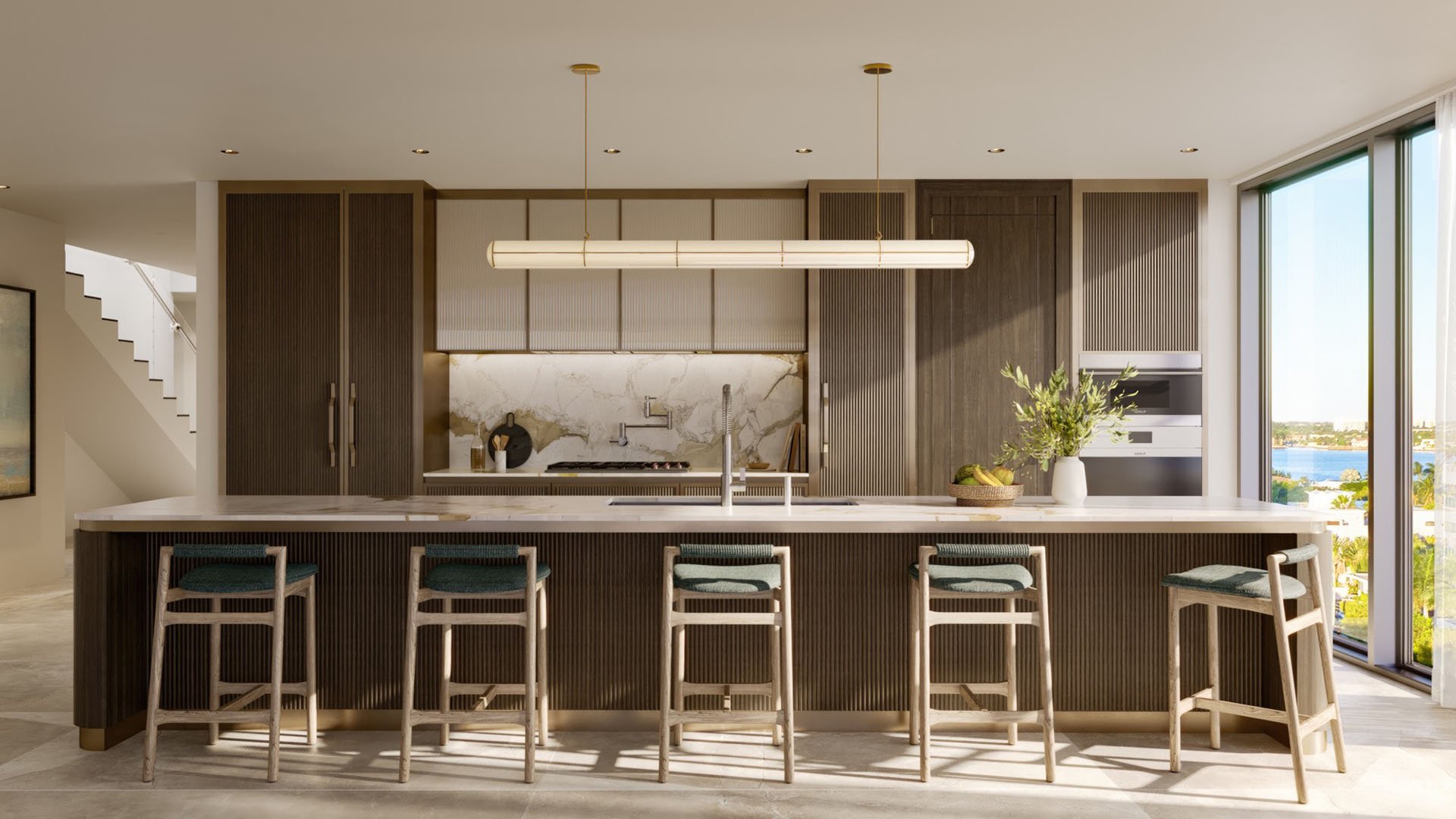
With La Baia North Bay Harbor Islands, buyers typically expect a more contemporary approach to space planning: open kitchens, larger expanses of glazing, and terraces designed as true extensions of the interior rather than a decorative ledge. When executed well, these strategies can make a residence feel larger than its interior footprint because the entertaining zone naturally shifts outdoors.
The right questions are less about whether a plan is “open” and more about whether it’s controlled. Does the kitchen have a discreet working wall, or is it fully exposed to the entire living room? Is there a powder room positioned so guests don’t pass through private bedroom corridors? If the plan is corner-oriented, do you get daylight in both the kitchen and living room-or does one area depend on borrowed light?
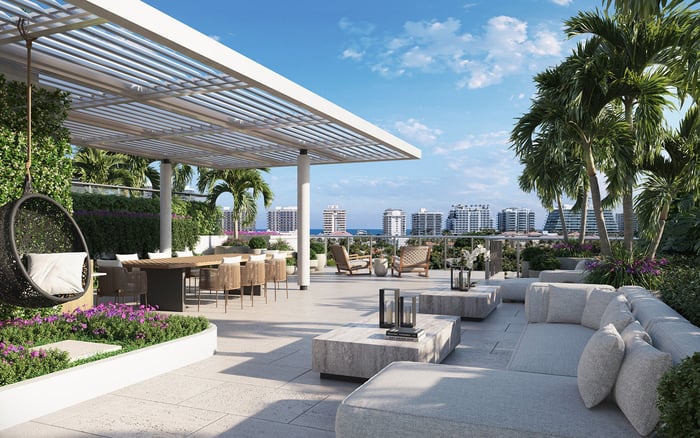
Pay particular attention to terrace geometry. A deep, rectangular terrace aligned with the living room can handle dining, lounging, and circulation at once, which is materially more valuable than a long, narrow balcony that photographs well but rarely gets used. If indoor-outdoor living is the priority in Bay Harbor, favor depth-not just linear frontage.
is often assessed through the lens of design intent. In design-led boutique properties, plans may be less conventional in exchange for a stronger sense of arrival, framed views, and sharper separation of zones. The upside is a residence that feels curated, not merely assembled.
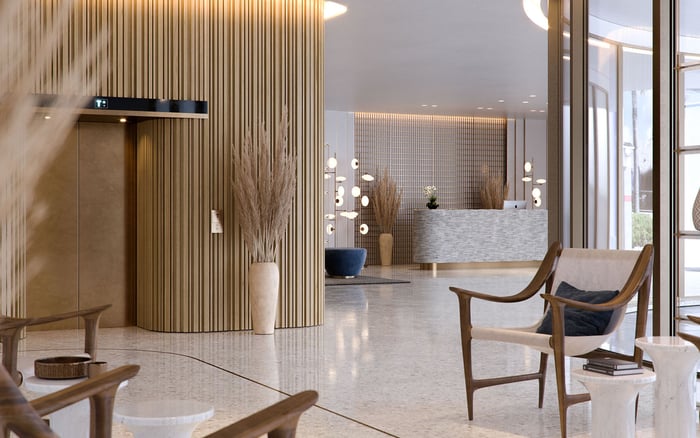
When you review Onda-style layouts, look for privacy cues engineered into the plan: an entry sequence that turns before revealing the living space, bedroom doors offset from the main corridor sightline, and laundry/service functions placed where noise is less likely to travel into sleeping areas. These details are what make a home feel “hotel quiet” without being a hotel.
Unit mix in a boutique, design-forward building can also shape how it holds value. A narrower band of plan types can make the building easier to understand for future buyers, but it also means you should choose your specific layout more intentionally-there may be fewer “middle ground” options.
It’s natural to want unit counts and exact bedroom breakdowns, but the more useful inquiry is what the mix implies for daily life. Ask: will your floor feel private? Are there multiple residences per elevator landing, or does the plan create natural separation? Does the building skew toward smaller homes with more frequent turnovers-or larger residences that tend to stay in the same hands longer?
Even without quoting figures, you can pressure-test unit mix by observing cues in plain sight: the scale of mail and package handling, the ratio of guest parking to resident parking, and how the lobby is designed for seating and circulation. A building built around frequent arrivals will read more like a transit space; a building oriented toward longer-term owners will feel more like a living room.
If you’re deciding between boutique calm and a more active feel, be candid about your lifestyle. Some owners want quietly predictable. Others want energy, convenience, and a little buzz. Neither is “better,” but unit mix will push the experience in one direction.
In this micro-market, certain planning details tend to track with pricing power and resale ease, even when finish levels are comparable.
Sightlines and “view capture.” A plan that frames water from the entry or from the kitchen often feels more expensive than one that only reveals the view from a single seating position.
Bedroom separation. A true split-bedroom configuration can matter as much as an extra half bath if you host family or prefer to work from home.
Service placement. Laundry near bedrooms, storage near entry, and a powder room positioned for guests are signals of thoughtful planning.
Terrace usability. Buyers pay for outdoor living they can actually furnish. Deep terraces and logical door placement outperform decorative outdoor space.
Natural light balance. Corner light can elevate everyday mood, but glare management matters. Ask where the sun hits during the hours you live-not just during a midday tour.
A pragmatic way to decide is to match your buyer profile to the plan character you prefer.
If you want a straightforward, low-drama home with clear room definitions and predictable furniture walls, Bay Harbor Towers-style plans can feel immediately familiar. They can also suit buyers who value function over fashion and prefer not to remodel extensively.
If you prioritize modern entertaining, larger expanses of glass, and terraces that read as part of the main living area, La Baia is often the shortlist. The best-fit buyer here is someone who likes a clean, contemporary interior language and is comfortable with a more open plan.
If you’re drawn to design-forward decisions and “quiet luxury” planning, Onda is frequently the fit. This tends to attract buyers who care about privacy choreography, framed perspectives, and a residence that feels more bespoke.
Before you choose a stack or sign a contract, pressure-test the plan the way you’d pressure-test a watch movement: methodically, without romance.
Start with the entry. Stand at the front door and identify what’s revealed first: a calm vestibule, a kitchen, or a long corridor. Then walk the main circulation path. Does it cut through the living room, or does it sit to the side?
Next, evaluate bedroom acoustics. Close the bedroom door and imagine a dinner party in the living room. If bedrooms open directly off the main entertaining zone, ask whether the build quality and door placement truly support quiet.
Then, assess storage. Closet depth, linen placement, and pantry solutions often separate a “nice condo” from a residence that works as a primary home.
Finally, consider your exit strategy. A highly specific plan can be a dream to own but narrower to resell. A classic plan can be less theatrical but widely acceptable. Your ideal balance depends on whether you view the residence as a long hold, a second home, or a future rental.
Bay Harbor Islands sits within a broader ecosystem of boutique waterfront luxury where buyers cross-shop by feel as much as by geography. If you find yourself wanting a different interpretation of boutique scale and water adjacency, it can help to calibrate your preferences against nearby offerings such as La Maré Bay Harbor Islands or Alana Bay Harbor Islands. The point isn’t to change neighborhoods-it’s to clarify what you value most in plan efficiency, privacy, and the building’s overall cadence.
Which matters more: interior square footage or terrace size? The best value is usable combined living area, but only if the terrace is deep and furnishable.
Are flow-through units always better? Often, yes for light and separation, but a well-designed corner plan can live just as well.
How can I judge unit mix without a full breakdown? Look at floorplate density, elevator landings, and how common areas are scaled for traffic.
What is the biggest floor plan red flag? A main circulation path that cuts through the living room usually erodes privacy and comfort.
Do open kitchens help or hurt resale? They are popular, but resale favors plans that can screen working mess from the living area.
How important is bedroom separation for a second home? Very, especially if you host guests or plan to work remotely while others sleep.
What should I measure on a terrace tour? Depth and door placement, plus whether furniture can fit without blocking circulation.
Is a boutique building always quieter? Not automatically; quiet depends on unit-size mix, owner profile, and acoustic detailing.
Should I prioritize view from the living room or primary suite? Prioritize the room you use most daily, then confirm the second key room still feels special.
What is the simplest way to compare plans across buildings? Map entry, public zone, private zone, storage, and outdoor space on one page for each plan.
For a discreet conversation and a curated building-by-building shortlist, connect with MILLION Luxury.
If branded residences are on your mind — as a home or as an allocation — we would be glad to share what we are seeing, privately.
Begin a quiet conversation