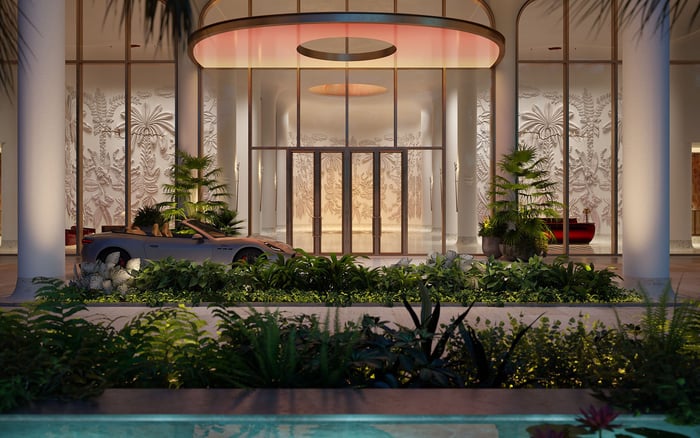
An editorial examination of 619 Residences in Miami through the lens that matters most to globally mobile owners: not amenity volume, but the discipline of service. Foster + Partners supplies the architectural language, while Nobu Hospitality shapes an operating model built around anticipatory care, culinary access, arrival-readiness, and discreet daily management.
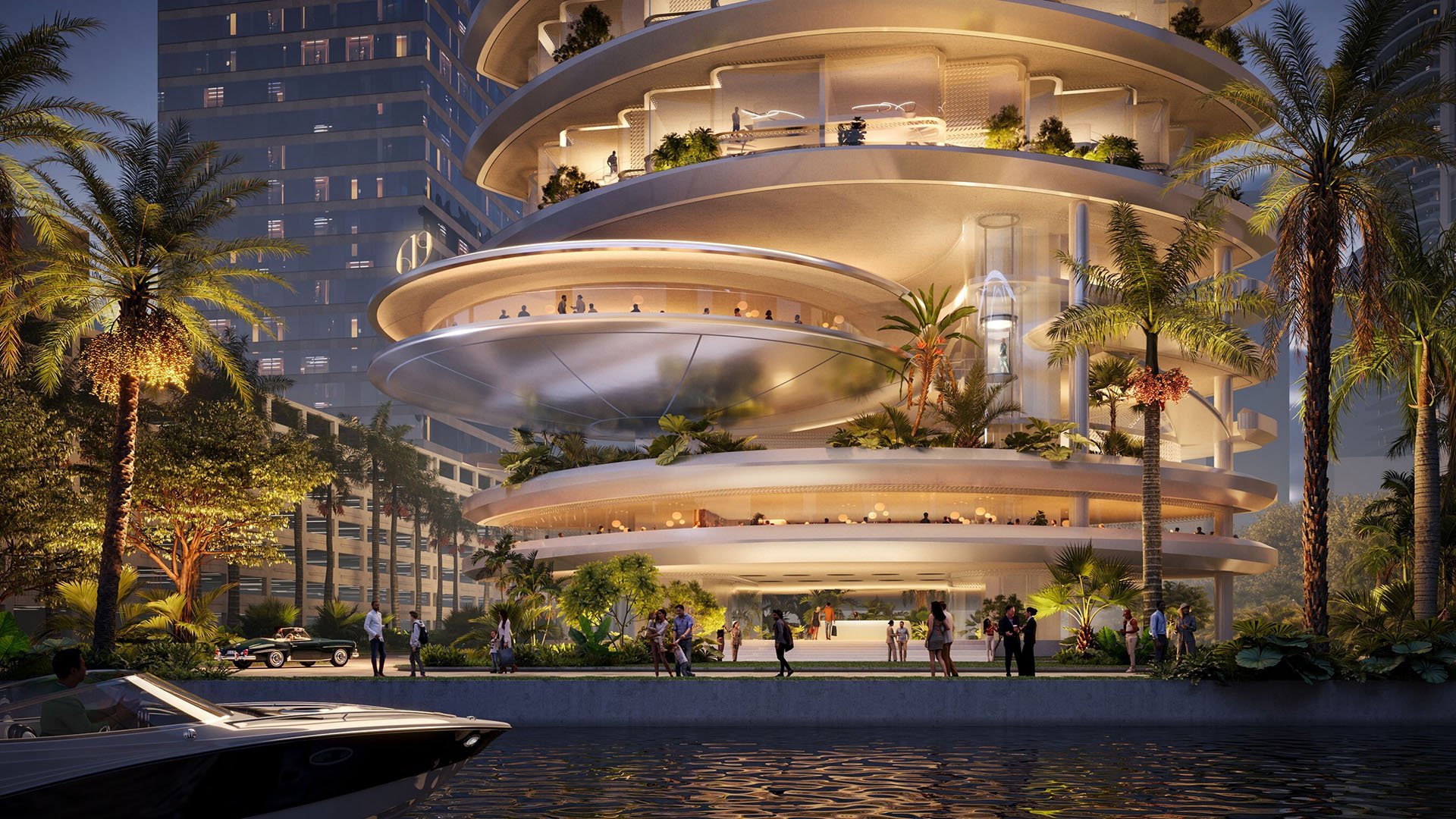
In Miami’s ultra-luxury market, the most sophisticated buyers are no longer persuaded by amenity inventories alone. They want a tower that functions with the calm precision of a private members club and the consistency of a world-class hotel, while preserving the sovereignty of homeownership. That is the lens through which 619 Residences by Foster + Partners + Nobu Hospitality should be understood.
The project enters the conversation as a Miami residence shaped for internationally mobile owners who value discretion, predictability, and the ease of arriving to a home that already feels composed. Its distinction is not merely the pairing of design pedigree with hospitality cachet. The proposition appears operational at its core. The value lies in the choreography of service: how a resident is received, how daily needs are anticipated, how maintenance is timed, and how a return from London, São Paulo, or New York can feel seamless rather than logistical.
For buyers who keep more than one residence, this is often the true dividing line between premium and ultra-luxury. A beautiful apartment can be bought in many places. A residence that performs with quiet fluency is rarer.
Foster + Partners brings a design language associated with clarity, restraint, and high performance. In the context of 619 Residences, that matters because service works best when the architecture supports it. Clean lines, expansive glazing, and efficient planning are not simply aesthetic preferences. They suggest homes that are easier to maintain, easier to staff, and easier to inhabit without friction.
The studio’s broader ethos also aligns with the expectations of modern global ownership: durability of materials, operational efficiency, and a disciplined visual calm that will age better than trend-driven extravagance. For a buyer comparing branded towers across Miami, that architectural authorship creates immediate legibility. It signals to an international purchaser that the building is intended to belong to a global conversation rather than a local cycle of excess.
This is one reason Brickell remains such a compelling stage for new luxury product. The district rewards projects that understand both urban intensity and international buyer behavior. In that context, 619 Residences by Foster + Partners + Nobu Hospitality sits within a competitive set where design credibility can shape both first impressions and resale storytelling.
Nobu Hospitality’s presence is meaningful because it suggests the service layer extends beyond a name on marketing material. The residential model described for 619 Residences points to service protocols, dining concepts, lifestyle programming, private culinary experiences, and a concierge structure that functions more like a 24/7 hospitality team than a conventional front desk.
That distinction is essential. A conventional condominium may offer assistance. A hospitality-backed residence aims to orchestrate an owner’s day. Arrival readiness, planned maintenance timing, private dining access, and an environment tuned to residents who travel frequently all point to a tower designed for people whose lives are divided across markets and time zones.
For the right buyer, this creates emotional as well as practical value. The home becomes less an asset requiring supervision and more a managed environment calibrated to personal rhythm. In Miami, where branded living has matured rapidly, that shift helps explain why service-backed properties command such close attention from second-home and cross-border purchasers.
The comparison set across Brickell reinforces the point. Buyers already familiar with branded or service-forward living may look at 888 Brickell by Dolce & Gabbana, Baccarat Residences Brickell, or The Residences at 1428 Brickell and ask a more nuanced question than which tower has the longest amenities brochure. They ask which residence is most likely to deliver consistency, discretion, and a strong sense of managed ease.
619 Residences is best understood as a proposition for the owner who lives internationally and buys accordingly. This buyer does not want to negotiate every detail each time they arrive. They want a residence that can be maintained in their absence, prepared for their return, and supported by service standards that feel familiar regardless of geography.
That profile is increasingly common in Miami. Some owners are in residence only part of the year. Others move between businesses, schools, family offices, or social calendars in multiple cities. For them, the home must offer turnkey confidence. It should feel private but never isolated; luxurious but never cumbersome.
This is where the phrase service choreography becomes genuinely useful. It describes a tower that understands sequence and timing. The elevator arrival, the greeting, the condition of the residence, the coordination of dining or wellness, the handling of maintenance, and the invisible correction of problems before they become interruptions all matter. In ultra-luxury real estate, this is often what residents remember most.
Miami has become a sophisticated arena for branded residences, and that has changed the buying calculus. International purchasers often compare unfamiliar buildings quickly, using recognizable architectural and hospitality names to measure quality before they know the neighborhood in depth. A project that joins a globally recognized design studio with an established hospitality platform enters that comparison with a considerable advantage.
The point is not merely reassurance. It is efficiency. Familiar names compress due diligence. They help buyers infer standards of design, operational thinking, and future marketability. In a city where prestige, service, and international capital are closely intertwined, that can shape both the initial purchase decision and the story told at resale.
The broader South Florida landscape offers parallels. In Miami Beach, The Ritz-Carlton Residences® South Beach speaks to buyers who value hospitality credibility as part of the residential equation. In Fort Lauderdale, Four Seasons Hotel & Private Residences Fort Lauderdale similarly underscores how service brands can anchor buyer confidence beyond amenity design alone. The shared lesson is that architecture may attract the eye, but operations often secure the commitment.
For a discerning purchaser, the right question is not whether 619 Residences has luxury components. It is whether those components are integrated into a coherent way of living. The most persuasive branded residence is one in which design, staffing, culinary programming, resident-only wellness and entertainment areas, and back-of-house discipline all feel part of the same intention.
That is especially important in new-construction product, where buyers are often underwriting not just a residence but an idea of future performance. The tower must justify itself as a long-term holding, a usable second home, and potentially a strong resale story within Brickell’s evolving hierarchy. If the pairing of Foster + Partners and Nobu Hospitality achieves what it implies, 619 Residences should appeal to owners who view service as a form of design and design as a form of operational clarity.
In that sense, the project belongs to a narrower category than simple branded living. It is for buyers who judge a building by what happens after the purchase: how quietly it works, how elegantly it receives them, and how reliably it protects their time.
What is the central appeal of 619 Residences? Its appeal is the combination of private homeownership with a hospitality-led operating model centered on anticipatory service.
Why does Foster + Partners matter here? The studio brings a refined architectural language associated with clean lines, efficient planning, and durable, high-performance design.
What does Nobu Hospitality add beyond branding? Its role appears tied to service protocols, dining concepts, concierge operations, and lifestyle programming rather than name recognition alone.
Who is the likely buyer profile? The project suits internationally mobile, high-net-worth owners seeking discretion, turnkey living, and consistent service standards.
Is this more about amenities or operations? Operations. The proposition is framed around how the residence functions day to day, not simply how many amenities it can advertise.
Why is Miami a strong setting for this model? Miami’s ultra-luxury market increasingly rewards branded residences that offer recognizable service and architecture to global buyers.
How does service choreography affect ownership? It can make ownership feel easier through arrival readiness, planned maintenance timing, and round-the-clock resident support.
Why might Brickell buyers respond to this concept? Brickell attracts buyers who want an urban Miami address paired with efficient, internationally legible luxury product.
Does hospitality branding help with resale? It can strengthen resale storytelling by giving future buyers a familiar framework for understanding quality and service expectations.
What should a serious purchaser focus on first? Look closely at whether the design, staffing, and service model appear integrated into a coherent residential experience.
For a discreet conversation and a curated building-by-building shortlist, connect with MILLION.
If branded residences are on your mind — as a home or as an allocation — we would be glad to share what we are seeing, privately.
Begin a quiet conversation